Why Food-Grade 304 Stainless Steel Uses High-Pressure Nitrogen Cutting for Laser Cutting
In marine environments, laser cutting for 316L stainless steel hardware requires far more than dimensional precision. Components such as brackets, marine fasteners, hinges, deck fittings, and structural supports must meet strict salt-spray resistance standards while maintaining clean edges, stable tolerances, and excellent surface quality. Even minor heat input errors during cutting can reduce corrosion resistance and affect long-term performance in high-salinity environments.
At Teda Ganghua, we provide precision laser cutting solutions for 316L marine-grade stainless steel plates, helping global customers achieve superior fabrication accuracy and long-term corrosion resistance for offshore, shipbuilding, and coastal engineering applications.
Why 316L Stainless Steel is Preferred for Marine Hardware
316L stainless steel contains molybdenum, which significantly improves resistance to chloride corrosion and saltwater pitting. Compared with 304 stainless steel, 316L performs better in seawater exposure, humid coastal environments, and chemical washdown conditions.
| Property | 304 Stainless Steel | 316L Stainless Steel |
|---|---|---|
| Chloride Resistance | Good | Excellent |
| Pitting Resistance | Moderate | High |
| Marine Suitability | Limited | Excellent |
| Weldability | Good | Excellent |
Challenges in Laser Cutting 316L Marine Hardware
Although 316L offers excellent corrosion resistance, it is more sensitive to heat accumulation during laser cutting. Poor cutting parameters can damage the passive oxide layer and create heat-affected zones that reduce salt-spray performance.
Common Cutting Challenges
- Heat discoloration near cut edges
- Micro-cracks caused by excessive thermal stress
- Rough edges affecting assembly precision
- Reduced corrosion resistance in heat-affected zones
- Burr formation on thicker marine components
Key Factors for Meeting High Salt-Spray Standards
1. Precise Heat Input Control
Laser power, cutting speed, and focal positioning must be optimized to minimize thermal damage. Lower heat input helps preserve the chromium-rich passive layer essential for corrosion resistance.
2. Nitrogen-Assisted Cutting
Nitrogen is commonly used instead of oxygen to reduce oxidation during cutting. This produces cleaner, brighter edges and improves corrosion performance in marine environments.
3. Edge Finishing and Surface Treatment
Post-processing such as deburring, polishing, and passivation can significantly improve edge quality and salt-spray resistance.
4. Tight Dimensional Tolerance
Marine hardware often requires high assembly precision. Laser cutting must maintain tight tolerances to ensure proper fit and long-term structural reliability.
Teda Ganghua Precision Laser Cutting Solutions
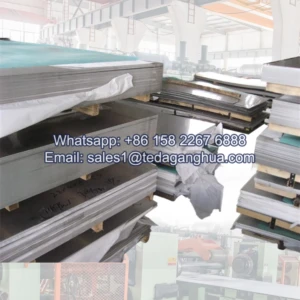
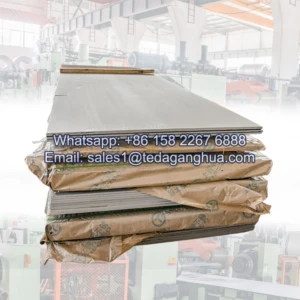
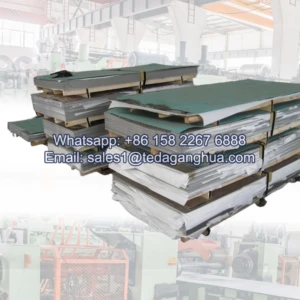
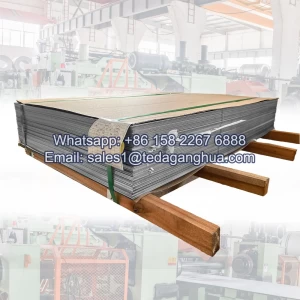
Teda Ganghua specializes in precision laser cutting for marine-grade stainless steel materials, including 316L plates and customized marine hardware components. Our advanced processing equipment ensures excellent dimensional accuracy, stable cut quality, and consistent corrosion-resistant performance.
Our Processing Capabilities
- High-precision laser cutting for thin and thick plates
- Complex marine hardware geometry processing
- Deburring and surface finishing support
- Custom fabrication for marine engineering projects
- Strict quality control before shipment
We provide customized processing services for global buyers seeking reliable marine-grade stainless steel fabrication. For more product specifications, visit
stainless steel plate
Typical Marine Applications
- Ship deck fittings
- Marine fasteners and brackets
- Offshore platform structural parts
- Boat hardware and connectors
- Coastal engineering equipment
FAQ
Is 316L better than 304 for marine environments?
Yes. 316L provides significantly better resistance to saltwater corrosion and chloride-induced pitting.
Why use nitrogen in laser cutting 316L?
Nitrogen minimizes oxidation and helps maintain clean cut edges with better corrosion resistance.
Can laser cutting affect corrosion resistance?
Yes. Improper cutting parameters can create heat-affected zones and reduce salt-spray performance.
Does Teda Ganghua support custom marine hardware processing?
Yes. We provide custom cutting, fabrication, and finishing services based on customer drawings and project requirements.