Classification of Surface Textures in Stainless Steel Wire Drawing Plates
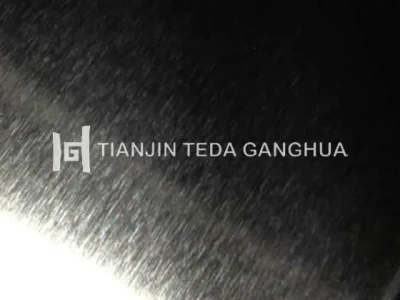
Wire drawing plates refer to stainless steel surfaces with specific textures. Previously called frosted plates, they include straight lines, random lines, corrugations, and threads.
Types of Surface Textures
1. Straight Wire Drawing
- Process: Achieved through mechanical friction, producing straight-line patterns.
- Features: Removes surface scratches and provides a decorative finish.
- Variations:
- Long Wire Texture: Created using a scouring pad or stainless steel brush.
- Short Wire Texture: Shorter, more subtle lines.
- Thickness Control: Adjusted by changing the brush diameter.
2. Random Wire Drawing (And Lines)
- Appearance: Matte surface with irregular circular sand grains.
- Process: Formed by the grinding head’s irregular motion (up, down, left, and right), followed by electroplating and coloring.
- Complexity: Requires high production precision.
3. Brushed Corrugation
- Process: Grinding rollers move axially across the surface using brushing or rubbing machines.
- Result: Creates a wavy texture.
4. Brushed Thread
- Process:
- A small motor with a round felt is fixed at a 60° angle to the table edge.
- A drag plate holds the stainless steel plate, with a polyester film along its edge to control thread speed.
- The felt rotates in straight lines, producing uniform thread patterns.
Applications
304 stainless steel brushed plates are widely used in:
- Catering kitchenware
- Sanitary ware
- Architectural decoration
- Medical equipment
- Hotel supplies
- Electronic components
This variety of surface textures enhances both the functionality and aesthetics of stainless steel plates across industries.