Turning 304 Stainless Steel: Key Characteristics and Process Guidelines
Overview
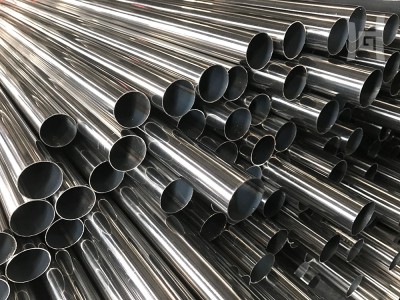
Austenitic 304 stainless steel is widely used due to its resistance to corrosion, heat, and low temperatures. It is commonly found in food, chemical, and nuclear equipment. However, its machinability is poor, making it hard to process. When turning this material, several challenges must be considered.
Main Challenges During Turning
1. High Cutting Force
304 stainless steel has good toughness and plasticity (elongation ≥ 40%, area reduction ≥ 60%). Its hardness is around 187 HB. During cutting, large plastic deformation occurs. The cutting force needed is about 2450 MPa—more than 25% higher than that for 45# steel.
2. Work Hardening
During machining, the structure becomes unstable. Austenite may convert into martensite, especially under heat. A hard layer forms on the surface. This hardened layer can reach a depth of 0.1 to 0.3 mm and hardness of up to 1500 MPa.
3. High Cutting Temperature
Due to poor thermal conductivity (only 1/3 that of 45# steel), heat builds up in the cutting area. The temperature can be 200–300°C higher than when cutting 45# steel. This affects both the part and the cutting tool.
4. Tool Wear and Adhesion
304 stainless steel tends to stick to the tool, causing wear. Small particles can also chip the tool, reducing its life. This affects both cutting precision and surface finish.
Recommended Turning Methods
To improve results, a suitable turning process must be selected. This includes tool material, shape, cutting settings, and cooling method.
Tool Material
1. Cemented Carbide
YG-type cemented carbide is preferred. It offers good toughness, wear resistance, and heat resistance. YG8N, which includes niobium, performs even better in rough and semi-finish turning.
2. High-Speed Steel
New types of high-speed steel (e.g., W6Mo5Cr4V2Al or W12Mo3Cr4V3N) are better than traditional types. These resist wear and improve performance.
Tool Geometry
The tool should have a sharp edge and larger front and back angles. This helps reduce cutting resistance and wear.
Cutting Parameters
-
Cutting Speed affects temperature and tool life most.
-
Feed Rate (F) influences tool wear.
-
Cutting Depth (AP) affects work hardening.
All parameters must be adjusted carefully to balance performance and tool life.
Cutting Fluids
Proper cooling is critical. Use fluids with strong cooling and lubricating effects.
-
For rough turning: Use emulsions (good cooling, low cost).
-
For semi-finishing and finishing: Use sulfurized oils with added S or Cl.
-
For high precision: Use mixtures like carbon tetrachloride, kerosene, and oleic acid.
Spray and high-pressure cooling methods help remove heat more effectively.
Summary
Turning 304 stainless steel is difficult due to its strength, heat resistance, and work hardening. Tool choice, cutting settings, and cooling methods must be carefully selected to improve machining quality and tool life.