Stainless Steel Square Tube Processing
Stainless Steel Square Tube Processing
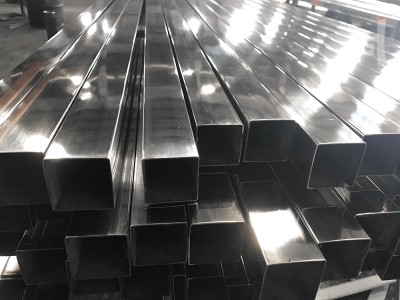
Stainless steel square tubes are widely used in industrial applications. They offer corrosion resistance, high-temperature tolerance, good mechanical strength, and are easy to process and weld.
They are available in various grades such as 201, 202, 304, 304L, 316L, 317, 310S, and 310C.
Key Processing Methods
1. Cold Rolling
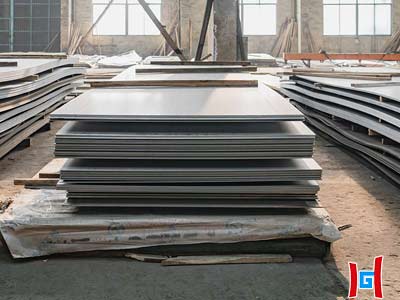
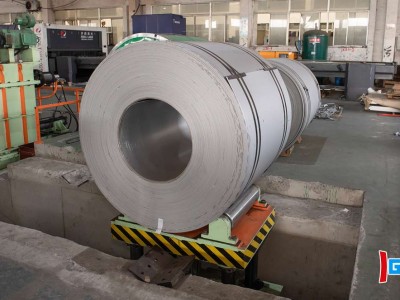
Cold rolling is done at room temperature. Steel plates are rolled to less than 0.2mm thickness. This process removes defects and improves the surface finish, grain structure, and dimensional accuracy.
2. Hot Rolling
Hot rolling involves heating the steel and passing it through rollers. This improves formability and makes it easier to shape the steel.
3. Straightening
Straightening is used to correct warping or bending in metal plates. Special machines apply force to align the material.
4. Drawing
Drawing involves pulling a metal wire through a die. This reduces its diameter and alters its mechanical properties.
5. Extrusion
During extrusion, pressure is applied to reduce the cross-section of a metal plate and increase its length.
Types of Pipes
6. Seamless Stainless Steel Pipe
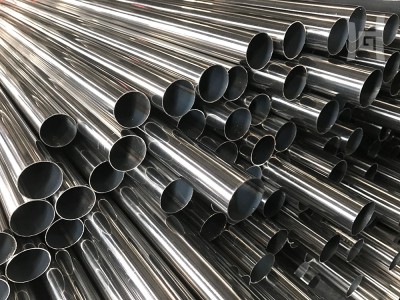
This type of pipe has no seams or joints. It has a hollow cross-section and offers high strength and pressure resistance.
7. Welded Pipes and Welding Wires
Welded pipes are formed by flattening and rolling steel into a cylinder, then welding the seam. Welding wires are used in the process to join metal parts.
8. Head and Tail Rods
These rods guide the seamless pipe during the drawing process. They help maintain pipe shape and alignment.
Stainless Steel Components
9. Stainless Steel Products
Common products include cast parts and forged components, used in various machinery and structures.
10. Pipe Connection Methods
Stainless steel pipes are connected using:
-
Threaded connections
-
Socket fittings
-
Groove couplings
Corrosion Resistance
All metals react with oxygen to form oxide layers. In carbon steel, this leads to continuous rust and eventual holes unless protected by paint or coatings. These layers can easily be damaged, allowing rust to form again.
Stainless steel behaves differently. When the chromium content reaches 12%, a thin, protective oxide layer forms on the surface. This layer prevents further oxidation. Even if scratched, the layer can self-repair using chromium and oxygen in the air.
Though some localized corrosion may still occur in extreme conditions, stainless steel does not corrode evenly like carbon steel. Therefore, corrosion allowance is usually not needed in stainless steel pipeline designs.