Austenitic Stainless Steel
Composition and Structure
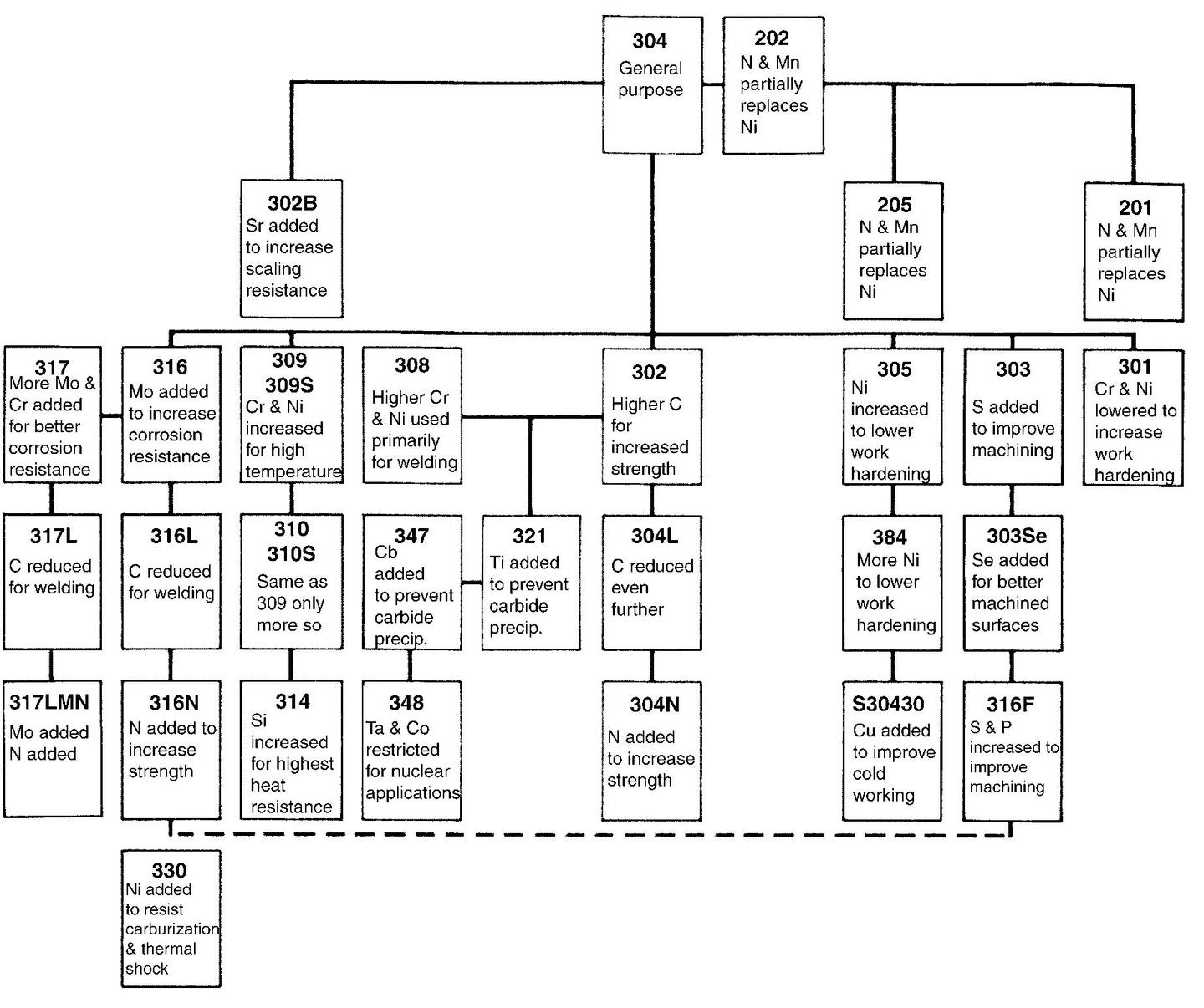
Austenitic stainless steel contains at least 16% chromium and 6% nickel. For example, 304 stainless steel, also known as 18/8 stainless steel, consists of 18% chromium and 8% nickel. The presence of nickel enhances low-temperature performance, preventing brittleness.
This type of stainless steel is classified into the 200 series (containing chromium, nickel, and manganese) and the 300 series (containing chromium and nickel). Austenitic stainless steel can be strengthened through cold working but not heat treatment.
Properties
- Corrosion Resistance: Excellent in various environments.
- Formability: Highly adaptable for different applications.
- Durability: Maintains structural integrity even in extreme conditions.
Common Types and Applications
304 Stainless Steel
- Resists ordinary rust in construction.
- Suitable for food processing due to resistance to acids, chlorides, and high temperatures.
- Withstands exposure to organic chemicals, dyes, and inorganic chemicals.
304L Stainless Steel (Low Carbon)
- Offers superior resistance to nitric and sulfuric acid at moderate temperatures.
- Widely used in liquefied gas storage, household appliances, kitchen equipment, and hospital instruments.
316 Stainless Steel
- Contains more nickel and 2-3% molybdenum compared to 304.
- Provides better resistance, especially in chloride-rich environments that cause pitting corrosion.
317 Stainless Steel
- Contains 3-4% molybdenum and more chromium than 316.
- Offers superior resistance to pitting and bracket corrosion.