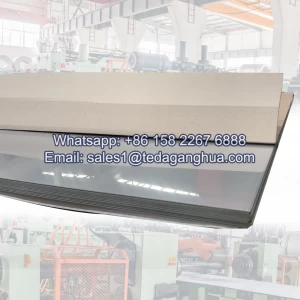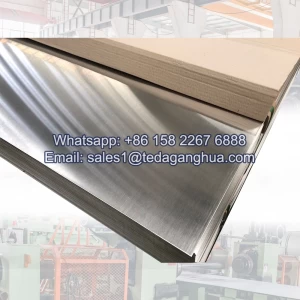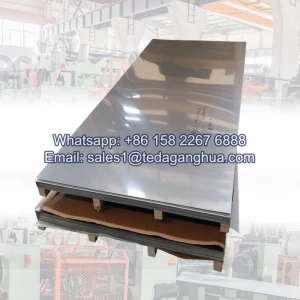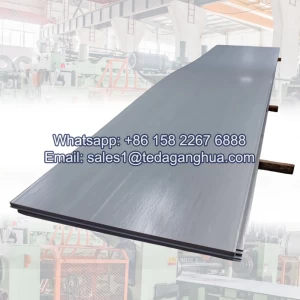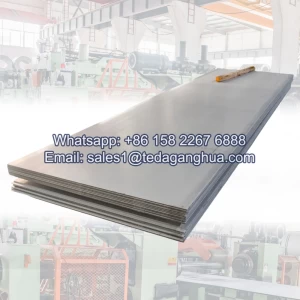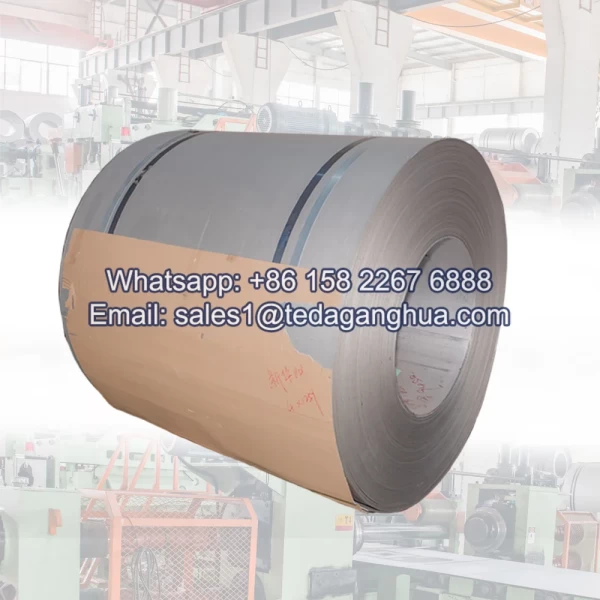

321 Ss Plate
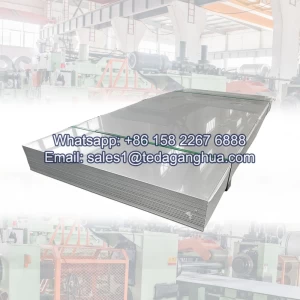
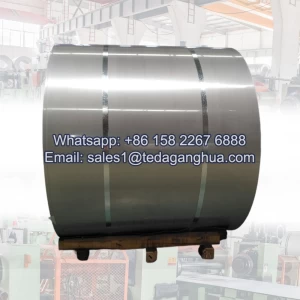
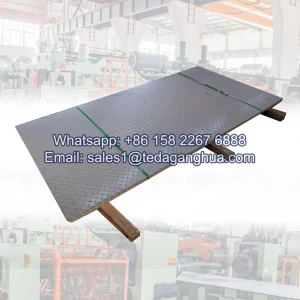
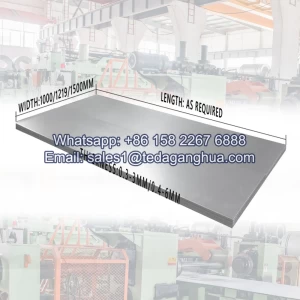
321 stainless steel plate is a titanium-stabilized austenitic stainless steel designed for high-temperature and welded applications. Its excellent resistance to intergranular corrosion and strong thermal stability make it ideal for aerospace, chemical processing, and industrial heat systems. Compared with 304 stainless steel, 321 provides superior performance in environments involving continuous heating and welding exposure.
- Description
321 stainless steel plate is an austenitic chromium-nickel stainless steel stabilized with titanium. It is designed to provide excellent resistance to intergranular corrosion, especially in high-temperature service environments. Compared with 304 stainless steel, 321 offers better stability under heat exposure, making it widely used in aerospace, chemical processing, and thermal equipment.
Chemical Composition of 321 Stainless Steel Plate
The key feature of 321 stainless steel is the addition of titanium, which stabilizes carbon and prevents chromium carbide precipitation.
| Element | Content (%) |
|---|---|
| Chromium (Cr) | 17.0–19.0 |
| Nickel (Ni) | 9.0–12.0 |
| Titanium (Ti) | ≥ 5 × C (typically 0.4–0.7) |
| Carbon (C) | ≤ 0.08 |
| Manganese (Mn) | ≤ 2.00 |
| Silicon (Si) | ≤ 1.00 |
| Phosphorus (P) | ≤ 0.045 |
| Sulfur (S) | ≤ 0.03 |
| Iron (Fe) | Balance |
Mechanical Properties of 321 Stainless Steel
321 stainless steel maintains good strength and ductility across a wide temperature range.
| Property | Typical Value |
|---|---|
| Tensile Strength | 515–750 MPa |
| Yield Strength | ≥ 205 MPa |
| Elongation | ≥ 40% |
| Hardness | ≤ 201 HB |
| Density | 7.9 g/cm³ |
Main Performance Features
1. Excellent High-Temperature Resistance
321 stainless steel performs well in continuous service up to around 800–900°C, making it suitable for heat-exposed environments.
2. Strong Resistance to Intergranular Corrosion
The titanium stabilization prevents carbide precipitation during heating, which significantly improves resistance to intergranular corrosion after welding or heat exposure.
3. Good Weldability
321 stainless steel can be welded using standard austenitic stainless steel methods without the need for post-weld heat treatment in most cases.
4. Good Mechanical Stability
It maintains stable mechanical properties in both low and high temperature environments, with good toughness and fatigue resistance.
Common Applications of 321 Stainless Steel Plate
321 stainless steel plate is widely used in high-temperature and welded structural applications.
Typical applications include:
- Aircraft exhaust systems
- Jet engine components
- Heat exchangers
- Boiler equipment
- Furnace components
- Expansion joints
- Chemical processing equipment
- Pressure vessels
- High-temperature pipelines
- Thermal insulation systems
321 Stainless Steel vs 304 Stainless Steel
| Property | 321 Stainless Steel | 304 Stainless Steel |
|---|---|---|
| Stabilizer | Titanium (Ti) | None |
| High Temperature Resistance | Better | Moderate |
| Intergranular Corrosion Resistance | Strong | Standard |
| Weld Performance | Excellent | Good |
| Typical Use | Heat-resistant systems | General use |