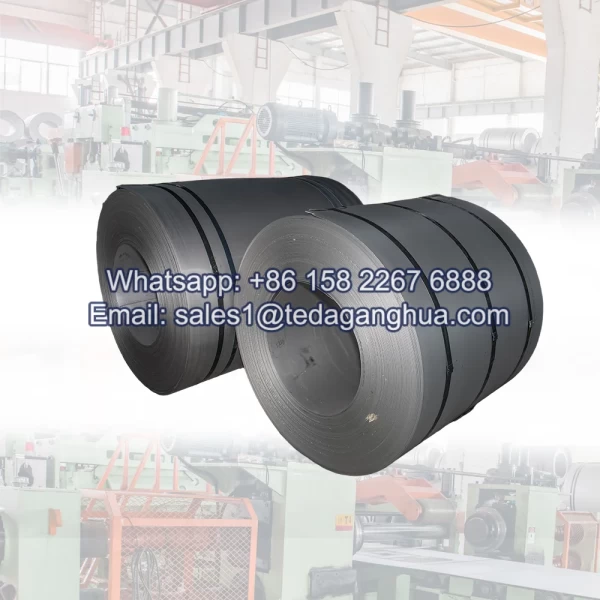
- Description
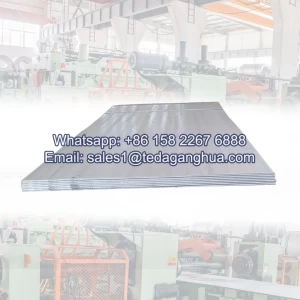
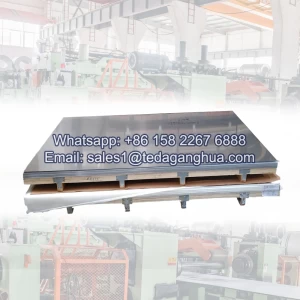
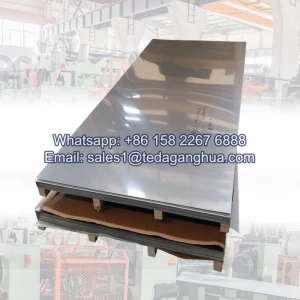
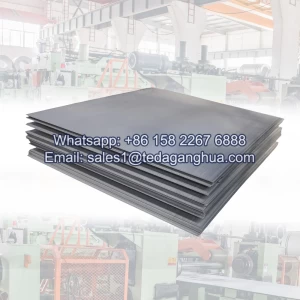
309 stainless steel plate is a high-alloy austenitic stainless steel designed for excellent heat resistance and oxidation resistance. Compared with 304 and 308 grades, 309 contains higher chromium and nickel content, which significantly improves performance in high-temperature environments. It is widely used in furnace equipment, thermal processing systems, and heat-resistant structural components.
Chemical Composition of 309 Stainless Steel Plate
The high chromium and nickel content provides excellent thermal stability and oxidation resistance.
| Element | Content (%) |
|---|---|
| Chromium (Cr) | 22.0–24.0 |
| Nickel (Ni) | 12.0–15.0 |
| Carbon (C) | ≤ 0.20 |
| Manganese (Mn) | ≤ 2.00 |
| Silicon (Si) | ≤ 1.00 |
| Phosphorus (P) | ≤ 0.045 |
| Sulfur (S) | ≤ 0.03 |
| Iron (Fe) | Balance |
Mechanical Properties of 309 Stainless Steel
309 stainless steel maintains stable strength and toughness even under elevated temperature conditions.
| Property | Typical Value |
|---|---|
| Tensile Strength | 520–750 MPa |
| Yield Strength | ≥ 205 MPa |
| Elongation | ≥ 40% |
| Hardness | ≤ 217 HB |
| Density | 7.9 g/cm³ |
Main Performance Features
1. Excellent High-Temperature Resistance
309 stainless steel is specifically designed for high-temperature service. It performs well in continuous exposure up to approximately 1000°C and intermittent exposure even higher.
It is widely used in:
- Furnace parts
- Heat treatment equipment
- High-temperature pipelines
2. Strong Oxidation Resistance
The high chromium content forms a stable oxide layer that protects the material from scaling and oxidation in hot environments.
This makes it suitable for:
- Thermal cycling conditions
- Combustion systems
- Exhaust gas environments
3. Good Corrosion Resistance
Although mainly a heat-resistant grade, 309 also provides good resistance to:
- Mild acidic environments
- Atmospheric corrosion
- Industrial chemical exposure
However, it is not designed for severe chloride-rich seawater conditions.
4. Excellent Weldability and Formability
309 stainless steel maintains good fabrication performance:
- Easy welding (TIG, MIG, SMAW)
- Good bending ability
- Stable austenitic structure
- No hardening after cooling
Common Applications of 309 Stainless Steel Plate
309 stainless steel plate is widely used in high-temperature and industrial furnace applications.
Typical applications include:
- Furnace liners and furnace parts
- Heat treatment equipment
- Boiler components
- High-temperature duct systems
- Kiln and incinerator parts
- Heat exchangers in thermal systems
- Power plant equipment
- Industrial burners and combustion chambers
- Expansion joints
- High-temperature structural supports
309 Stainless Steel vs 304 Stainless Steel
| Property | 309 Stainless Steel | 304 Stainless Steel |
|---|---|---|
| Heat Resistance | Very high | Moderate |
| Chromium Content | Higher (22–24%) | Lower (18–20%) |
| Nickel Content | Higher | Standard |
| Oxidation Resistance | Excellent | Good |
| Main Use | High-temperature systems | General industrial use |