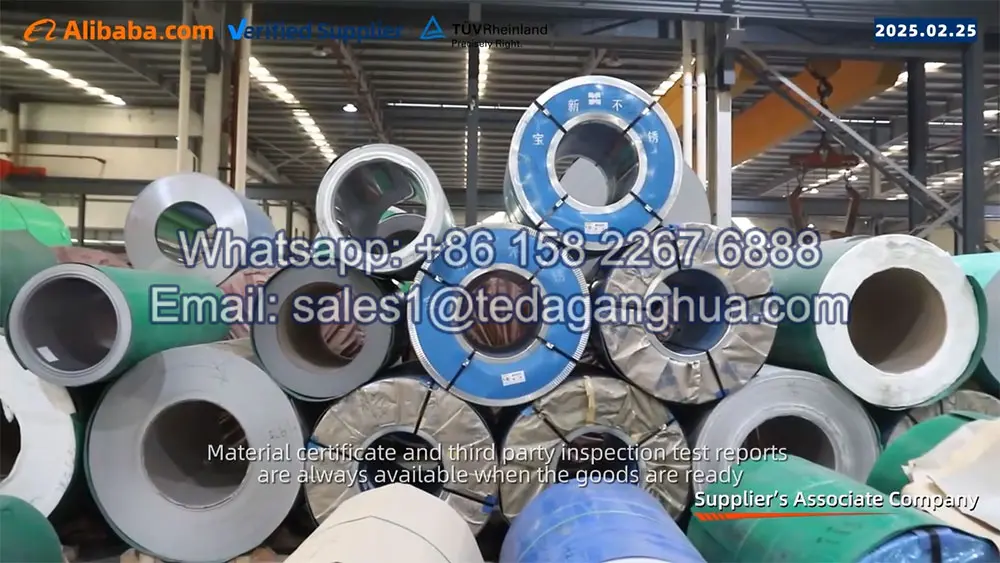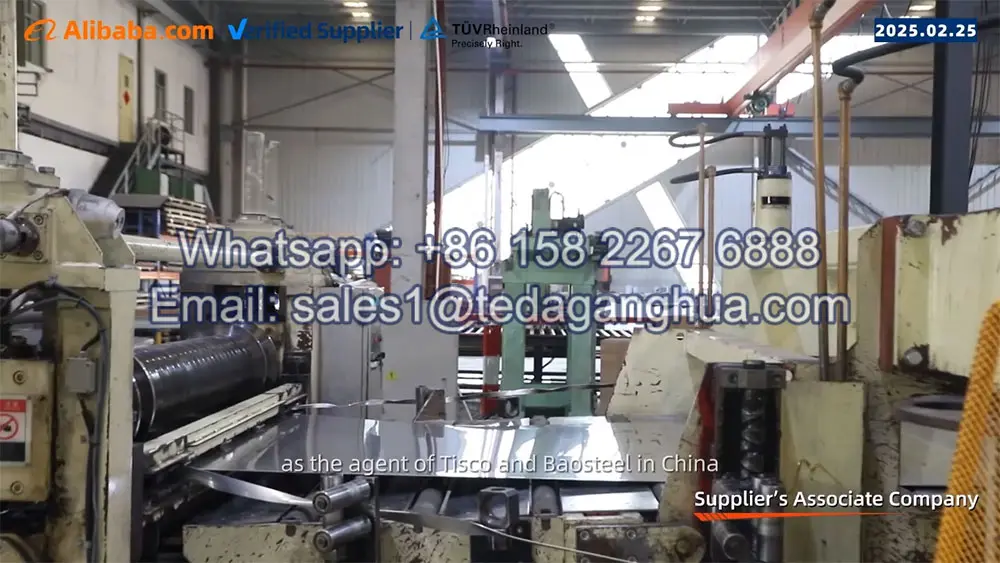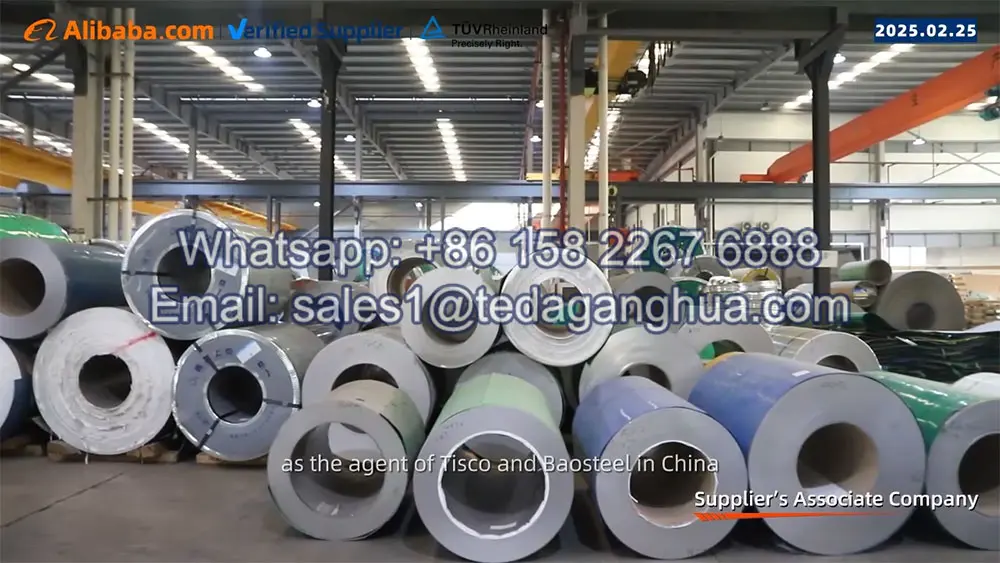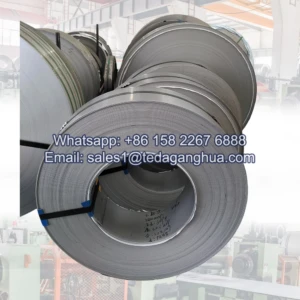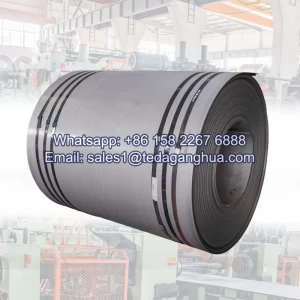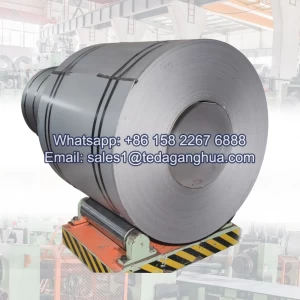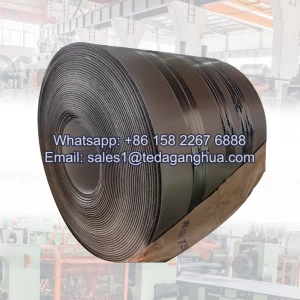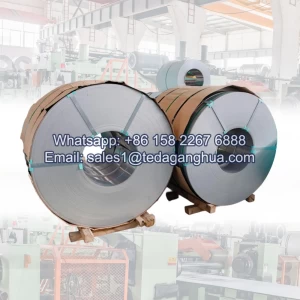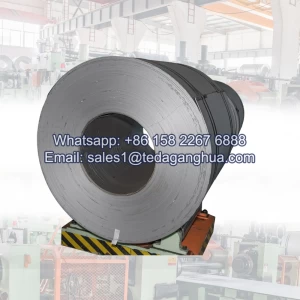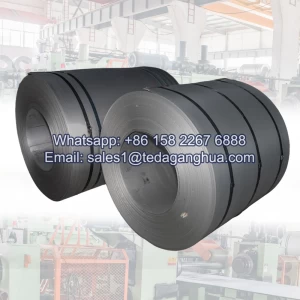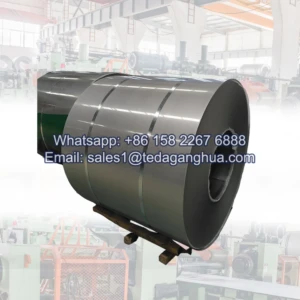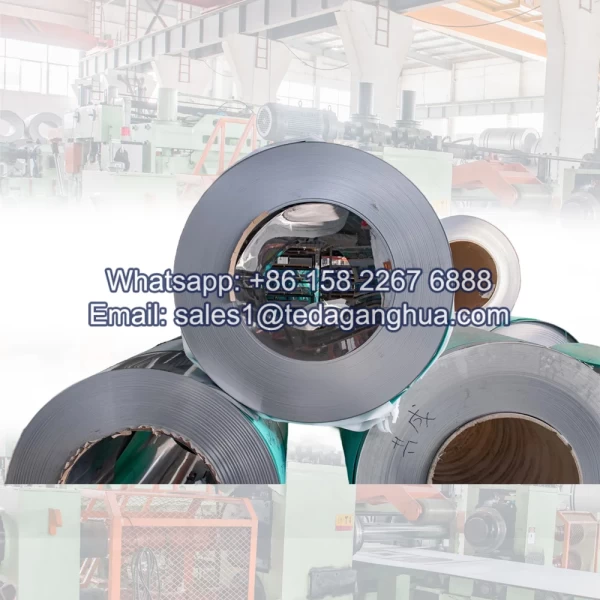
Thép cuộn cán nguội bằng thép không gỉ
Stainless steel cold rolled coil and cold rolled carbon steel coil differ mainly in:
-
Thành phần hóa học (hàm lượng crom)
-
Chống ăn mòn
-
Mechanical performance
-
Surface finish quality
-
Long-term durability
Stainless steel cold rolled coil is ideal for corrosion-resistant, trang trí, and hygienic environments. Carbon steel cold rolled coil is more economical for structural applications where corrosion protection can be added separately.
- Sự miêu tả
Stainless steel cold rolled coil is produced by cold reducing stainless steel hot rolled coils, tiếp theo là ủ và hoàn thiện bề mặt. Compared with ordinary cold rolled carbon steel coil, stainless steel cold rolled coil provides superior corrosion resistance, different mechanical behavior, and distinct application advantages.
Understanding the differences between these two materials is essential for proper material selection.
1. Main Differences Between Stainless Steel and Carbon Steel Cold Rolled Coils
1.1 Chemical Composition Difference
Thép cuộn cán nguội bằng thép không gỉ
Contains a minimum of 10.5% crom (Cr), which forms a passive oxide film on the surface to prevent corrosion.
Typical alloy elements:
-
crom (Cr)
-
Niken (TRONG)
-
Molypden (Mo)
-
Mangan (Mn)
-
Low carbon content (varies by grade)
Common grades:
-
201
-
304 / 304L
-
316 / 316L
-
430
Cold Rolled Carbon Steel Coil
Primarily composed of:
-
Sắt (Fe)
-
Cacbon (C)
-
Small amounts of manganese (Mn)
Does not contain sufficient chromium to resist corrosion and usually requires painting, lớp phủ, or galvanizing for protection.
1.2 Chống ăn mòn
| Tài sản | Thép cuộn cán nguội bằng thép không gỉ | Carbon Steel Cold Rolled Coil |
|---|---|---|
| Chống ăn mòn | Xuất sắc | Thấp (requires coating) |
| Rust Resistance | Self-protecting oxide layer | Easily rusts in humid environments |
| Chemical Resistance | Good to excellent (depends on grade) | Nghèo |
Stainless steel performs well in marine, hóa chất, food, and humid environments, while carbon steel is mainly used in dry structural applications.
1.3 So sánh tính chất cơ học
Cold rolling increases strength in both materials through work hardening.
thép không gỉ (Ví dụ: 304 Tình trạng ủ)
| Tài sản | Giá trị điển hình |
|---|---|
| Sức mạnh năng suất | ≥205 MPa |
| Độ bền kéo | ≥515 MPa |
| Độ giãn dài | ≥40% |
| độ cứng | 95HRB |
Stainless steel also supports different temper conditions:
-
Ủ mềm
-
1/4 cứng
-
1/2 cứng
-
Hoàn toàn cứng
Cold Rolled Carbon Steel (Typical Commercial Grade)
| Tài sản | Giá trị điển hình |
|---|---|
| Sức mạnh năng suất | 200–350 MPa |
| Độ bền kéo | 300–500 MPa |
| Độ giãn dài | 20–35% |
| độ cứng | Lower than hardened stainless |
Carbon steel is easier to form but lacks corrosion durability.
2. Surface Finish Difference
Thép cuộn cán nguội bằng thép không gỉ
Common finishes:
-
2B (smooth matte)
-
cử nhân (ủ sáng)
-
Số 4 (chải)
-
đường chân tóc (HL)
-
Hoàn thiện gương
Surface quality is generally superior and suitable for decorative use.
Carbon Steel Cold Rolled Coil
Typically:
-
Bright cold rolled surface
-
Oiled finish
-
Requires painting or coating
Surface appearance is not corrosion-resistant without further treatment.
3. Size and Dimension Comparison
Both stainless steel and carbon steel cold rolled coils share similar dimensional ranges.
Phạm vi độ dày
-
thép không gỉ: 0.2 mm – 3.0 mm (standard cold rolled range)
-
Thép cacbon: 0.3 mm – 3.5 mm (typical range)
Phạm vi chiều rộng
-
1000 mm
-
1219 mm
-
1250 mm
-
1500 mm
-
Chiều rộng khe tùy chỉnh có sẵn
Trọng lượng cuộn
-
3–10 tons standard
-
Trọng lượng cuộn tùy chỉnh có sẵn
Dimensional tolerance in stainless steel is generally stricter due to its frequent use in precision and decorative applications.
4. Sự khác biệt về ứng dụng
Stainless Steel Cold Rolled Coil Applications
-
Thiết bị nhà bếp
-
Food processing machinery
-
Trang trí kiến trúc
-
Chemical tanks and pipelines
-
Thiết bị y tế
-
Marine components
Carbon Steel Cold Rolled Coil Applications
-
Automotive structural parts
-
Thiết bị gia dụng (painted)
-
Steel furniture frames
-
Machinery housings
-
Thành phần kết cấu (with coating)
5. Cost and Maintenance Consideration
-
Stainless steel has higher initial material cost.
-
Carbon steel is lower cost but requires maintenance or protective coating.
-
Stainless steel provides longer service life in corrosive environments.
-
Carbon steel is suitable for dry, trong nhà, or coated applications.