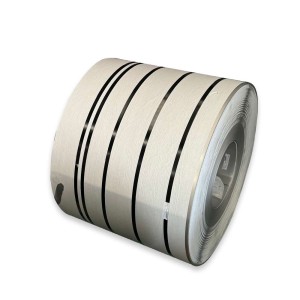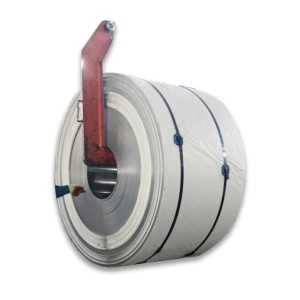
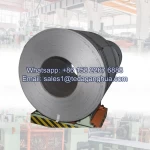
321 Stainless Steel Coil
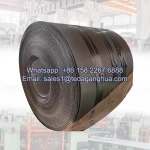
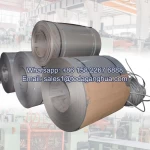
321 stainless steel coil is a titanium-stabilized austenitic stainless steel designed for high-temperature and welded applications. Its key advantages include:
Excellent intergranular corrosion resistance
Stable high-temperature performance
Good oxidation resistance
Strong weldability
Reliable long-term engineering stability
For projects involving heat, pressure, and structural welding, 321 stainless steel coil provides a durable and technically sound material solution.
- Description
321 stainless steel coil is a titanium-stabilized austenitic stainless steel developed to improve intergranular corrosion resistance at elevated temperatures. By adding titanium (Ti), carbide precipitation is controlled, making 321 especially suitable for high-temperature and welded applications.
It is widely used in heat-resistant structures, pressure equipment, and thermal processing systems.
1. Chemical Composition of 321 Stainless Steel
321 stainless steel is similar to 304 in chromium and nickel content but contains titanium for stabilization.
Typical Chemical Composition (%)
| Element | 321 Stainless Steel |
|---|---|
| Carbon (C) | ≤0.08 |
| Chromium (Cr) | 17.0 – 19.0 |
| Nickel (Ni) | 9.0 – 12.0 |
| Titanium (Ti) | ≥5 × C% (typically 0.3 – 0.7) |
| Manganese (Mn) | ≤2.0 |
| Silicon (Si) | ≤1.0 |
| Phosphorus (P) | ≤0.045 |
| Sulfur (S) | ≤0.03 |
The titanium addition binds carbon to form stable titanium carbides, preventing chromium carbide precipitation at grain boundaries.
2. Mechanical Properties of 321 Stainless Steel Coil
In annealed condition:
| Property | Typical Value |
|---|---|
| Tensile Strength | ≥515 MPa |
| Yield Strength | ≥205 MPa |
| Elongation | ≥40% |
| Hardness | ≤95 HRB |
321 maintains good strength and ductility similar to 304, while offering better high-temperature stability.
3. Key Performance Characteristics
3.1 Intergranular Corrosion Resistance
Due to titanium stabilization, 321 stainless steel:
Resists sensitization during welding
Reduces risk of intergranular corrosion
Performs well after exposure to temperatures between 450°C – 850°C
This makes it more reliable than 304 in welded structures exposed to heat.
3.2 High-Temperature Resistance
321 stainless steel offers:
Continuous service temperature up to about 870°C
Intermittent service temperature up to about 925°C
Improved creep resistance compared to 304
It retains structural integrity in high-temperature environments such as exhaust systems and furnace components.
3.3 Oxidation Resistance
321 provides good oxidation resistance at elevated temperatures, making it suitable for hot gas and thermal cycling environments.
3.4 Weldability
Excellent weldability using standard welding methods
No need for post-weld annealing in many applications
Reduced risk of weld decay
This is a major advantage in pressure vessels and pipeline systems.
4. Engineering Performance of 321 Stainless Steel
In engineering applications, 321 stainless steel demonstrates:
Structural Stability Under Heat
It maintains strength and corrosion resistance in high-temperature structural parts, minimizing deformation and cracking.
Long-Term Service Reliability
In pressure equipment and heat exchangers, 321 resists grain boundary corrosion, extending service life.
Thermal Fatigue Resistance
It performs well under repeated heating and cooling cycles, reducing the risk of thermal fatigue failure.
Fabrication Efficiency
Good formability and weldability make it suitable for complex structural components and custom fabrication.
5. Common Applications of 321 Stainless Steel Coil
321 stainless steel coil is widely used in industries requiring high-temperature resistance and welding reliability.
Typical applications include:
Aircraft exhaust manifolds
Jet engine components
Heat exchangers
Expansion joints
Furnace parts
Petrochemical processing equipment
Pressure vessels
Boiler components
Automotive exhaust systems
It is especially suitable for equipment exposed to continuous or cyclic high temperatures.
6. Available Specifications
Typical coil supply range:
Thickness: 0.3 mm – 6.0 mm
Width: 1000 mm, 1219 mm, 1250 mm, 1500 mm
Surface finish: 2B, BA, No.4
Custom slitting and cut-to-length processing are commonly available for engineering projects