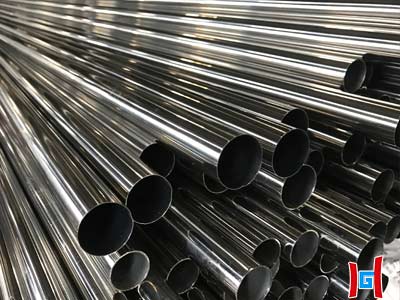
Passivation of Stainless Steel Pipes
Pickling, Solid Solution, and Passivation of Stainless Steel Pipes
Stainless steel is commonly used for product parts due to its excellent mechanical properties, high hardness, and wear resistance. The surface treatment of stainless steel involves pickling and passivation, which is performed after heat treatment and solid solution aging. This process is challenging because of the thick oxide scale formed during heat treatment and the material’s unique characteristics.
1. Low-Temperature Solid Solution Aging
Parts undergoing low-temperature solid solution aging have a thinner oxide scale, typically light purple, making them easier to treat. After pickling, the oxide scale is mostly removed without corroding the parts, and the surface remains free of residue. Subsequently, passivation can be performed directly.
2. High-Temperature Solid Solution Aging
For parts subjected to high-temperature solid solution aging, the oxide scale is thicker and darker, often appearing dark purple or black. The dense and complex oxide layer makes pickling more challenging. The process involves loosening the oxide scale, pickling, and ash removal.
Steps for Treating High-Temperature Oxide Scale:
- Loosening the Oxide Scale: The initial step is to loosen the dense oxide layer.
- Pickling: After loosening, pickling is used to remove the oxide scale.
- Ash Removal: Ash that adheres to the parts’ surfaces is removed, allowing for effective passivation.
Importance of Passivation
After pickling, the parts have reduced corrosion resistance and are prone to rust when exposed to air. To enhance corrosion resistance, a dense passivation film is formed on the surface. This film’s quality significantly affects the parts’ service life and appearance. The composition of the material and the quality of the passivation solution are crucial factors influencing the passivation film’s effectiveness.
3. Pickling and Passivation Process
The stainless steel surface treatment process is straightforward, but pickling and passivation can be difficult due to the following reasons:
- Oxide Scale Removal: Conventional rust removal methods are ineffective for stainless steel. Specific pickling and oxide scale removal techniques are required.
- Passivation: The passivation process involves forming a corrosion-resistant film on the surface without affecting the parts’ dimensions or finish. Strong oxidants are used during pickling and passivation to achieve this.
Chemical Composition and Oxide Formation
Stainless steel contains elements like Ti, Cr, Ni, Si, V, Mn, and Mo. These elements form thick, dense oxide scales during heat treatment. The oxide film, primarily composed of iron, chromium, nickel, and oxygen, forms a stable spinel structure (FeCrO4), making it challenging to remove.
By following these steps, the pickling, solid solution, and passivation processes ensure that stainless steel parts are effectively treated to enhance their corrosion resistance and longevity.