- Penerangan
316 Bar Tahan Karat: Komposisi dan Ciri-ciri Prestasi
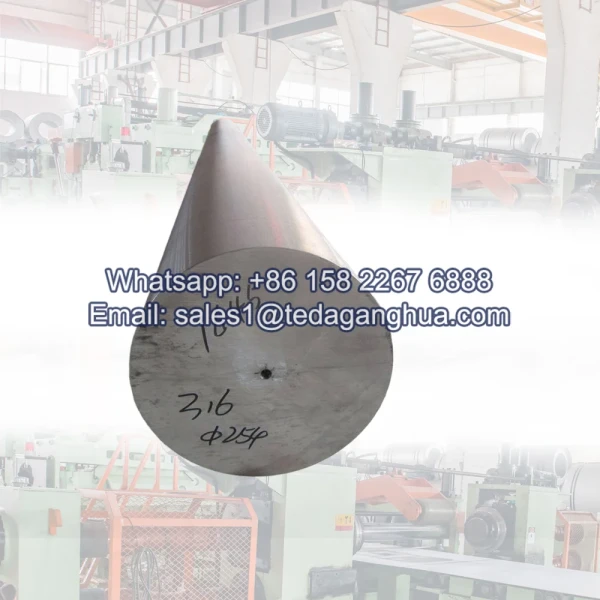
316 stainless bar is an austenitic stainless steel widely used in marine, kimia, pemprosesan makanan, and pharmaceutical industries. It is an upgraded version of 304 keluli tahan karat, with molybdenum added to significantly improve resistance to pitting corrosion and chloride attack.
Because of its balanced alloy design, 316 stainless bar offers excellent corrosion resistance, kekuatan mekanikal yang baik, and stable performance in harsh environments such as seawater, acidic media, and high-humidity conditions.
Komposisi Kimia bagi 316 Keluli Tahan Karat
The key performance advantage of 316 stainless bar comes from the addition of molybdenum (Mo), which enhances resistance to localized corrosion such as pitting and crevice corrosion.
| unsur | Kandungan Biasa (%) | Fungsi |
|---|---|---|
| Chromium (Cr) | 16.0 – 18.0 | Corrosion and oxidation resistance |
| Nikel (Dalam) | 10.0 – 14.0 | Austenitic stability and toughness |
| Molibdenum (Mo) | 2.0 – 3.0 | Improves resistance to pitting and chloride corrosion |
| Karbon (C) | ≤ 0.08 | Controls hardness and weldability |
| Mangan (Mn) | ≤ 2.0 | Improves hot workability |
| silikon (Dan) | ≤ 1.0 | Enhances oxidation resistance |
| Fosforus (P) | ≤ 0.045 | Controls brittleness |
| Sulfur (S) | ≤ 0.03 | Meningkatkan kebolehmesinan (controlled level) |
| Besi (Fe) | Keseimbangan | Base matrix |
Key Performance Advantages of 316 Bar Tahan Karat
316 stainless bar is designed for demanding environments where standard stainless steels may fail due to corrosion or chemical exposure.
- Excellent resistance to chloride-induced corrosion
- High resistance to pitting and crevice corrosion
- Strong performance in acidic and chemical environments
- Good mechanical strength and toughness
- Stable performance in high-humidity and marine conditions
Role of Molybdenum in 316 Keluli Tahan Karat
The most important element in 316 stainless bar is molybdenum. It significantly improves the material’s ability to resist localized corrosion, especially in chloride-rich environments such as seawater or de-icing salts.
- Reduces pitting corrosion risk
- Improves crevice corrosion resistance
- Enhances performance in seawater exposure
- Increases durability in chemical processing systems
Comparison of Alloy Content with 304 Keluli Tahan Karat
| Gred | Chromium | Nikel | Molibdenum | Perbezaan Utama |
|---|---|---|---|---|
| 304 | 18–20% | 8–10% | tiada | Rintangan kakisan am |
| 316 | 16–18% | 10–14% | 2–3% | Superior chloride resistance |
Industrial Importance of 316 Stainless Bar Composition
The combination of chromium, nikel, and molybdenum in 316 stainless bar creates a highly stable austenitic structure that performs reliably in aggressive environments. This makes it one of the most trusted materials in corrosion-critical engineering applications.
In global supply chains, suppliers such as Teda Ganghua provide controlled-chemistry 316 stainless bars with stable metallurgical performance and consistent quality for industrial manufacturing needs.
Application-Driven Material Performance
- Marine and offshore engineering components
- Chemical and petrochemical processing equipment
- Food and pharmaceutical machinery parts
- Medical and sanitary-grade equipment
- Industrial fasteners and structural components
Soalan Lazim
1. Apa itu 316 stainless bar made of?
It is mainly composed of chromium, nikel, and molybdenum with iron as the base metal.
2. Why is molybdenum important in 316 keluli tahan karat?
Because it significantly improves resistance to pitting and chloride corrosion.
3. Adakah 316 stainless steel better than 304?
ya, especially in marine and chemical environments due to its higher corrosion resistance.
4. boleh 316 stainless steel resist seawater corrosion?
It has strong resistance to seawater, though extreme conditions may require higher alloys.
5. Adakah Teda Ganghua membekalkan 316 stainless bars?
ya, Teda Ganghua supplies 316 stainless bars with stable composition and export-ready quality.