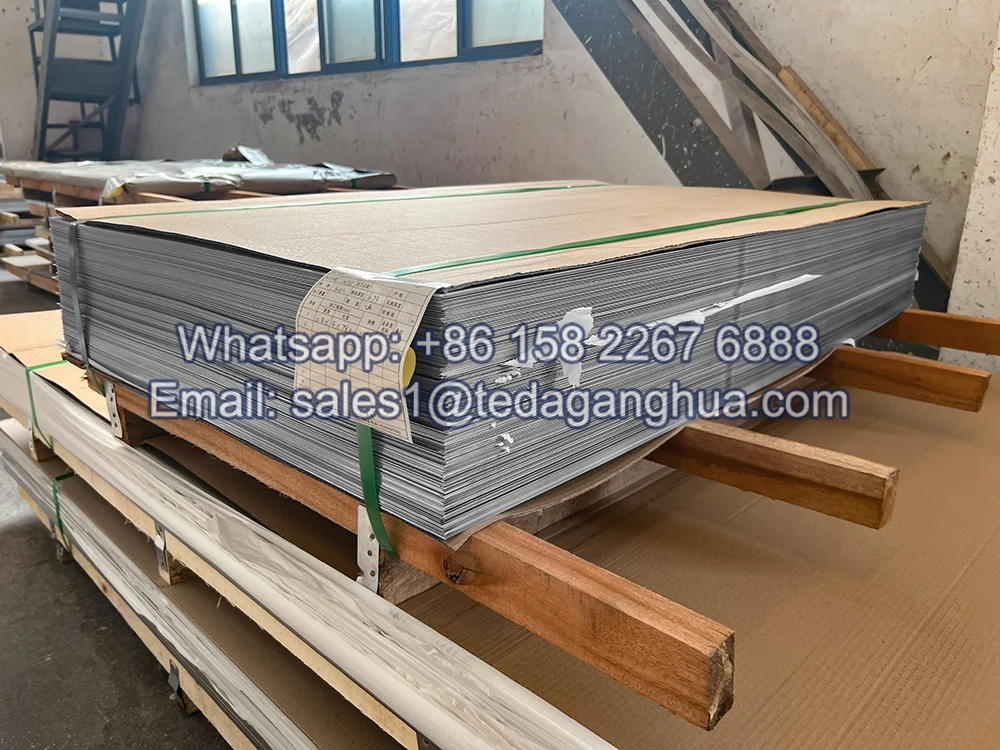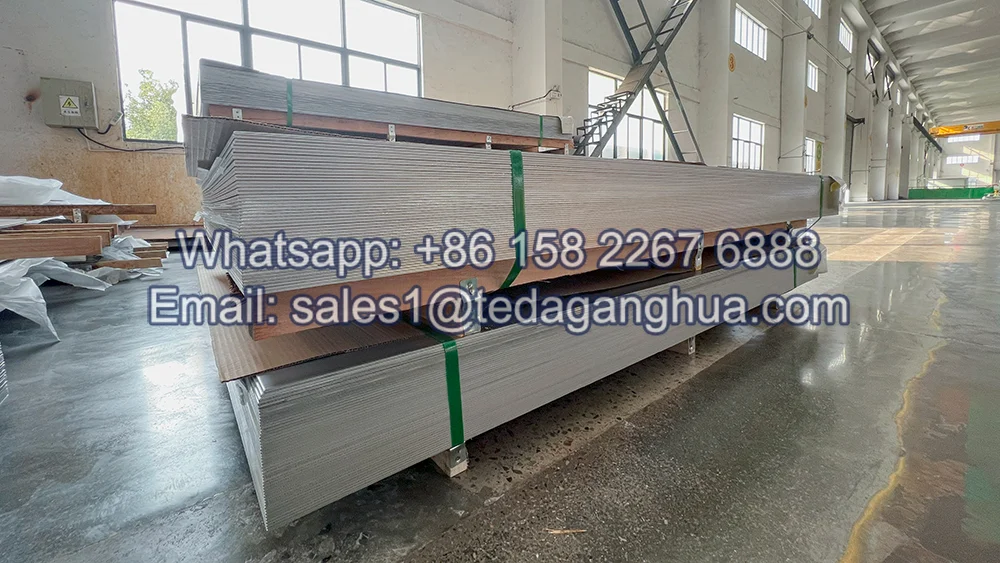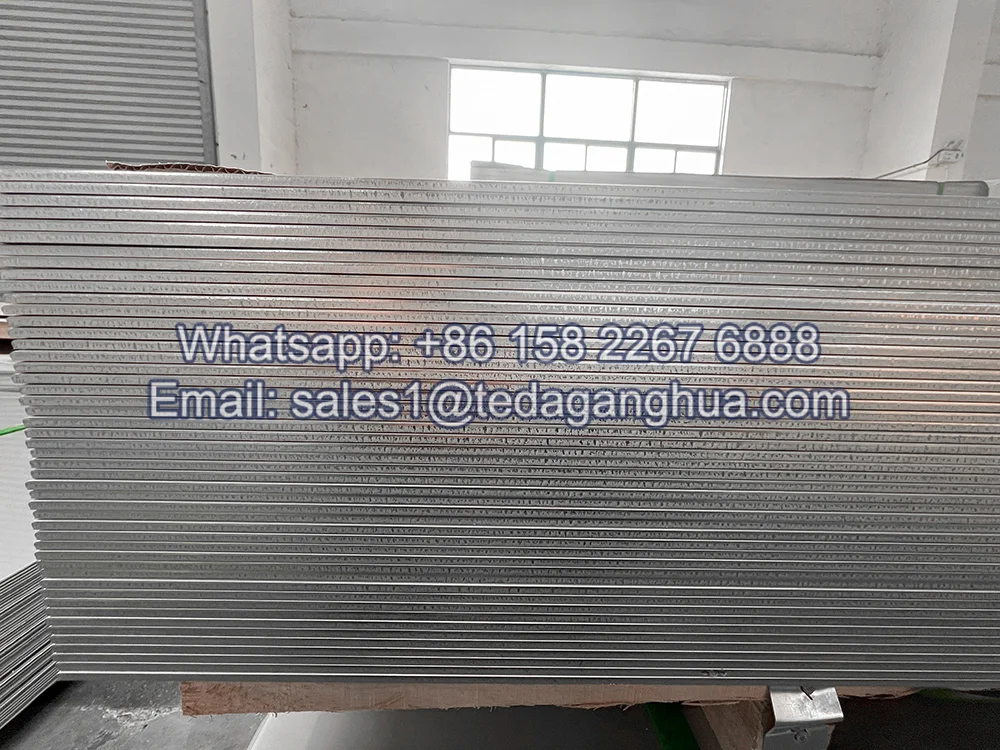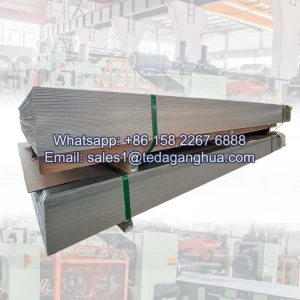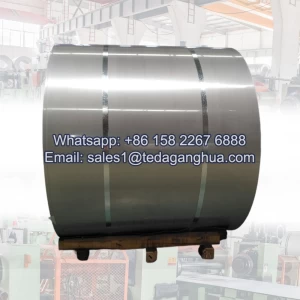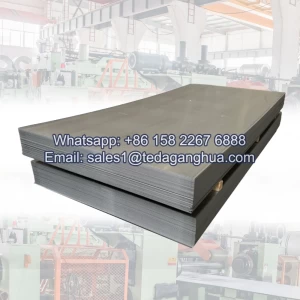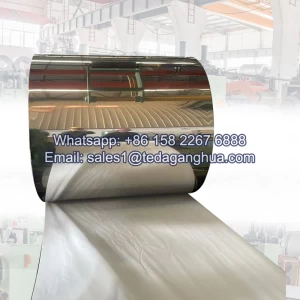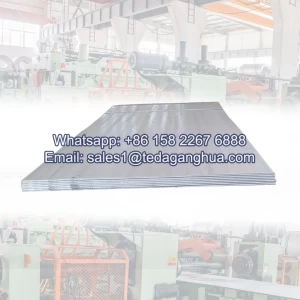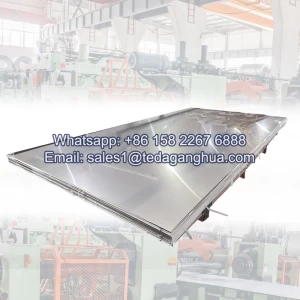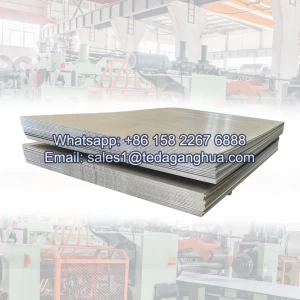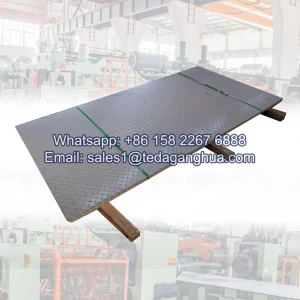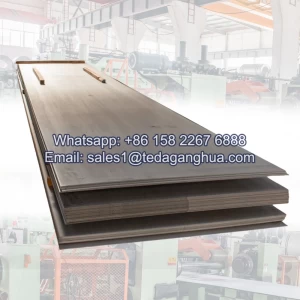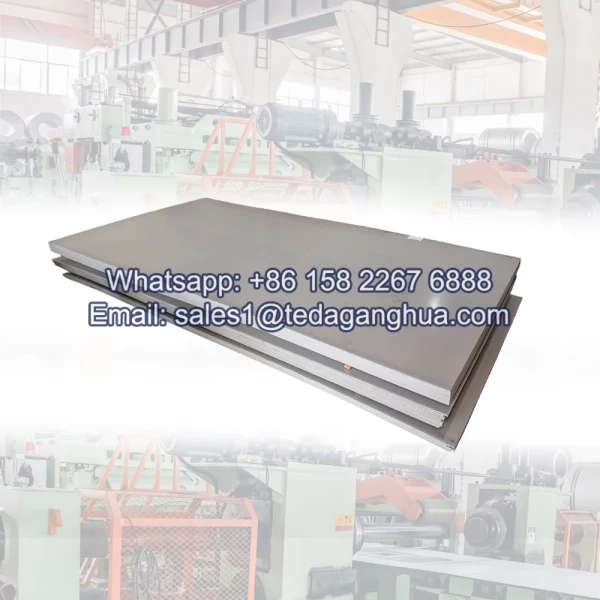
430 2B Edelstahl

430 stainless steel appears especially bright in 2B and BA finishes wegen:
- Ferritic crystal structure for better light reflection
- Low alloy complexity (kein Nickel) for cleaner surfaces
- Uniform deformation during rolling
- Excellent response to bright annealing (BA process)
- Lower work hardening and fewer surface defects
- Beschreibung
430 stainless steel is a Ferritischer Edelstahl containing chromium but little or no nickel. It is widely used for decorative and appliance applications due to its gute Korrosionsbeständigkeit, Formbarkeit, and excellent surface finish performance.
Warum ist 430 Stainless Steel So Bright in 2B and BA Finishes?
Im Vergleich zu austenitischen Sorten wie 304, 430 stainless steel often shows higher brightness, vor allem in 2B and BA finishes. This is mainly due to its composition and metallurgical structure.
1. Ferritic Structure Reflects Light Better
430 stainless steel has a ferritisch (BCC) crystal structure, während 304 has an austenitisch (FCC) structure.
Effect on Surface Brightness
- Ferritic structure is more uniform and stable during rolling
- Produziert less surface distortion
- Results in better light reflection and cleaner appearance
Abschluss:
Ferritic stainless steel naturally provides a brighter and more uniform surface.
2. Lower Alloy Content (No Nickel Influence)
430 Zusammensetzung:
- Chrom: ~16–18%
- Nickel: ~0%
Impact on Brightness
- No nickel → fewer alloying complexities during rolling
- Surface oxide layer is more consistent and thinner
- Easier to achieve clean metallic luster
Im Gegensatz, 304 contains nickel, which can:
- Increase surface micro-variations
- Slightly reduce reflectivity after rolling
3. Better Surface Response to Cold Rolling
In 2B Finish
2B is produced by:
- Kaltwalzen
- Glühen
- Beizen
- Light skin pass
430 performs well because:
- Surface deformation is more uniform
- Produces a smoother and more reflective matte finish
Ergebnis:
430 2B often appears:
- Brighter
- Whiter
- More reflective than 304 2B
4. Excellent Performance in BA (Blankgeglüht) Beenden
BA finish is produced by:
- Kaltwalzen
- Annealing in a protective atmosphere (keine Oxidation)
Warum 430 BA is Very Bright
- Ferritic structure remains stable during annealing
- Minimal oxidation → spiegelähnliche Oberfläche
- Surface roughness is very low
Ergebnis:
- 430 BA can achieve very high reflectivity, close to mirror finish
- Often used as a base for polished or decorative products
5. Lower Work Hardening Rate
- 430 hat lower work hardening als 304
- During rolling:
- Weniger innerer Stress
- Fewer surface defects
- Leads to a cleaner and more uniform finish
6. Surface Color Characteristics
430 stainless steel typically shows:
- Brighter, whiter tone
- Less “gray” compared to 304
- More suitable for decorative panels and appliances
Comparison: 430 vs 304 in 2B/BA Finish
| Eigentum | 430 Edelstahl | 304 Edelstahl |
|---|---|---|
| Struktur | Ferritisch | Austenitisch |
| Nickelgehalt | Keiner | 8–10,5 % |
| 2B Brightness | Höher | Mäßig |
| BA Brightness | Sehr hoch | Hoch |
| Surface Tone | Whiter | Slightly gray |
| Härtung arbeiten | Niedrig | Hoch |
Typische Anwendungen von 430 2B and BA Stainless Steel
Decorative and Appliance Use
- Home appliance panels (Kühlschränke, washing machines)
- Innenverkleidungen von Aufzügen
- Küchenausstattung
Architekturanwendungen
- Dekorative Wandpaneele
- Deckensysteme
- Trim and molding
Industrial Use
- Kfz -Trim
- Exhaust components (moderate conditions)