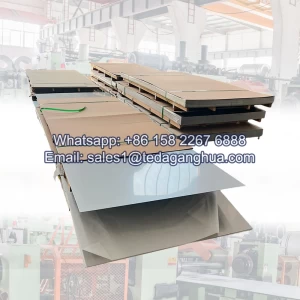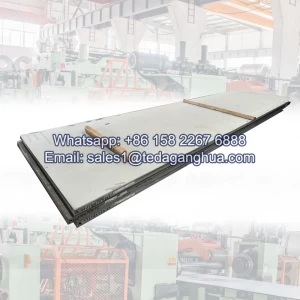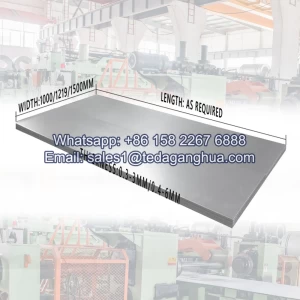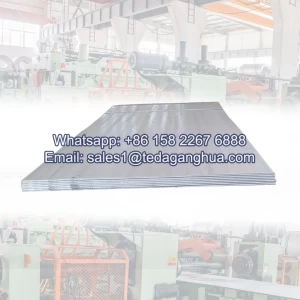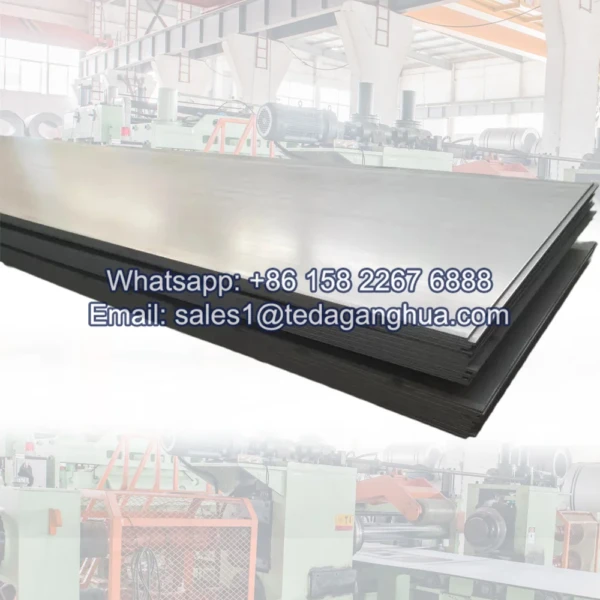
20 Messgerät 304 Edelstahl

20 Messgerät 304 stainless steel is a thin, highly formable material suitable for precision fabrication. Its processing mainly involves laser cutting, CNC-Biegen, Schweißen, and surface finishing techniques.
Aufgrund seiner dünnen Stärke, careful control of heat input, tooling pressure, and surface protection is required to ensure high-quality results in industrial and decorative applications.
- Beschreibung
20 Messgerät 304 stainless steel sheet is a thin austenitic stainless steel material widely used in industrial fabrication, Küchenausstattung, architektonische Komponenten, and precision metal parts. With a thickness of approximately 0.9 mm, it offers a good balance between flexibility, Korrosionsbeständigkeit, und mechanische Festigkeit.
Because of its relatively thin gauge, this material is commonly processed using precision forming and cutting techniques to ensure surface quality and dimensional accuracy.
1. Cutting Processes for 20 Messgerät 304 Edelstahl
Laserschneiden
Laser cutting is one of the most common methods for 20 gauge stainless steel.
Vorteile:
- High precision and smooth edges
- Minimale Materialverformung
- Suitable for complex shapes and fine patterns
- Clean cutting surface with low burr formation
It is widely used for decorative panels, Gehäuse, and precision components.
Scheren (Mechanisches Schneiden)
Shearing is suitable for straight-line cutting of sheet materials.
Merkmale:
- High efficiency for mass production
- Low cost processing method
- Suitable for standard sheet sizing
Jedoch, edge finishing may be required for high-quality applications.
CNC-Stanzen
CNC punching is used for repetitive hole patterns and ventilation designs.
Vorteile:
- High production efficiency
- Suitable for perforated sheets
- Good consistency in mass production
2. Forming and Bending Processes
CNC Press Brake Bending
Press brake bending is the most common forming method for 20 gauge stainless steel.
Key features:
- Suitable for precise angle control
- Minimal thickness distortion
- Widely used for brackets, Gehäuse, und Strukturteile
Rollformen
Used for continuous curved or cylindrical shapes.
Anwendungen:
- Ducting systems
- Tubular structures
- Long continuous profiles
Deep Drawing (Limited for 20 Messgerät)
Due to its thin thickness:
- Moderate deep drawing capability
- Requires controlled pressure and lubrication
- Suitable for shallow formed parts
3. Welding Processes
304 stainless steel has excellent weldability.
Gängige Schweißmethoden:
- WIG-Schweißen (hohe präzision, clean welds)
- MIG-Schweißen (faster production)
- Punktschweißen (thin sheet joining)
Key considerations:
- Control heat input to prevent deformation
- Maintain corrosion resistance at weld joints
- Post-weld cleaning may be required
4. Surface Treatment and Protection
To maintain surface quality during processing:
Protective Film Protection
- Prevents scratches during cutting and forming
- Commonly applied before fabrication
Optionen zur Oberflächenveredelung
- 2B-Finish: Standard-Industrieoberfläche
- BA-Finish: bright annealed surface
- Gebürstete Oberfläche: decorative appearance
Cleaning and Passivation
- Removes surface contamination after welding
- Improves corrosion resistance
- Restores protective oxide layer
5. Challenges in Processing Thin 20 Messgerät Edelstahl
Because of its thin thickness, special attention is required:
- Easy to deform during bending
- Sensitive to heat during welding
- Risk of surface scratching
- Springback effect during forming
- Requires precise tooling control
Proper processing techniques are essential to maintain dimensional accuracy and surface quality.
6. Common Applications After Processing
Nach der Herstellung, 20 Messgerät 304 stainless steel is widely used in:
- Elektrische Gehäuse
- Küchenausstattung
- HVAC-Kanalsysteme
- Dekorative Paneele
- Maschinenabdeckungen
- Precision metal components