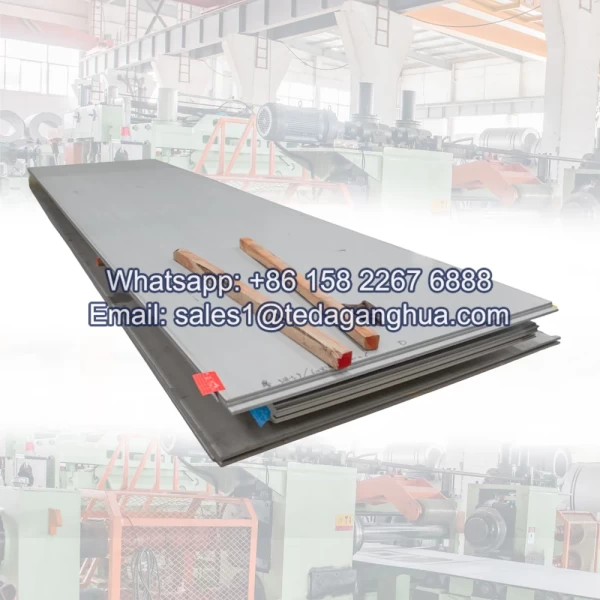

Harga Helaian Ss Per Kg

The pricing of stainless steel sheets is inherently weight-based because both raw materials and manufacturing processes are measured in mass. The price per kg provides a standardized and transparent way to evaluate cost across different sizes, gred, and specifications.
- Penerangan
The price of stainless steel sheet is commonly quoted in harga sekilogram (kg) because stainless steel is fundamentally a mass-based commodity material. Regardless of shape or size, the cost is directly tied to how much raw material is used, making weight the most accurate and standardized pricing basis in global trade.
Why Stainless Steel Sheet Price is Based on Weight
1. Raw Material Cost is Weight-Driven
Stainless steel is produced from alloying elements such as:
- Besi (Fe)
- Chromium (Cr)
- Nikel (Dalam)
- Molibdenum (Mo)
These elements are traded globally by weight. Oleh itu:
- Higher الوزن = more raw material consumption
- More alloy content = higher cost per kg
Contohnya:
- 304 stainless steel contains nickel → higher price
- 316 stainless steel contains molybdenum → even higher price
2. Thickness Directly Affects Total Weight
Even if two sheets have the same length and width, mereka thickness determines weight, and therefore total price.
Berat badan (kg)= Panjang (m)×Lebar (m)×Ketebalan (mm)×7.93\text{Berat badan (kg)} = teks{Panjang (m)} \kali teks{Lebar (m)} \kali teks{Ketebalan (mm)} \kali 7.93
Where:
- 7.93 is the density of stainless steel (g/cm³ equivalent factor)
This explains why:
- Thicker sheets cost more
- Larger dimensions increase total price proportionally
3. Processing Cost is Also Weight-Related
Manufacturing costs such as:
- Bergolek sejuk
- Penyepuhlindapan
- Kemasan permukaan (2B, BA, cermin)
- Cutting and leveling
are often calculated based on processing weight (tons or kg).
Heavier materials require:
- More energy
- Longer processing time
- Higher equipment load
How SS Sheet Price Per Kg is Calculated
The final quotation per kg is typically composed of several cost components:
1. Kos Bahan Asas
- Depends on stainless steel grade (201, 304, 316, dll.)
- Influenced by alloy element market prices
2. Manufacturing Cost
- Rolling process (hot rolled or cold rolled)
- Annealing method (bright annealing, solution annealing)
3. Surface Finish Cost
- 2B (standard industrial finish)
- BA (anil terang)
- Polished or mirror finish
4. Thickness Tolerance and Precision
- Tighter tolerances increase production difficulty
- Ultra-thin or precision sheets have higher cost per kg
Example Price Calculation Structure
| Cost Component | Calculation Basis | Influence on Final Price |
|---|---|---|
| Bahan Mentah | Alloy composition (per kg) | Core cost driver |
| Rolling Process | Weight processed | Affects production cost |
| Penyepuhlindapan | Heat treatment per ton | Impacts structure and quality |
| Kemasan Permukaan | Processing complexity | Adds value |
| Pembungkusan & Pengendalian | Weight and protection needs | Minor but necessary |
Total Price Formula (Simplified)
Jumlah Harga=Berat (kg)×Harga setiap kgteks{Jumlah Harga} = teks{Berat badan (kg)} \kali teks{Harga per kg}
This is why in international trade:
- Buyers often calculate total cost based on final shipment weight
- Suppliers quote FOB or CIF price per ton (1000 kg)
Key Factors That Affect Price Per Kg
- Stainless steel grade (alloy content)
- Sheet thickness and dimensions
- Keperluan kemasan permukaan
- Production process complexity
- Order quantity (economies of scale)