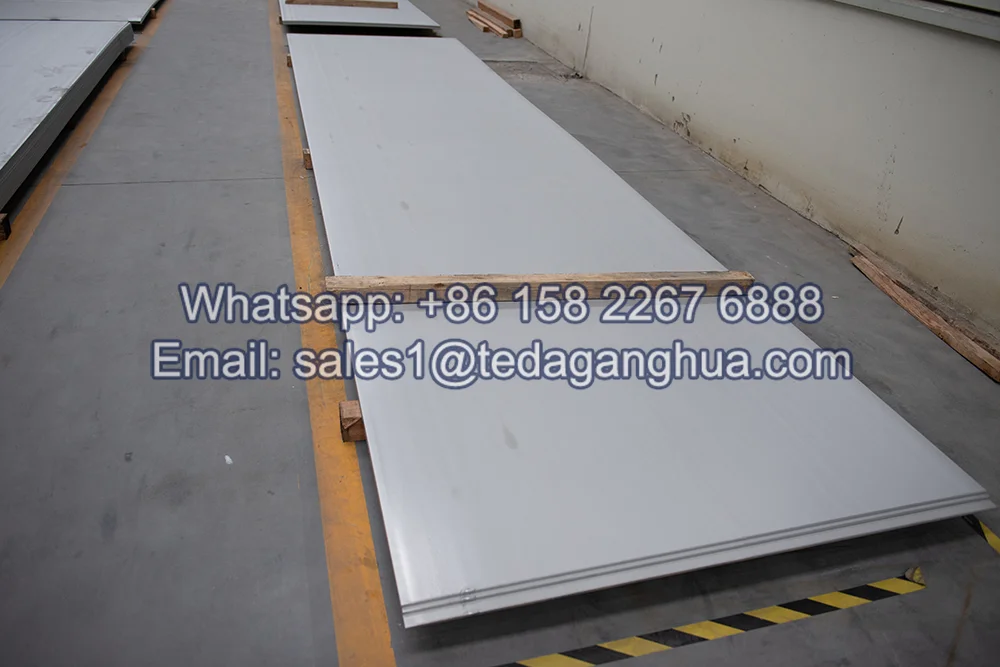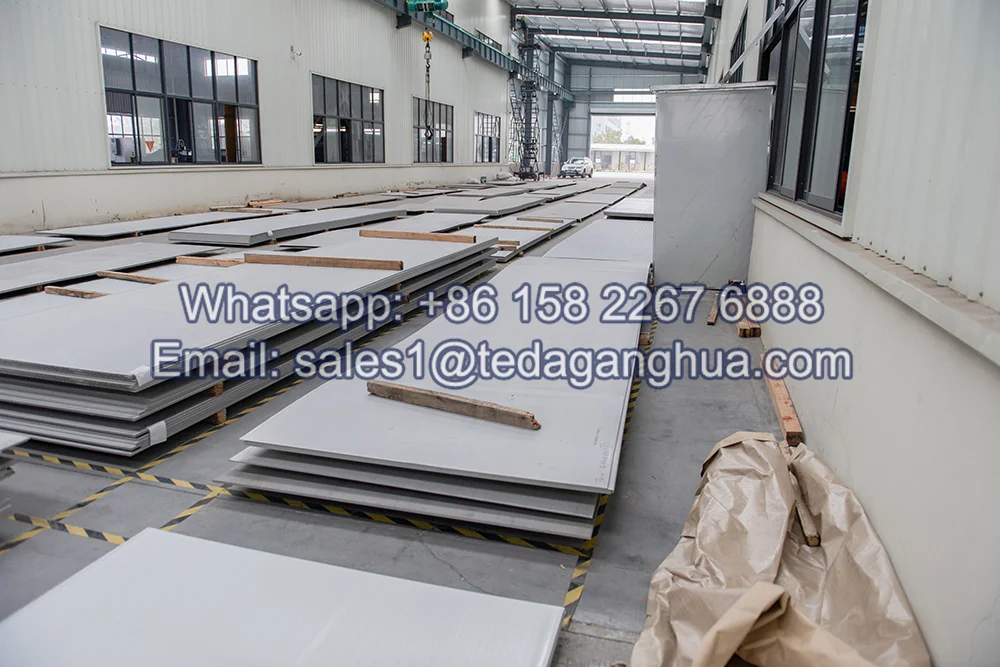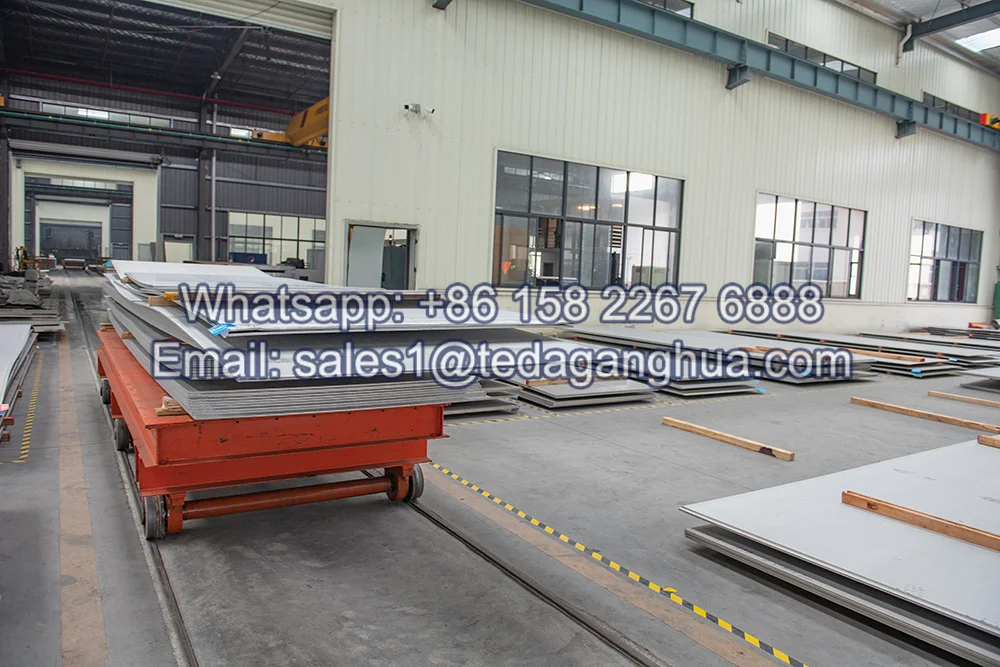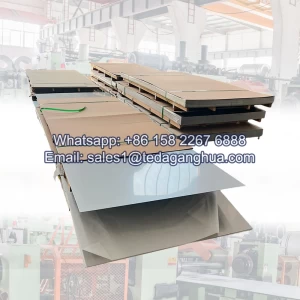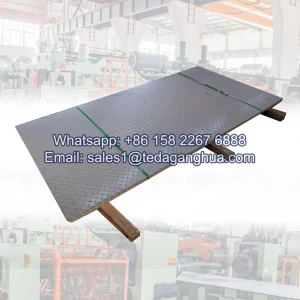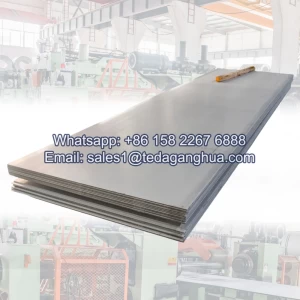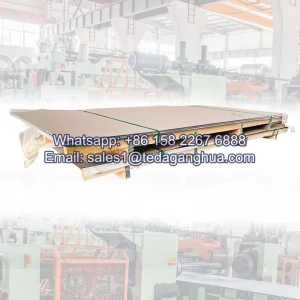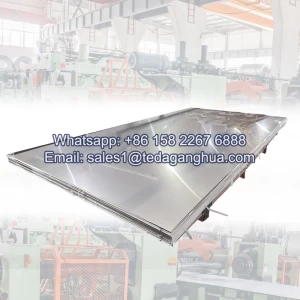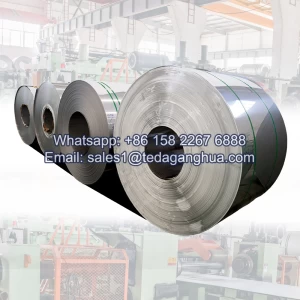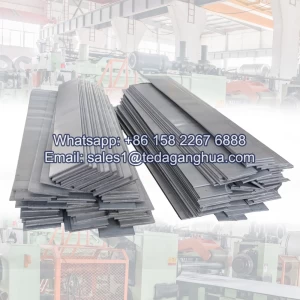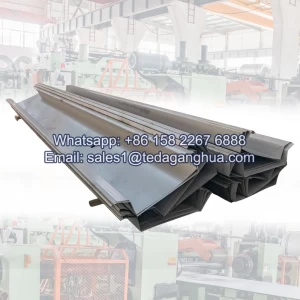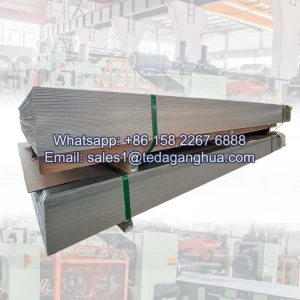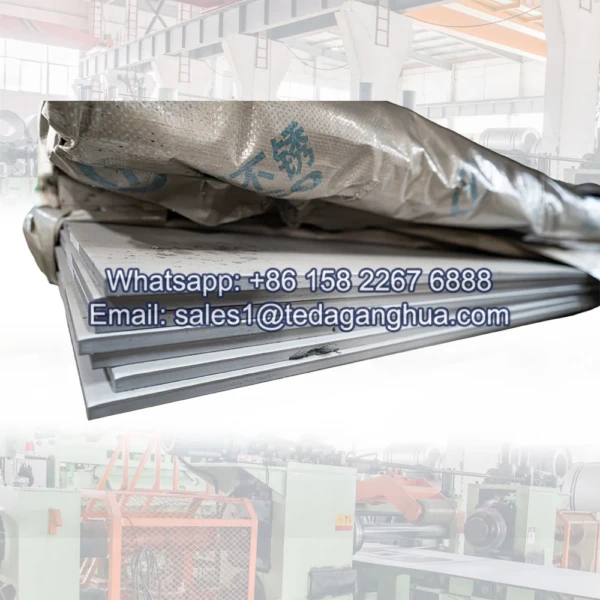
5mm Lembaran Keluli Tahan Karat
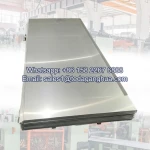
Walaupun 5kepingan keluli tahan karat mm is relatively thick, it can still be processed using a combination of hot rolling and cold finishing techniques. Cold rolling at this thickness is mainly used for improving surface quality and dimensional precision rather than primary thickness reduction. Processing methods such as cutting, membengkok, and welding require stronger equipment and adjusted parameters, making 5mm stainless steel suitable for medium-to-heavy industrial applications requiring both strength and durability.
- Penerangan
mm Lembaran Keluli Tahan Karat is considered a medium-thickness stainless steel material widely used in machinery structures, peralatan industri, support frames, and engineering fabrication. Although 5mm thickness is relatively thick for cold-rolled stainless steel, it can still be produced and processed through specialized cold rolling and finishing techniques.
Can Cold Rolled Stainless Steel Be Used for Medium Thickness Plates?
ya, but with limitations.
Cold rolling is typically used for thin sheets, but when producing medium-thickness stainless steel (such as 5mm), manufacturers often combine:
- Hot rolling for primary thickness reduction
- Cold rolling for surface finishing and dimensional accuracy
Oleh itu, 5mm stainless steel sheets are often hot-rolled base material with cold-finished surface treatment.
Production Process of 5mm Stainless Steel Sheet
1. Bergolek Panas (Primary Forming)
- Steel slabs are heated above recrystallization temperature
- Thickness is reduced through rolling mills
- Produces basic 5mm plate structure
2. Pickling and Surface Cleaning
- Removes oxide scale formed during hot rolling
- Improves surface quality before further processing
3. Cold Rolling or Cold Finishing (Pilihan)
- Meningkatkan kelicinan permukaan
- Enhances dimensional accuracy
- Meningkatkan kekuatan melalui pengerasan kerja
4. Annealing Treatment
- Restores ductility after cold working
- Improves internal stress distribution
- Ensures stable mechanical properties
5. Meratakan dan Meluruskan
- Ensures flatness of medium-thickness sheets
- Removes deformation caused during rolling
Processing Methods for 5mm Stainless Steel Sheet
Berbanding dengan kepingan nipis, 5mm stainless steel requires stronger equipment and adjusted parameters.
1. Proses Pemotongan
Pemotongan Laser
- High power required for 5mm thickness
- Clean edge quality
- Suitable for complex shapes
Pemotongan Plasma
- Faster for structural parts
- Slightly rough edge compared to laser
Pemotongan Waterjet
- Tiada zon terjejas haba
- Ideal for precision parts and thick sections
Pemotongan Mekanikal
- Guillotine shearing possible but limited for complex shapes
2. Membengkok dan Membentuk
5mm stainless steel sheet requires:
- High-tonnage press brake machines
- Larger bending radius compared to thin sheets
- Controlled bending speed to avoid cracking
Key Points:
- Thicker material = higher bending force
- Minimum bend radius increases with thickness
- Tool wear is higher than thin sheet processing
3. Welding Process
Kaedah kimpalan biasa:
- Kimpalan TIG (ketepatan tinggi)
- kimpalan MIG (efficient for thicker plates)
Welding Characteristics:
- Requires higher heat input
- Preheating may be needed in some cases
- Strong joint strength after proper welding
4. Rawatan Permukaan
Available surface finishes:
- 2B (cold rolled finish)
- No.1 (hot rolled pickled surface)
- Kemasan berus (No.4, HL)
- Polished or mirror finish (after mechanical polishing)
Cold Rolled vs Hot Rolled at 5mm Thickness
| Ciri | Gulung Sejuk (or Cold-Finished) | Digulung Panas |
|---|---|---|
| Kualiti Permukaan | Smoother | Rougher |
| Ketepatan Dimensi | Lebih tinggi | Sederhana |
| kos | Lebih tinggi | Lebih rendah |
| Processing Difficulty | Lebih tinggi | Lebih rendah |
| Permohonan | Bahagian ketepatan | Bahagian struktur |
Application of 5mm Stainless Steel Sheet
- Industrial machinery frames
- Structural support components
- Chemical equipment bases
- Heavy-duty enclosures
- Engineering fabrication parts
- Transportation and energy systems