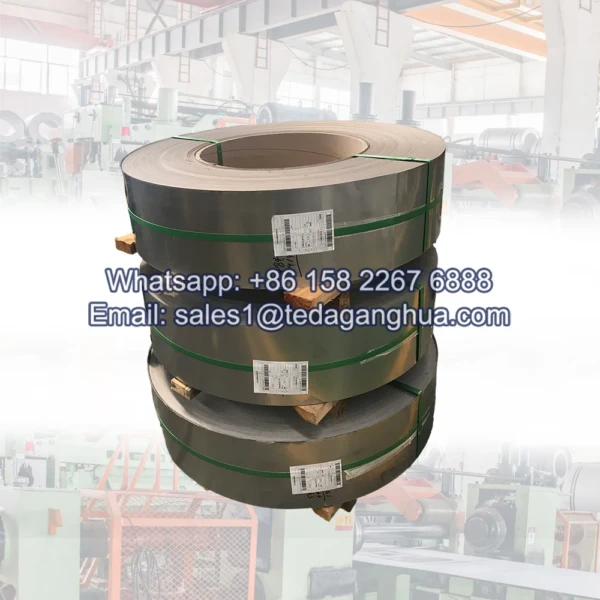

Bandes de garniture en acier inoxydable

Stainless steel trim strips are available in a wide range of widths, généralement de 5 mm à 150 mm, depending on decorative and functional requirements. Narrow strips are used for fine detailing, while wider strips are used for architectural design and structural decoration.
- Description
Stainless steel trim strips are narrow stainless steel strips used for decorative finishing, edge protection, and structural detailing. They are widely applied in construction, décoration intérieure, automotive trim, and industrial design.
Compared with standard stainless steel sheets, trim strips are cut into smaller widths to meet precise installation and design requirements.
Common Widths of Stainless Steel Trim Strips
Stainless steel trim strips are typically produced in coil or sheet slitting form and then cut into different widths depending on application needs.
Standard Width Range
| Largeur (mm) | Typical Application |
|---|---|
| 5 mm – 10 mm | Fine decorative edging |
| 10 mm – 20 mm | Furniture trim, cabinet edges |
| 20 mm – 30 mm | Wall decoration lines |
| 30 mm – 50 mm | Architectural interior trims |
| 50 mm – 80 mm | Building facade lines |
| 80 mm – 100 mm | Industrial finishing strips |
| 100 mm – 150 mm | Structural decorative panels |
Most Common Market Widths
In practical use, several standard widths are more widely used:
- 10 mm stainless steel trim strip
- 15 mm stainless steel trim strip
- 20 mm stainless steel trim strip
- 25 mm stainless steel trim strip
- 30 mm stainless steel trim strip
- 50 mm stainless steel trim strip
These sizes are commonly used because they balance aesthetics and installation convenience.
Why Width Matters in Stainless Steel Trim Strips
The width of trim strips directly affects:
1. Decorative Effect
- Narrow strips (5–20mm): bien, elegant design lines
- Medium strips (20–50 mm): modern architectural appearance
- Wide strips (50 mm+): strong visual impact
2. Structural Function
- Narrow strips: edge protection and detailing
- Wider strips: surface division and reinforcement appearance
3. Installation Flexibility
- Narrow strips are easier to bend and fit curves
- Wider strips are more stable for straight-line installation
Common Stainless Steel Grades Used for Trim Strips
| Grade | Caractéristiques | Applications |
|---|---|---|
| 201 | Cost-effective, usage décoratif | Garniture intérieure |
| 304 | Excellente résistance à la corrosion | Architectural and outdoor use |
| 316 | Haute résistance à la corrosion | Marine and coastal environments |
Surface Finishes for Trim Strips
Stainless steel trim strips are available in different surface finishes:
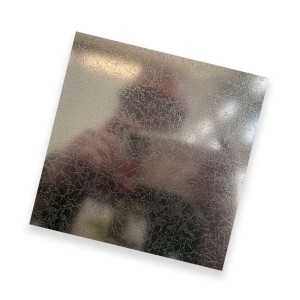
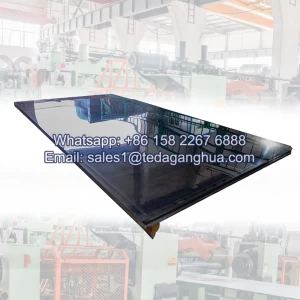
- Finition miroir (high gloss decorative use)
- Finition brossée (style architectural moderne)
- Finition satinée (matte elegant appearance)
- Revêtement de couleur PVD (or, noir, or rose, etc.)
Common Applications of Stainless Steel Trim Strips
- Interior wall decoration lines
- Ceiling decorative joints
- Floor transition strips
- Furniture edging
- Décoration intérieure d'ascenseur
- Kitchen and bathroom finishing
- Exterior building facade lines