- Description
321 Stainless Steel Plate Explained: How Titanium Stabilization Improves High-Temperature Performance
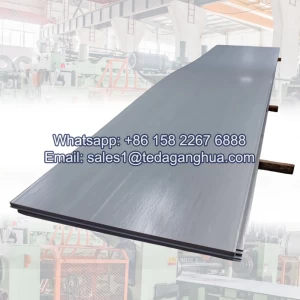
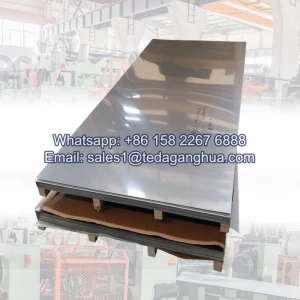
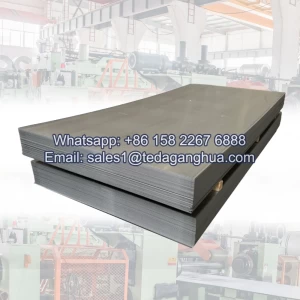
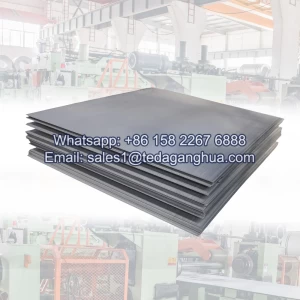
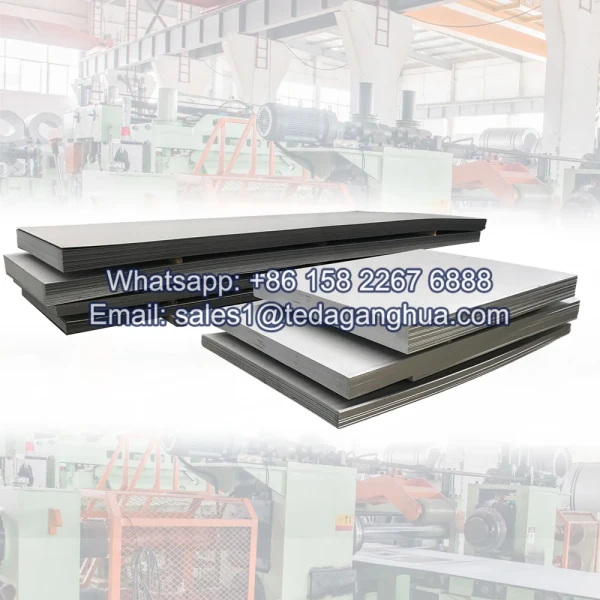
321 stainless steel plate is an austenitic stainless steel stabilized with titanium (De), designed specifically to improve performance in environnements à haute température. Il est largement utilisé dans petrochemical equipment, chaudières, systèmes d'échappement, et échangeurs de chaleur where thermal stability and corrosion resistance are critical.
Par rapport à 304 acier inoxydable, 321 offers better resistance to intergranular corrosion at elevated temperatures, making it a preferred choice for welded structures operating under heat stress.
1. Qu'est-ce que 321 Acier inoxydable?
| Élément | Fonction |
|---|---|
| Chrome (Cr) | Provides basic corrosion resistance |
| Nickel (Dans) | Improves toughness and stability |
| Titane (De) | Stabilizes carbon and prevents carbide precipitation |
The addition of titanium is the key factor that differentiates 321 from standard 304 acier inoxydable.
2. Role of Titanium (De) Stabilization
À des températures élevées (typically 450–850°C), carbon in stainless steel can combine with chromium to form chromium carbides, which reduces corrosion resistance at grain boundaries.
- Titanium binds with carbon more strongly than chromium
- Prevents chromium carbide formation
- Maintains corrosion resistance after welding and heating
| Matériel | Carbide Behavior | Corrosion Risk |
|---|---|---|
| 304 | Prone to carbide precipitation | Higher after welding |
| 321 | Stabilized by Ti, reduced precipitation | Lower intergranular corrosion risk |
3. Intergranular Corrosion Resistance Mechanism
- Welding or heating can deplete chromium at grain boundaries
- This leads to localized corrosion in standard stainless steels
- 321 prevents this by stabilizing carbon with titanium
This mechanism makes 321 ideal for welded structures exposed to continuous or cyclic heat.
4. High-Temperature Applications
| Industrie | Application Example |
|---|---|
| Petrochemical | Échangeurs de chaleur, piping systems |
| Boiler systems | Appareils à pression, steam lines |
| Automobile | Exhaust manifolds, high-temperature components |
| Équipement industriel | Pièces de four, systèmes de traitement thermique |
5. 321 contre 304 Acier inoxydable
| Propriété | 321 Acier inoxydable | 304 Acier inoxydable |
|---|---|---|
| Stabilité à haute température | Excellent | Modéré |
| Intergranular corrosion resistance | Haut | Lower after welding |
| Coût | Légèrement plus élevé | Inférieur |
| Meilleure utilisation | Heat-exposed welded structures | General-purpose applications |
6. Selection Considerations
- Choisir 321 for continuous or cyclic high-temperature environments
- Prefer 321 when welding is involved in critical structures
- Utiliser 304 when temperature exposure is limited
7. Capacité d’approvisionnement en acier inoxydable de Teda Ganghua
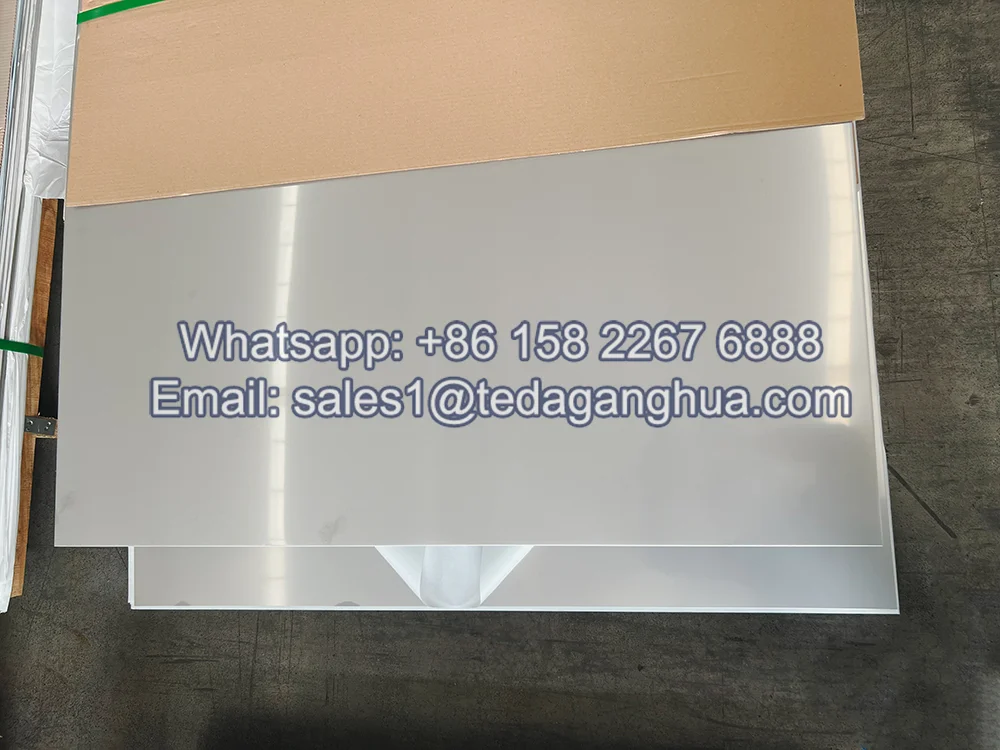
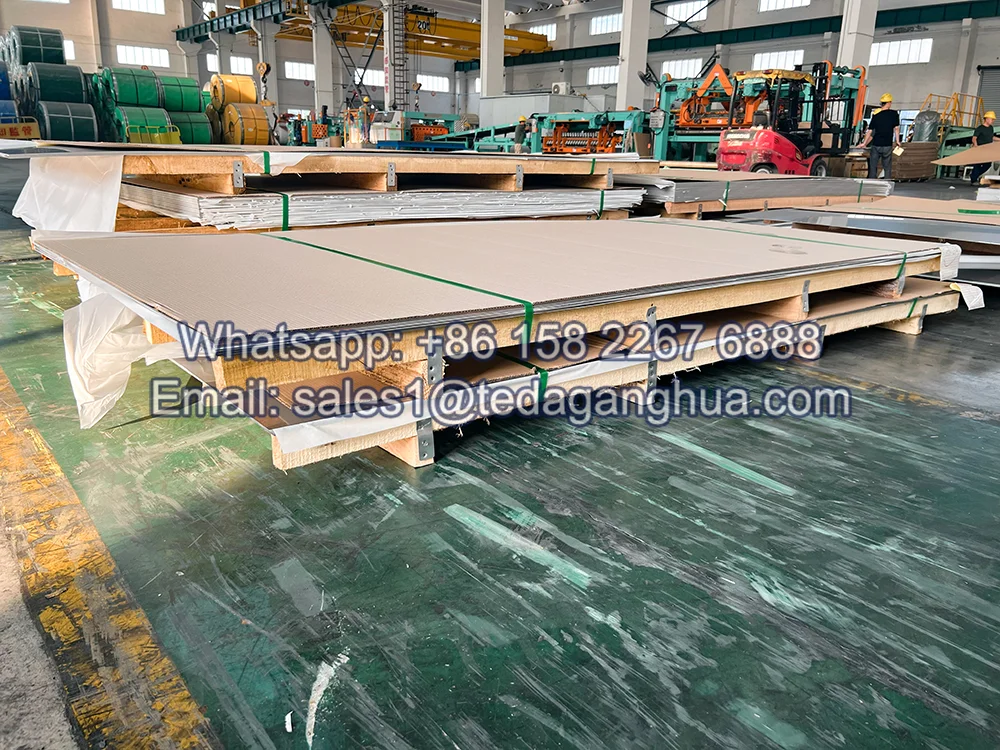
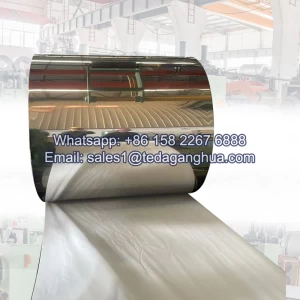
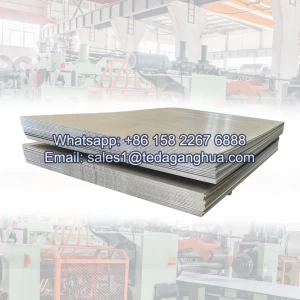
À Teda Ganghua, we supply high-quality 321 stainless steel plates with stable titanium-stabilized composition and reliable heat resistance performance. Our materials are widely used in petrochemical, chaudière, and industrial thermal systems.
Nous réalisons également des découpes de précision, finition de surface, and custom fabrication services to support high-temperature engineering projects.
Découvrez nos produits en acier inoxydable ici:
Produits en tôle d'acier inoxydable
Conclusion
321 stainless steel plate is a titanium-stabilized solution designed for high-temperature and welded environments. Its superior resistance to intergranular corrosion makes it a critical material in petrochemical and boiler applications.