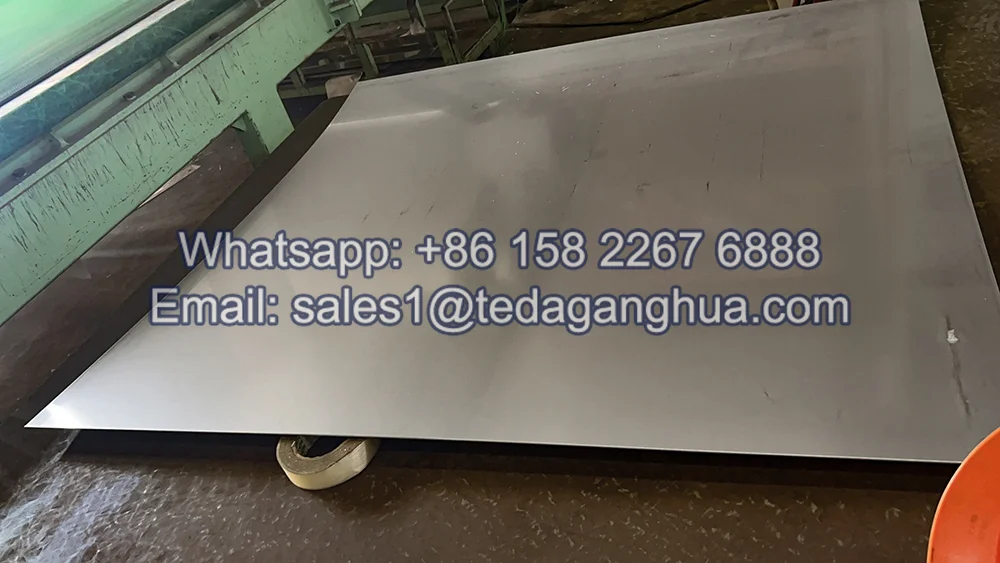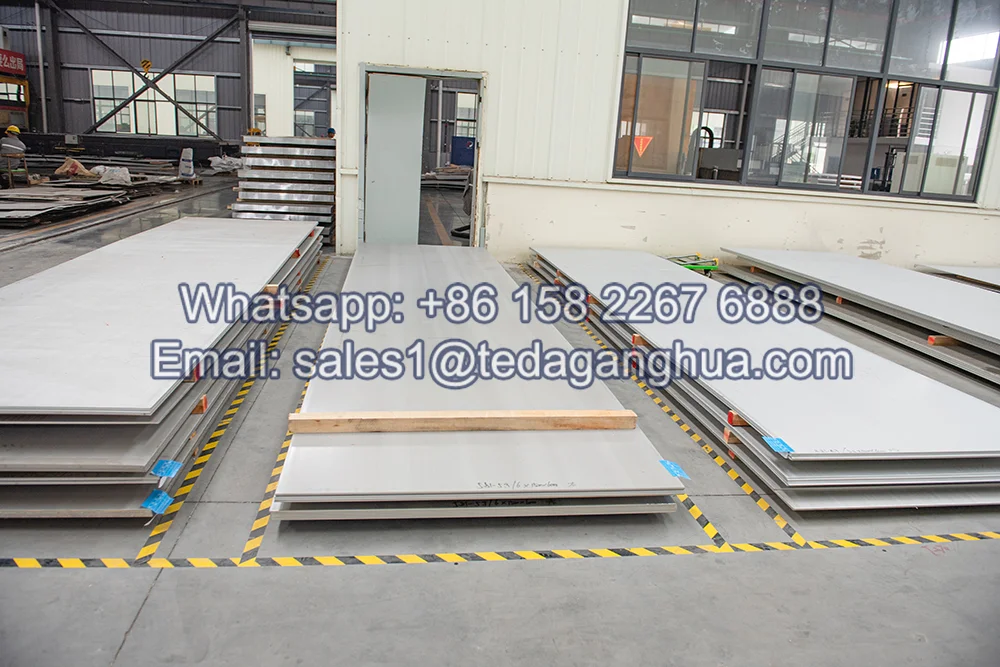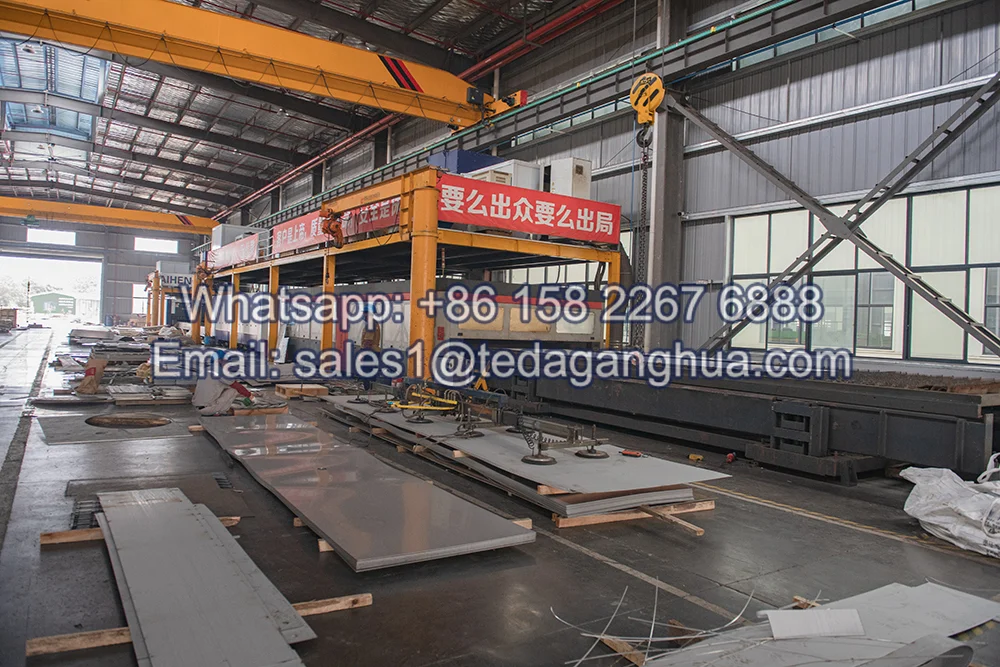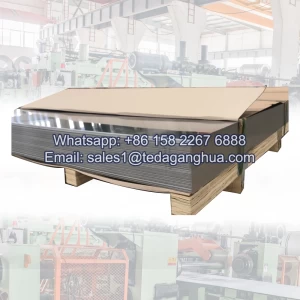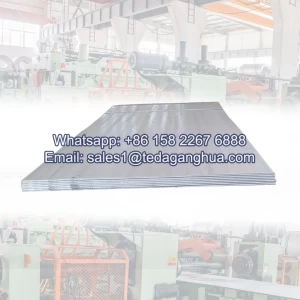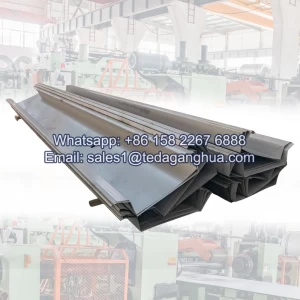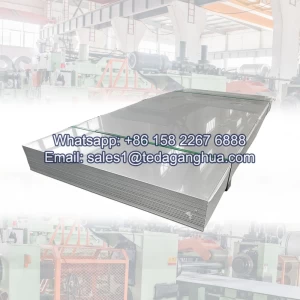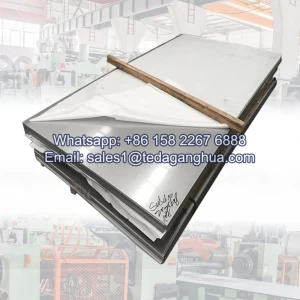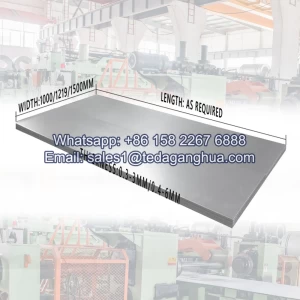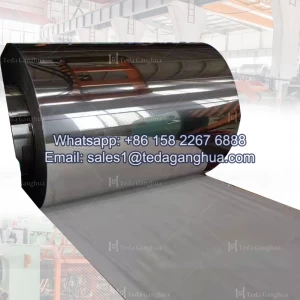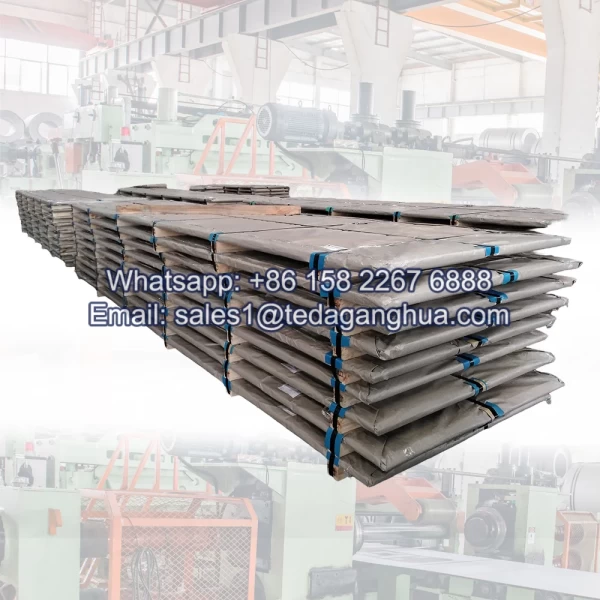
316 Placa de acero inoxidable
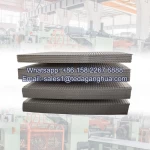
316 placa de acero inoxidable is more expensive primarily due to its higher alloy content, especially molybdenum and nickel, which deliver superior corrosion resistance and durability.
- Descripción
316 placa de acero inoxidable is an advanced austenitic stainless steel widely used in marina, químico, and high-corrosion environments. Compared with standard grades like 304, 316 is known for its superior corrosion resistance and durability, which is the main reason it is priced higher.
Understanding its composition and performance explains why 316 stainless steel plates are considered a premium material.
Composición química de 316 Acero inoxidable
| Elemento | Contenido (%) |
|---|---|
| Cromo (cr) | 16.0 – 18.0 |
| Níquel (En) | 10.0 – 14.0 |
| Molibdeno (Mes) | 2.0 – 3.0 |
| Carbón (do) | ≤ 0.08 |
| Manganeso (Minnesota) | ≤ 2.00 |
| Silicio (Y) | ≤ 1.00 |
| Hierro (fe) | Balance |
Key Alloy Element – Molybdenum (Mes)
La adición de molibdeno is the most important factor that differentiates 316 from other stainless steels. It significantly improves resistencia a la corrosión, especialmente en ambientes de cloruro.
Por qué 316 Stainless Steel Plate Is More Expensive
1. Higher Alloy Content
316 contains more nickel and added molybdenum, both of which are relatively expensive alloying elements. This directly increases the raw material cost.
2. Resistencia superior a la corrosión
The molybdenum content provides:
- Excelente resistencia a pitting and crevice corrosion
- Strong performance in marine and saltwater environments
- Better resistance to chemical corrosion
Esto hace 316 suitable for demanding applications where cheaper materials would fail.
3. Longer Service Life
Because of its enhanced corrosion resistance, 316 acero inoxidable:
- Requires less maintenance
- Has a longer lifespan
- Reduces replacement and repair costs
This adds value despite the higher initial price.
4. More Demanding Production and Processing
Higher alloy content can increase:
- Complejidad de fabricación
- Processing difficulty
- Quality control requirements
These factors also contribute to a higher overall cost.
Propiedades clave de 316 Placa de acero inoxidable
1. Excelente resistencia a la corrosión
Especially effective in chloride-rich and marine environments, outperforming 304 acero inoxidable.
2. Good High-Temperature Performance
Maintains strength and oxidation resistance at elevated temperatures.
3. Strong Mechanical Properties
Provides good strength combined with high ductility and toughness.
4. Good Weldability and Fabrication
Can be processed by soldadura, corte, y formando, though slightly more demanding than 304.
Propiedades mecánicas típicas
| Propiedad | Valor |
|---|---|
| Resistencia a la tracción | ≥ 520 MPa |
| Fuerza de producción | ≥ 205 MPa |
| Alargamiento | ≥ 40% |
| Densidad | ~7.98 g/cm³ |
Aplicaciones comunes
1. Marine Industry
- Componentes del barco
- Plataformas marinas
- Seawater systems
2. Chemical and Petrochemical
- Tanques de almacenamiento
- Tuberías
- Intercambiadores de calor
3. Industria alimentaria y médica
- Equipos de procesamiento de alimentos
- Pharmaceutical machinery
- Ambientes higiénicos
4. Construcción y Arquitectura
- High-end exterior cladding
- Corrosion-resistant structural components
316 vs 304 – Key Difference
| Característica | 316 Acero inoxidable | 304 Acero inoxidable |
|---|---|---|
| Molibdeno | 2–3% | Ninguno |
| Resistencia a la corrosión | Excelente | Bien |
| Costo | Más alto | Más bajo |
| Solicitud | Ambientes hostiles | uso general |
Teda Ganghua – Capacidad de suministro
Teda Ganghua suministros 316 stainless steel plates with reliable quality and processing support:
- Wide range of thickness and sizes
- Servicios de corte y fabricación personalizados.
- Estricta inspección de calidad
- Export packaging and global delivery
With strong inventory and processing capabilities, Teda Ganghua proporciona high-performance stainless steel solutions for demanding industries.