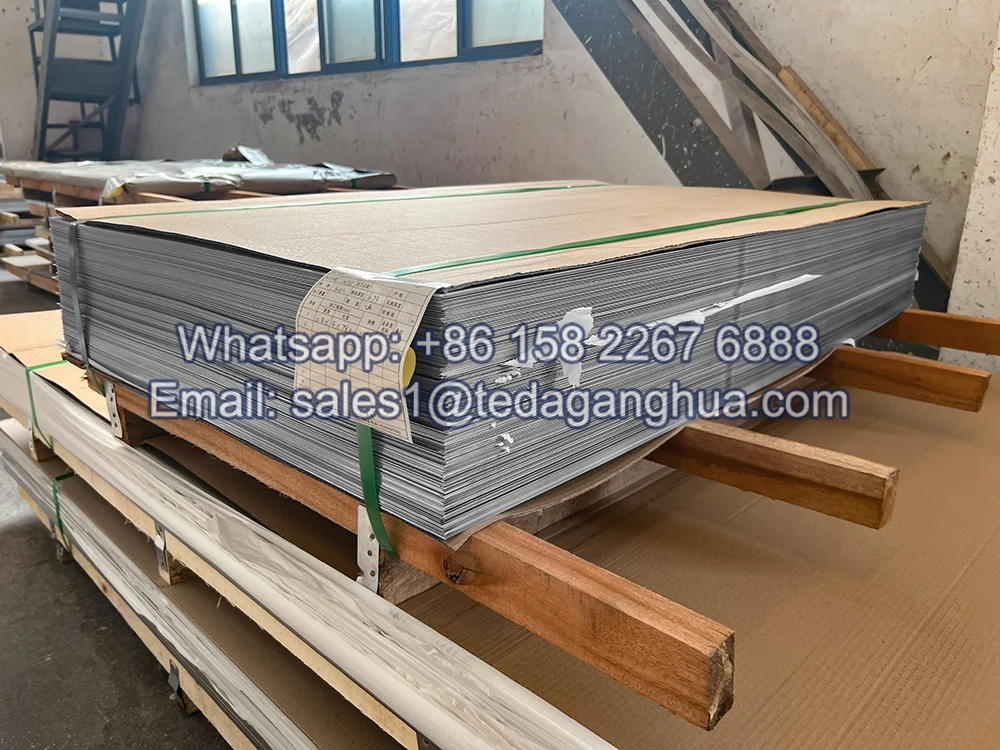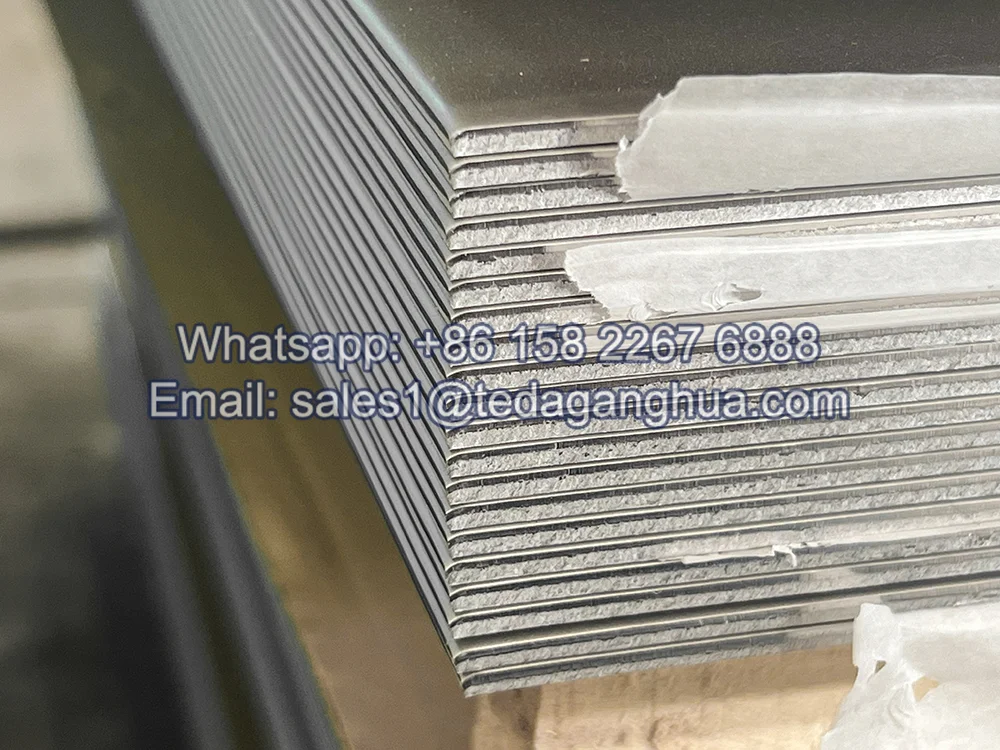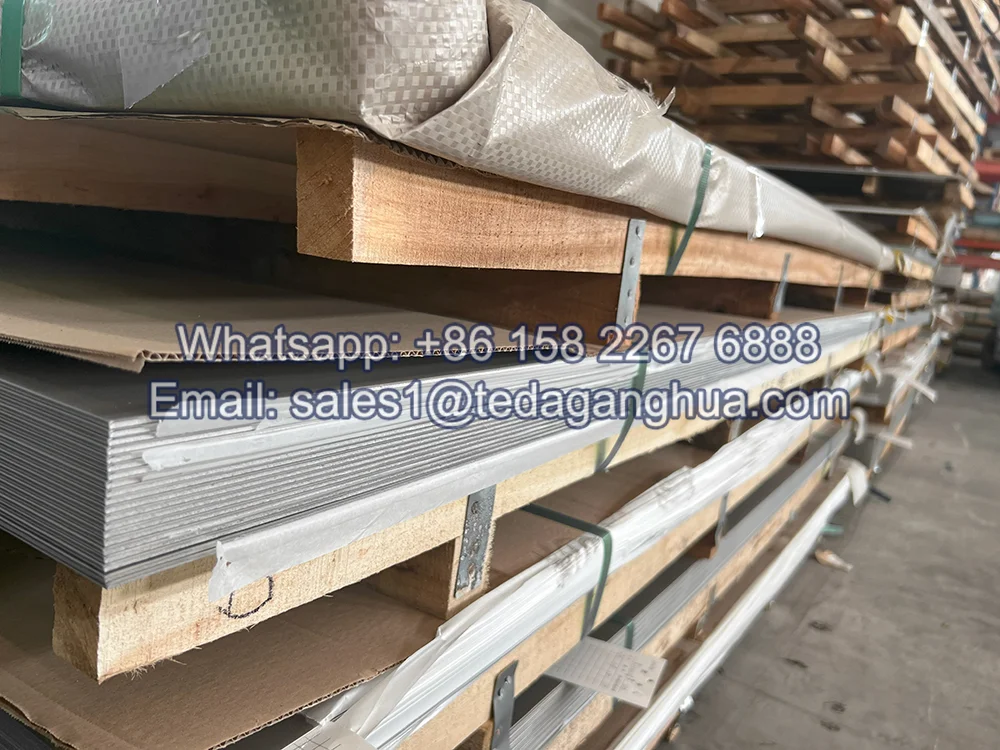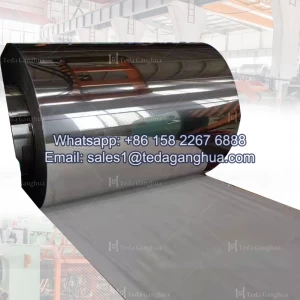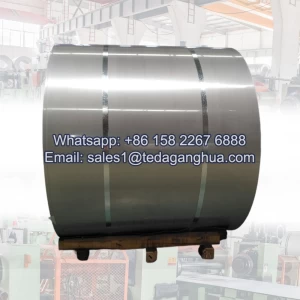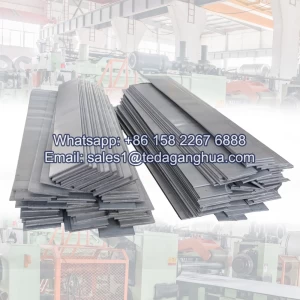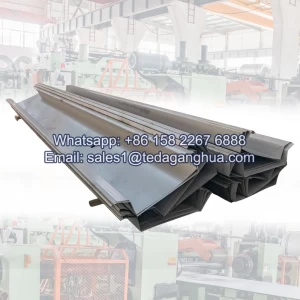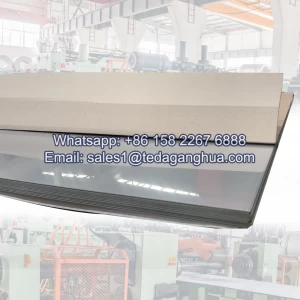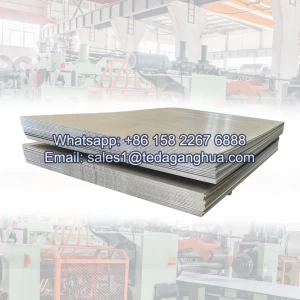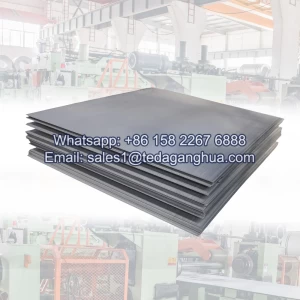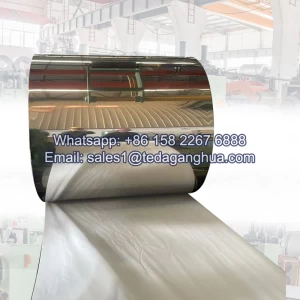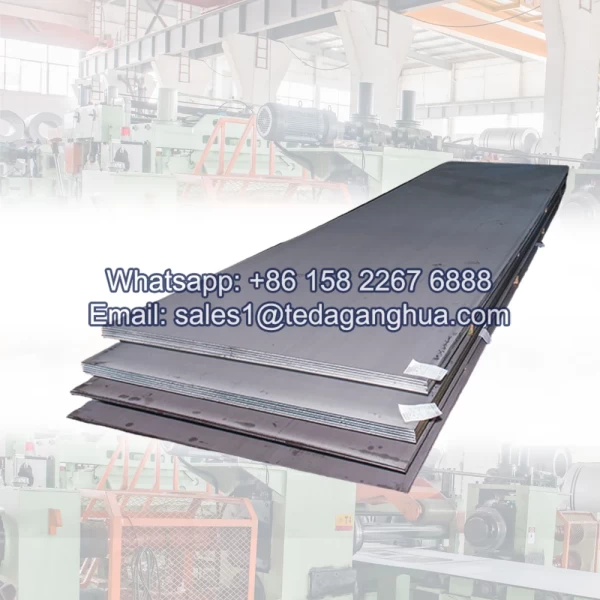
Warmgewalztes Weichstahlblech
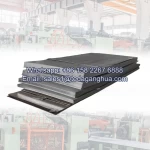
Hot rolled mild steel sheet is widely used due to its cost efficiency, excellent workability, and reliable mechanical performance. Common grades such as A36, S235, and Q235 are ideal for structural and general industrial use.
Hot rolled stainless steel sheets, einschließlich 304, 316, Und 2205, offer enhanced corrosion resistance and durability, making them suitable for demanding environments such as chemical processing and marine applications.
- Beschreibung
Hot rolled mild steel sheet is produced by rolling steel at high temperatures, typically above 900°C. At this temperature, the steel becomes more ductile and can be easily formed into sheets, Teller, und Spulen.
Hauptmerkmale:
- Scaled, rough surface finish
- Excellent formability and ductility
- Gute Schweißbarkeit
- Lower production cost compared to cold rolled steel
- Wider dimensional tolerances
It is widely used in structural and industrial applications where surface finish is not critical.
Common Grades of Hot Rolled Mild Steel Sheet
Hot rolled mild steel grades are defined by international standards such as ASTM, IN, and GB.
Typical Grade Comparison Table
| Grad | Standard | Streckgrenze (MPa) | Zugfestigkeit (MPa) | Verlängerung (%) |
|---|---|---|---|---|
| A36 | ASTM | ≥250 | 400–550 | 20–23 |
| S235 | IN 10025 | ≥235 | 340–470 | ≥26 |
| S275 | IN 10025 | ≥275 | 430–580 | ≥22 |
| S355 | IN 10025 | ≥355 | 470–630 | ≥22 |
| Q235 | GB/T 700 | ≥235 | 370–500 | 20–25 |
| Q345 | GB/T 700 | ≥345 | 470–630 | 20–22 |
| 1018 | AISI/SAE | 310–420 | 380–540 | ≥28 |
Grade Characteristics
- Low carbon steel (≤0.25%): Excellent forming and welding performance
- Medium carbon steel (0.25–0.6%): Höhere Festigkeit, lower ductility
- High carbon steel (>0.6%): Hohe Härte, limited formability
Industrial Properties of Hot Rolled Mild Steel
Mechanical Performance
- Moderate strength with good toughness
- High ductility suitable for bending and forming
- Stable mechanical properties for large-scale applications
Fabrication Advantages
- Easy to cut, drill, and weld
- Suitable for heavy fabrication and structural components
- Efficient for mass production
Oberflächeneigenschaften
- Oxide scale formed during hot rolling
- Not suitable for decorative applications without further processing
- Can be pickled or coated for improved appearance and corrosion resistance
Typische Anwendungen
- Structural frames and supports
- Construction materials
- Maschinenkomponenten
- Automotive structures
- Storage tanks and pipelines
Hot Rolled Stainless Steel Sheet – Grades and Industrial Performance
In industrial applications, hot rolled mild steel is often compared with hot rolled stainless steel due to differences in corrosion resistance and alloy composition.
Common Hot Rolled Stainless Steel Grades
Austenitischer Edelstahl
- 304: Universell einsetzbar, ausgezeichnete Korrosionsbeständigkeit
- 316: Improved corrosion resistance with molybdenum, suitable for marine and chemical environments
- 321: Stabilized for high-temperature applications
Ferritischer Edelstahl
- 430: Magnetisch, mäßige Korrosionsbeständigkeit
- 409: Good heat resistance, commonly used in exhaust systems
Duplex-Edelstahl
- 2205: High strength combined with excellent corrosion resistance
Industrial Performance of Stainless Steel
Mechanische Eigenschaften
- Good strength and ductility
- High impact resistance
- Suitable for both structural and precision applications
Korrosionsbeständigkeit
- Chromium content forms a protective oxide layer
- Superior resistance to oxidation and chemical exposure
- 316 and duplex grades perform well in chloride environments
Processing Characteristics
- Surface scale after hot rolling
- Requires pickling or descaling for improved corrosion performance
- Good weldability with proper procedures
Anwendungen
- Ausrüstung für die chemische Verarbeitung
- Marine- und Offshore-Strukturen
- Lebensmittelverarbeitungsmaschinen
- Oil and gas industry
- Architectural and industrial systems
Mild Steel vs Stainless Steel (Warmgewalzt)
| Eigentum | Mild Steel Sheet | Edelstahlblech |
|---|---|---|
| Zusammensetzung | Kohlenstoffarm | Mit Chrom legiert, Nickel |
| Korrosionsbeständigkeit | Niedrig | Hoch |
| Stärke | Mäßig | Mäßig bis hoch |
| Schweißbarkeit | Exzellent | Exzellent |
| Oberflächenbeschaffenheit | Rauh, skaliert | Scaled (kann eingelegt werden) |
| Anwendungen | Strukturell und industriell | Korrosive und Hochleistungsumgebungen |