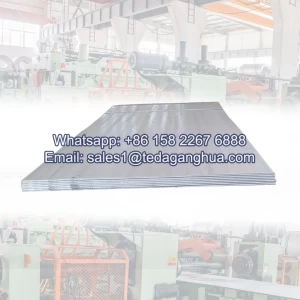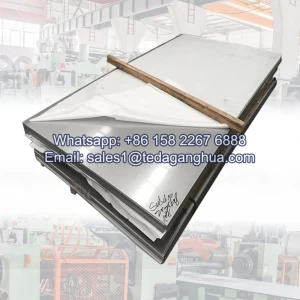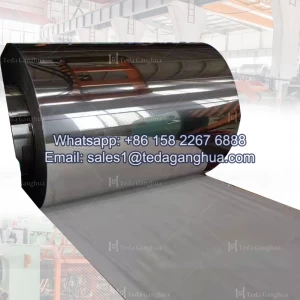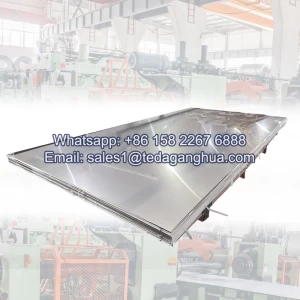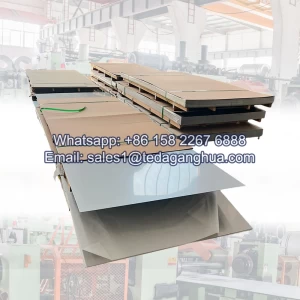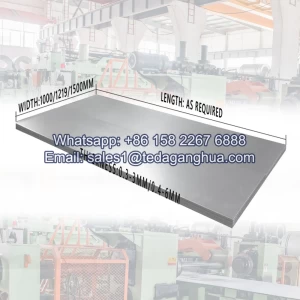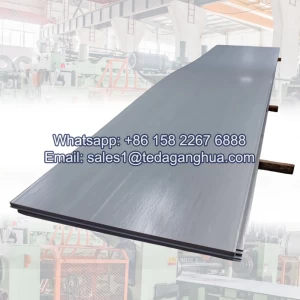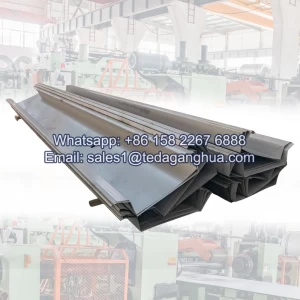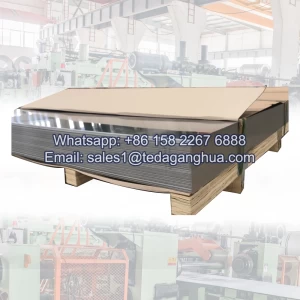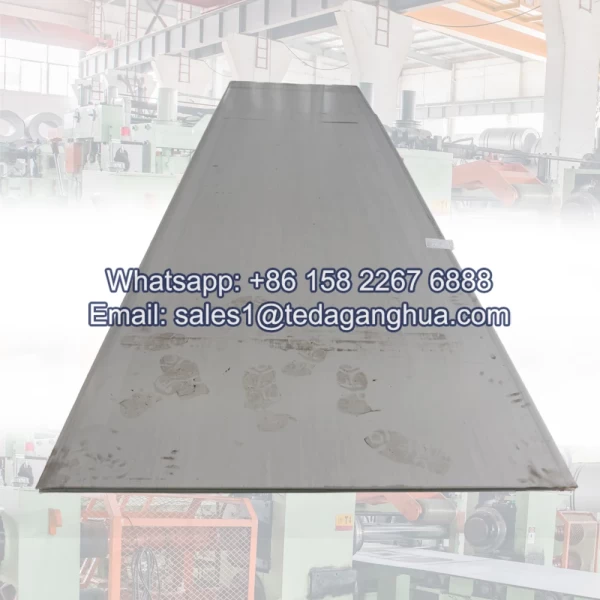
17 4 Edelstahlblech
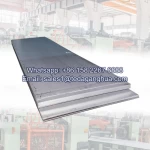
17-4 Edelstahlblech is a high-strength precipitation hardening grade that offers a unique balance of mechanical performance and corrosion resistance.
Compared with other stainless steel grades:
- Stronger than 304, 316, Und 430
- Less corrosion-resistant than 316 in harsh marine environments
- More suitable for mechanical and load-bearing applications
It is widely used in industries where strength is more critical than formability or extreme corrosion resistance.
- Beschreibung
17-4 Edelstahlblech (also known as precipitation hardening stainless steel) is a high-strength stainless steel grade widely used in aerospace, chemisch, Marine, and mechanical engineering applications.
It is characterized by:
- Hohe Festigkeit nach Wärmebehandlung
- Gute Korrosionsbeständigkeit
- Excellent mechanical stability
- Hardness adjustable through aging treatment
The designation “17-4” refers to its approximate composition:
- ~17% chromium
- ~4% nickel
- Plus copper and other alloying elements
Main Category: Ausscheidungshärtender Edelstahl
17-4 Edelstahl gehört dazu Ausscheidungshärtung (PH) stainless steel family, which includes other high-performance grades designed for strength and corrosion resistance.
Common PH Stainless Steel Grades
- 15-5 PH-Edelstahl
- 17-4 PH-Edelstahl
- 13-8 Mo stainless steel
- 17-7 PH-Edelstahl
These grades are heat-treatable and designed for applications requiring high strength without losing corrosion resistance.
17-4 Stainless Steel vs Other Stainless Steel Grades
1. Vergleich mit 304 Edelstahl
| Eigentum | 17-4 Edelstahl | 304 Edelstahl |
|---|---|---|
| Typ | Ausscheidungshärtung | Austenitisch |
| Stärke | Sehr hoch (wärmebehandelt) | Mäßig |
| Korrosionsbeständigkeit | Gut | Sehr gut (allgemeine Verwendung) |
| Hardening ability | Ja (aging treatment) | NEIN |
| Anwendungen | Luft- und Raumfahrt, shafts, Ventile | Essen, Küche, allgemeine Verwendung |
Key difference:
17-4 is used when strength is critical, während 304 wird verwendet für general corrosion resistance and fabrication ease.
2. Vergleich mit 316 Edelstahl
| Eigentum | 17-4 Edelstahl | 316 Edelstahl |
|---|---|---|
| Typ | PH-Edelstahl | Austenitischer Edelstahl |
| Korrosionsbeständigkeit | Gut | Exzellent (Marinequalität) |
| Stärke | Much higher | Mäßig |
| Chloride resistance | Mäßig | Exzellent |
| Anwendungen | Mechanische Teile, shafts | Marine, chemisch, medizinisch |
Key difference:
316 is preferred in high-corrosion environments, während 17-4 is chosen for load-bearing mechanical parts.
3. Vergleich mit 430 Edelstahl
| Eigentum | 17-4 Edelstahl | 430 Edelstahl |
|---|---|---|
| Typ | Ausscheidungshärtung | Ferritisch |
| Stärke | Sehr hoch | Low–medium |
| Korrosionsbeständigkeit | Gut | Mäßig |
| Magnetismus | Magnetisch | Magnetisch |
| Anwendungen | High-performance engineering | Haushaltsgeräte, Dekoration |
Key difference:
17-4 ist ein high-performance engineering material, während 430 ist ein cost-effective decorative grade.
4. Vergleich mit 17-7 PH-Edelstahl
| Eigentum | 17-4 Edelstahl | 17-7 PH-Edelstahl |
|---|---|---|
| Stärke | Höher | Hoch |
| Korrosionsbeständigkeit | Gut | Gut |
| Formbarkeit | Mäßig | Besser |
| Heat treatment | Aging hardened | Controlled transformation |
| Anwendungen | Strukturteile, shafts | Federn, flexible Komponenten |
Key difference:
17-7 is better for spring and flexible applications, während 17-4 is better for structural strength applications.
Hauptvorteile von 17-4 Edelstahlblech
- Very high mechanical strength after heat treatment
- Good corrosion resistance in industrial environments
- Stable dimensional performance under load
- Suitable for precision machining and engineering parts
- Can be supplied in solution-treated or aged conditions
Typische Anwendungen
- Luft- und Raumfahrtkomponenten
- Pump shafts and valve parts
- Ausrüstung für die chemische Verarbeitung
- Marine engineering components
- Mechanical fasteners and structural parts