GRAD
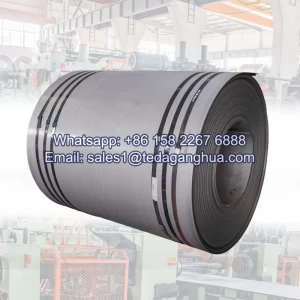
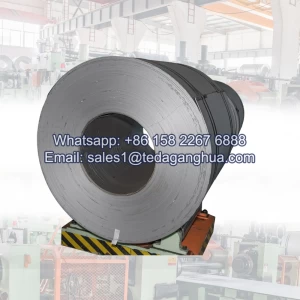
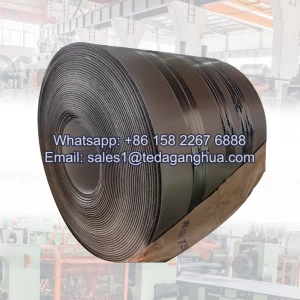
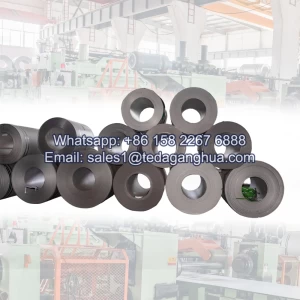
Grade 316L (UNS S31603, IN 1.4404) is molybdenum-bearing austenitic stainless steels, which is more resistant to general corrosion and pitting/crevice corrosion than the conventional chromium-nickel austenitic stainless steels such as Grade 304. The low carbon chemistry of 316L combined with an addition of nitrogen enables 316L to meet the mechanical properties of 316.
Grade 316L is often utilized in process streams containing chlorides or halides. The addition of molybdenum improves general corrosion and chloride pitting resistance. It also offers higher creep, stress-to-rupture, and tensile strength at elevated temperatures. In addition to excellent corrosion resistance and strength properties, the Grade 316L Cr-Ni-Mo alloys also provide excellent fabricability and formability .
EIGENSCHAFTEN
- Resists atmospheric corrosion, more resistant than grade 304
- Resists corrosion in polluted marine atmospheres
- Hitzebeständigkeit
- Heat treatment
- Prevention of product contamination
- Resistance to oxidation
- Easily welded and processed by standard shop fabrication practices.
- Hervorragende Formbarkeit
- Hot and cold working
- Beauty of appearance
- Ease of cleaning
- Good strength and toughness at cryogenic temperatures
- Ready availability of a wide range of product forms
CHEMICAL COMPOSITION AND PHYSICAL PROPERTIES FOR 316L
| Artikel | C% | Und% | Mn% | P% | S% | In% | Cr% | Mo% | N% | Andere |
|---|---|---|---|---|---|---|---|---|---|---|
| Min | — | — | — | — | 10.00 | 16.00 | 2.00 | — | — | |
| Max | 0.030 | 0.750 | 2.00 | 0.045 | 0.030 | 14.00 | 18.00 | 3.00 | 0.100 | — |
| Artikel | C% | Und% | Mn% | P% | S% | In% | Cr% | Mo% | N% | Andere |
|---|---|---|---|---|---|---|---|---|---|---|
| Min | — | — | — | — | 10.00 | 16.00 | 2.00 | — | — | |
| Max | 0.030 | 0.750 | 2.00 | 0.045 | 0.030 | 14.00 | 18.00 | 3.00 | 0.100 | — |
ANWENDUNG
- Food preparation equipment
- Chemical processing for inks, rayons, photographic chemicals….
- Laboratory benches and equipment
- Rubber, Kunststoffe, Fruchtfleisch & paper machinery
- Pollution control equipment
- Boat fitting, value and pump trim
- Wärmetauscher
- Pharmaceutical industries, surgical and medical implants, including pins, screws and orthopaedic implants
- Condensers, evaporators and tanks
- Architecture and marine applications
SPEZIFIKATIONEN
- ASTM A240M – Chrom und Chrom – Nickel-Edelstahlplatte, Bleche und Bänder für Druckbehälter und für allgemeine Anwendungen.
- ASTM 480M – Allgemeine Anforderungen für flachgewalzte rostfreie und hitzebeständige Stahlplatten, Blatt und Streifen
- IN 10088-2 (1.4404) – Edelstahl Technische Lieferbedingungen für Blech, Bleche und Bänder aus korrosionsbeständigem Stahl für allgemeine Zwecke
ROHSTOFFVERARBEITUNG & VERFÜGBARE GRÖSSEN
| Nr.1 | A rough, dull and non-uniform surface, welches durch Warmwalzen auf die angegebene Dicke entsteht, gefolgt von Glühen und Entzundern. | |||||
|---|---|---|---|---|---|---|
| Reichweite | 914 (3′) | 1000 | 1219 (4′) | 1250 | 1500 | 1524 (5′) |
| 3.0mm ~ 10.0mm | ◇ | ◆ | ◆ | ◆ | ◆ | ◆ |
| 12.0mm ~ 100,0 mm | ◆ | ◆ | ||||
| 2D | Eine Uniform, mattes silbergraues Finish, das durch Kaltwalzen mit anschließendem Glühen und Entzundern entsteht. | |||||
| Reichweite | 914 (3′) | 1000 | 1219 (4′) | 1250 | 1500 | 1524 (5′) |
| 0.3mm ~ 3,0 mm | ◇ | ◆ | ◆ | ◆ | ◆ | ◆ |
| 30GA ~ 11GA | ◇ | ◆ | ◆ | ◆ | ◆ | ◆ |
| 0.012″ ~ 0,1196″ | ◇ | ◆ | ◆ | ◆ | ◆ | ◆ |
| 2B (Mühlenfinish) |
Ein helles, Kaltgewalztes Finish, das auf die gleiche Weise wie das 2D-Finish resultiert, mit der Ausnahme, dass das geglühte und entzunderte Blech einen abschließenden leichten Walzdurchlauf durch polierte Walzen erhielt. Dies ist die allgemein verwendbare kaltgewalzte Oberfläche, oder als Vorstufe zum Polieren. | |||||
| Reichweite | 914 (3′) | 1000 | 1219 (4′) | 1250 | 1500 | 1524 (5′) |
| 0.3mm ~ 3,0 mm | ◇ | ◆ | ◆ | ◆ | ◆ | ◆ |
| 30GA ~ 11GA | ◇ | ◆ | ◆ | ◆ | ◆ | ◆ |
| 0.012″ ~ 0,1196″ | ◇ | ◆ | ◆ | ◆ | ◆ | ◆ |
| BA (Blankglühen) |
Ein stark reflektierendes, spiegelähnliches Finish, das durch Blankglühen unter sauerstofffreien Atmosphärenbedingungen nach dem Kaltwalzen mit polierten Walzen hergestellt wurde. | |||||
| Reichweite | 914 (3′) | 1000 | 1219 (4′) | 1250 | 1500 | 1524 (5′) |
| 0.3mm ~ 2,0 mm | ◇ | ◆ | ◆ | ◆ | ||
| 30GA ~ 14GA | ◇ | ◆ | ◆ | ◆ | ||
| 0.012″ ~ 0,0747″ | ◇ | ◆ | ◆ | ◆ | ||