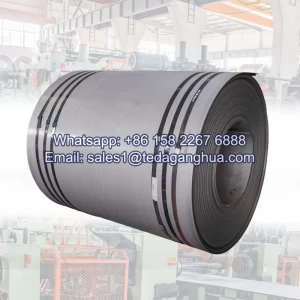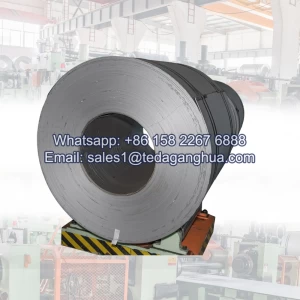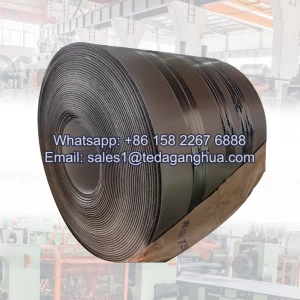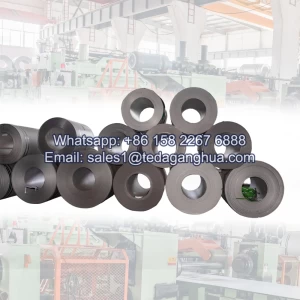
GRAD
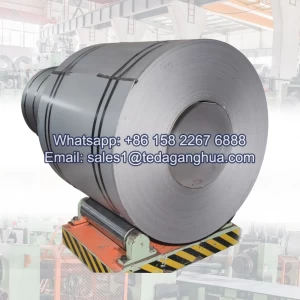
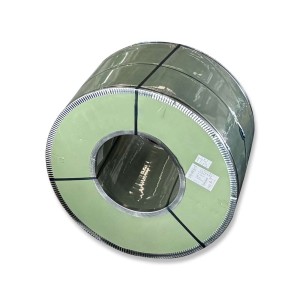
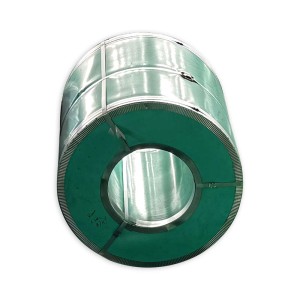
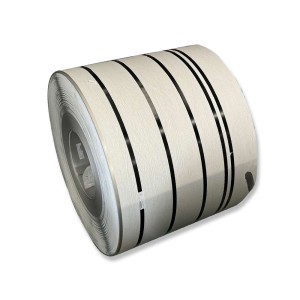
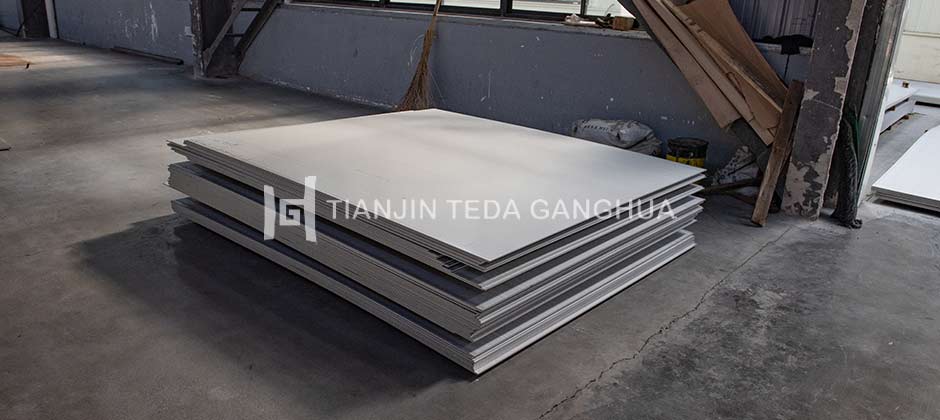
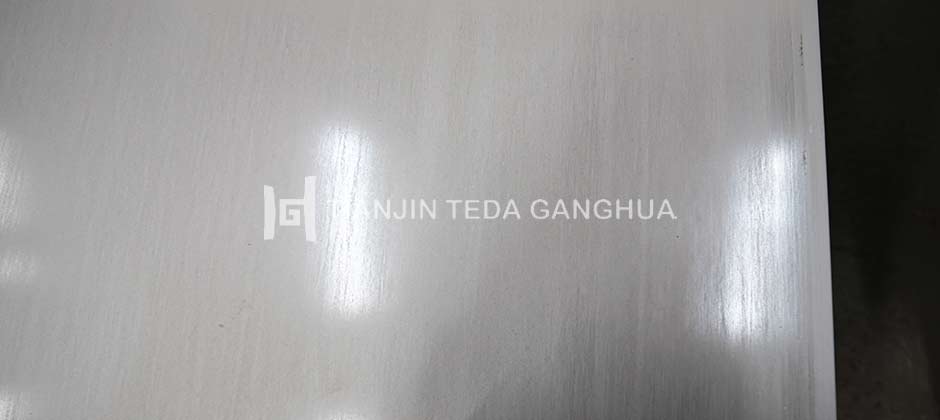
Grade 304/304L (UNS S30400/S30403, IN 1.4301/1.4307) is the most widely used Austenitic stainless steel. It accounts for more than 50% of all stainless steel produced, represents between 50% – 60% of consumption of stainless materials and fins applications in almost every industry.
Grade 304L is a low carbon chemistry of 304, it combined with an addition of nitrogen enables 304L to meet the mechanical properties of 304. Grade 304L often used to avoid possible sensitization corrosion in welded components.
It’s non-magnetic in the annealed condition, but can become slightly magnetic as a result of cold working or welding. It can be easily welded and processed by standard fabrication practices.
It has excellent resistance to atmospheric corrosion, moderately oxidizing and reducing environments, as well as intergranular corrosion in the as-welded condition. It also has excellent strength and toughness at cryogenic temperatures as well.
EIGENSCHAFTEN
- Korrosionsbeständigkeit
- Prevention of product contamination
- Resistance to oxidation
- Einfache Herstellung
- Hervorragende Formbarkeit
- Beauty of appearance
- Ease of cleaning
- High strength with low weight
- Good strength and toughness at cryogenic temperatures
- Ready availability of a wide range of product forms
CHEMISCHE ZUSAMMENSETZUNG UND PHYSIKALISCHE EIGENSCHAFTEN FÜR 304
| Artikel | C% | Und% | Mn% | P% | S% | In% | Cr% | N% | Andere |
|---|---|---|---|---|---|---|---|---|---|
| Min | — | — | — | — | — | 8.00 | 18.00 | — | — |
| Max | 0.08 | 1.00 | 2.00 | 0.045 | 0.030 | 10.50 | 20.00 | — | — |
| Artikel | Zugversuch | Härtetest | ||||
|---|---|---|---|---|---|---|
| 0.2%Y.S.. | 1%Y.S.. | T.S. | ER (%) | HRB | HV | |
| Min | 205 | — | 520 | 40 | — | — |
| Max | N/mm2 | — | N/mm2 | — | 90 | 200 |
CHEMICAL COMPOSITION AND PHYSICAL PROPERTIES FOR 304L
| Artikel | C% | Und% | Mn% | P% | S% | In% | Cr% | N% | Andere |
|---|---|---|---|---|---|---|---|---|---|
| Min | — | — | — | — | — | 8.00 | 17.50 | — | — |
| Max | 0.03 | 0.75 | 2.00 | 0.045 | 0.030 | 12.00 | 19.50 | 0.100 | — |
| Artikel | Zugversuch | Härtetest | ||||
|---|---|---|---|---|---|---|
| 0.2%Y.S.. | 1%Y.S.. | T.S. | ER (%) | HRB | HV | |
| Min | 170 | — | 485 | 40 | — | — |
| Max | Mpa | — | Mpa | — | 92 | — |
ANWENDUNG
- Kitchen benches, such as preparation areas, work surfaces
- Food and beverage processing, such as sinks, Kühlschränke, beer brewing, milk processing, wine making , cream dispensers and all types of dairy equipment
- Chemikalienbehälter
- Wärmetauscher
- Architectural trim and molding
- Petrochemical and petroleum refining
- Woven or welded screens for mining, quarrying and water filtration
- Medical or pharmaceutical processing for environments such as clean rooms
SPEZIFIKATIONEN
- ASTM A240M – Chrom und Chrom – Nickel-Edelstahlplatte, Bleche und Bänder für Druckbehälter und für allgemeine Anwendungen.
- ASTM 480M – Allgemeine Anforderungen für flachgewalzte rostfreie und hitzebeständige Stahlplatten, Blatt und Streifen
- IN 10088-2 (1.4301/1.4307) – Edelstahl Technische Lieferbedingungen für Blech, Bleche und Bänder aus korrosionsbeständigem Stahl für allgemeine Zwecke
ROHSTOFFVERARBEITUNG & VERFÜGBARE GRÖSSEN
| Nr.1 | A rough, dull and non-uniform surface, welches durch Warmwalzen auf die angegebene Dicke entsteht, gefolgt von Glühen und Entzundern. | |||||
|---|---|---|---|---|---|---|
| Reichweite | 914 (3′) | 1000 | 1219 (4′) | 1250 | 1500 | 1524 (5′) |
| 3.0mm ~ 10.0mm | ◇ | ◆ | ◆ | ◆ | ◆ | ◆ |
| 12.0mm ~ 100,0 mm | ◆ | ◆ | ||||
| 2D | Eine Uniform, mattes silbergraues Finish, das durch Kaltwalzen mit anschließendem Glühen und Entzundern entsteht. | |||||
| Reichweite | 914 (3′) | 1000 | 1219 (4′) | 1250 | 1500 | 1524 (5′) |
| 0.3mm ~ 3,0 mm | ◇ | ◆ | ◆ | ◆ | ◆ | ◆ |
| 30GA ~ 11GA | ◇ | ◆ | ◆ | ◆ | ◆ | ◆ |
| 0.012″ ~ 0,1196″ | ◇ | ◆ | ◆ | ◆ | ◆ | ◆ |
| 2B (Mühlenfinish) |
Ein helles, Kaltgewalztes Finish, das auf die gleiche Weise wie das 2D-Finish resultiert, mit der Ausnahme, dass das geglühte und entzunderte Blech einen abschließenden leichten Walzdurchlauf durch polierte Walzen erhielt. Dies ist die allgemein verwendbare kaltgewalzte Oberfläche, oder als Vorstufe zum Polieren. | |||||
| Reichweite | 914 (3′) | 1000 | 1219 (4′) | 1250 | 1500 | 1524 (5′) |
| 0.3mm ~ 6.0mm | ◇ | ◆ | ◆ | ◆ | ◆ | ◆ |
| 30GA ~ 4GA | ◇ | ◆ | ◆ | ◆ | ◆ | ◆ |
| 0.012″ ~ 0.2242″ | ◇ | ◆ | ◆ | ◆ | ◆ | ◆ |
| BA (Blankglühen) |
Ein stark reflektierendes, spiegelähnliches Finish, das durch Blankglühen unter sauerstofffreien Atmosphärenbedingungen nach dem Kaltwalzen mit polierten Walzen hergestellt wurde. | |||||
| Reichweite | 914 (3′) | 1000 | 1219 (4′) | 1250 | 1500 | 1524 (5′) |
| 0.3mm ~ 2,0 mm | ◇ | ◆ | ◆ | ◆ | ||
| 30GA ~ 14GA | ◇ | ◆ | ◆ | ◆ | ||
| 0.012″ ~ 0,0747″ | ◇ | ◆ | ◆ | ◆ | ||