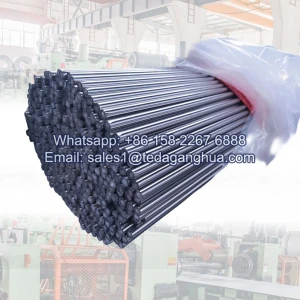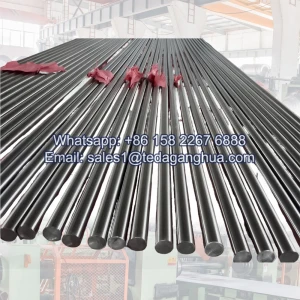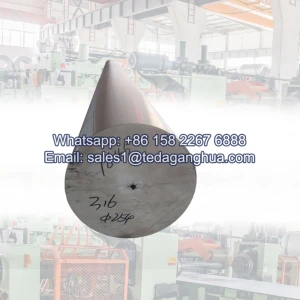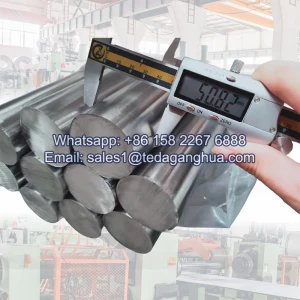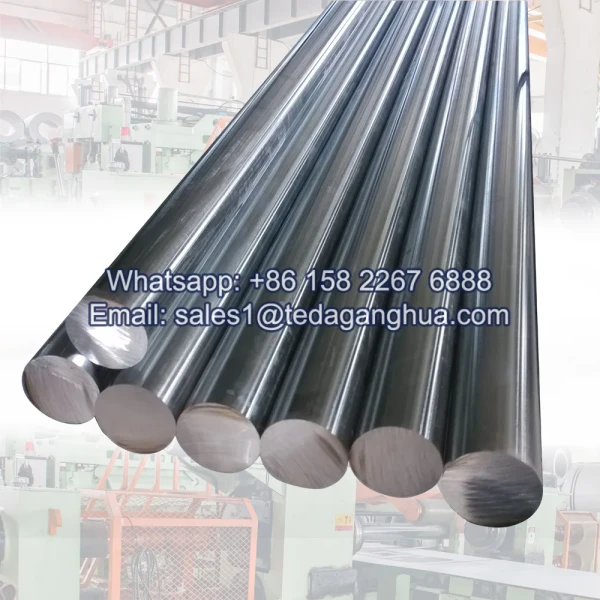
- 설명
바 스테인레스 스틸: Processing and Manufacturing Techniques for High-Performance Applications
Stainless steel bar production involves a series of controlled metallurgical and mechanical processes designed to ensure strength, 치수 정확도, 표면 품질. From hot working to final finishing, each step directly affects the performance of the final product in machining, 건설, 산업 응용 분야.
Different stainless steel grades such as 304, 316, 321, 347, and precipitation-hardened alloys require slightly different processing routes, but the core manufacturing principles remain consistent across the industry.
1. Raw Material Selection and Melting
The process begins with high-quality raw materials, including scrap steel and alloying elements such as chromium, 니켈, 및 몰리브덴. These are melted in electric arc furnaces or AOD refining systems to achieve precise chemical composition control.
- Electric Arc Furnace (EAF) melting for initial steel production
- AOD refining to reduce carbon and impurities
- Strict alloy composition control for grade accuracy
2. Continuous Casting Process
After refining, molten stainless steel is cast into billets or blooms through continuous casting. This step determines the internal structure and uniformity of the material.
- Produces semi-finished steel billets
- Improves internal density and reduces defects
- Ensures consistent chemical distribution
3. Hot Rolling Process
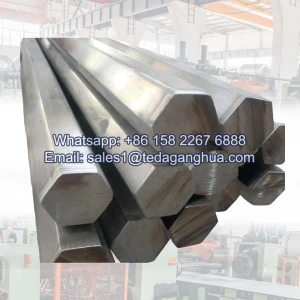
Hot rolling is used to transform billets into bar shapes at high temperatures. This stage defines the basic dimensions and mechanical properties of stainless steel bars.
| Process Step | 온도 범위 | 주요 목적 |
|---|---|---|
| Reheating | 1100°C – 1250°C | Prepare billet for deformation |
| 구르는 | Above recrystallization temperature | Shape formation and grain refinement |
| 냉각 | Controlled air cooling | Stabilize mechanical structure |
4. Annealing and Heat Treatment
Annealing is used to relieve internal stress, improve ductility, and stabilize the microstructure of stainless steel bars. For certain grades like 17-4PH, solution treatment and aging are required.
- Solution annealing for austenitic steels (304, 316)
- Stress relief to improve machinability
- Precipitation hardening for 17-4PH grades
5. Cold Drawing and Precision Sizing
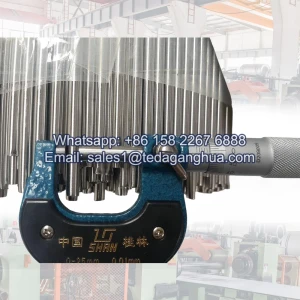
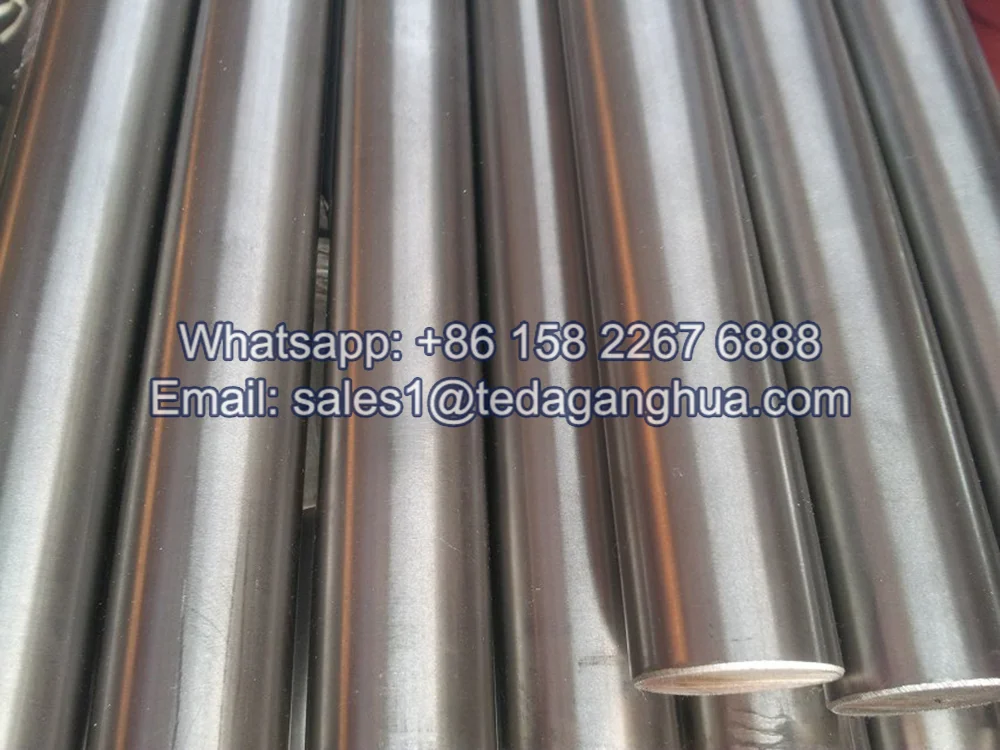
Cold drawing improves dimensional accuracy and surface finish. This process is widely used for bright bars and precision machining applications.
- Improves diameter tolerance and straightness
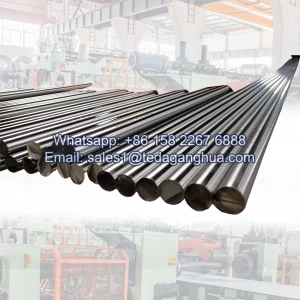
- Enhances surface smoothness and brightness
- Increases mechanical strength through work hardening
6. Surface Finishing Processes
Surface treatment is essential for corrosion resistance and aesthetic requirements. Different finishing methods are selected based on application needs.
| 마감 유형 | 방법 | 애플리케이션 |
|---|---|---|
| Hot Rolled Black | As-rolled surface | Structural engineering |
| 절인 & Passivated | Acid cleaning | Corrosion-resistant industrial use |
| Bright Bar | Cold drawing & 세련 | Machining and precision parts |
| Polished Surface | Mechanical polishing | Decorative and hygienic applications |
7. 절단, Straightening and Packaging
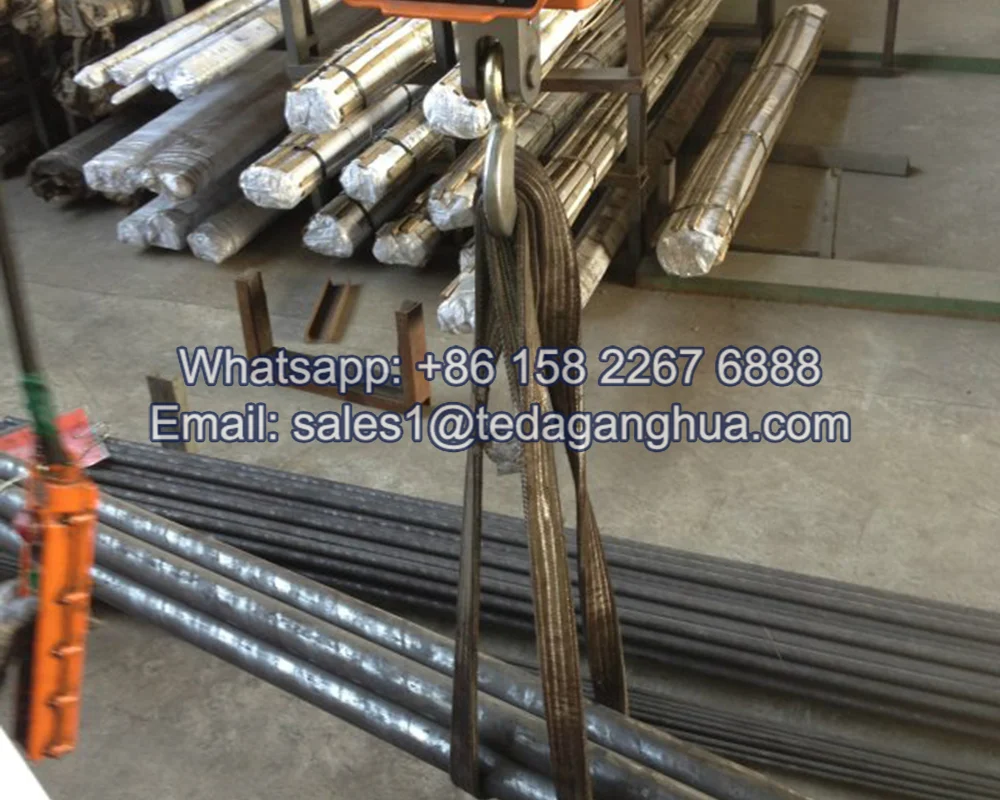
Final processing includes cutting to length, straightening, and bundling for shipment. These steps ensure usability in downstream manufacturing and construction.
- Precision cutting to customer-required lengths
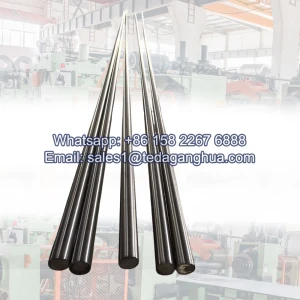
- Straightening to remove bending deformation
- Steel strap bundling for export packaging
- Moisture-proof wrapping for corrosion protection
Industrial Applications of Processed Stainless Steel Bars
Properly processed stainless steel bars are widely used across industries due to their mechanical reliability and corrosion resistance.
- Machined components and precision engineering parts
- Construction structural supports and frameworks
- 패스너, 볼트, and mechanical connectors
- Food processing and sanitary equipment
- Chemical and petrochemical plant systems
산업 공급망에서, 같은 회사 테다강화 provide stainless steel bar products with stable metallurgy, 정밀 가공, and export-grade packaging to ensure consistent performance in downstream manufacturing.
For structural stainless steel bar and profile products, 방문하다
스테인레스 스틸 프로파일 솔루션 to explore industrial-grade bar materials and engineered sections.
Advantages of Controlled Stainless Steel Bar Processing
- Improved dimensional accuracy for machining
- Enhanced corrosion resistance through proper finishing
- Stable mechanical performance across applications
- Long service life with reduced failure risk
자주하는 질문
1. What are the main processes in stainless steel bar production?
The main processes include melting, continuous casting, 열간 압연, 가열 냉각, 콜드 드로잉, 표면 마무리, 그리고 절단.
2. Why is annealing important for stainless steel bars?
Annealing reduces internal stress and improves ductility and machinability of the material.
3. What is the difference between hot rolled and cold drawn bars?
Hot rolled bars are used for structural applications, while cold drawn bars offer higher precision and smoother surfaces.
4. Why is pickling and passivation necessary?
It removes oxidation and restores corrosion resistance by rebuilding the protective chromium oxide layer.
5. Does Teda Ganghua provide processed stainless steel bars?
예, Teda Ganghua supplies stainless steel bars with multiple processing options including cutting, 마무리 손질, and custom sizing.