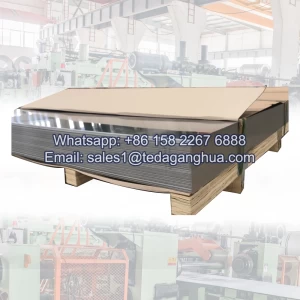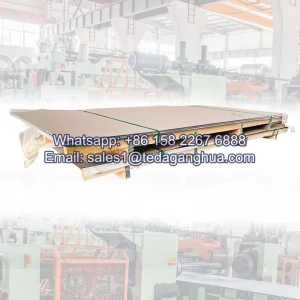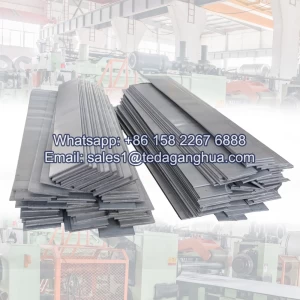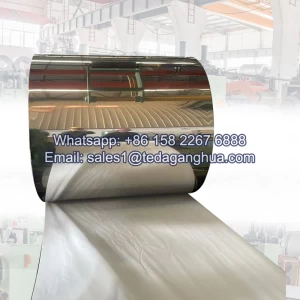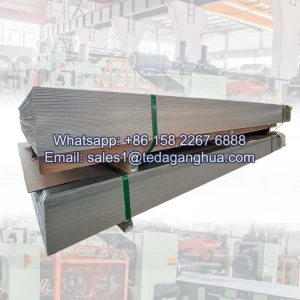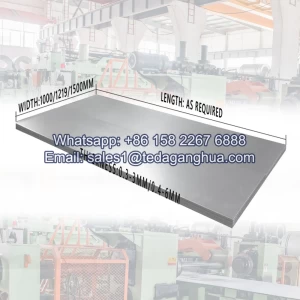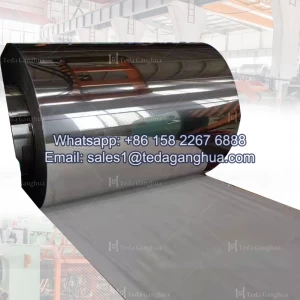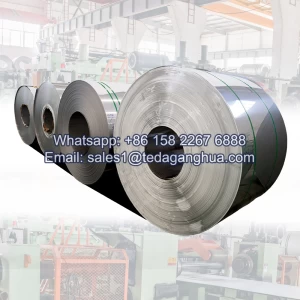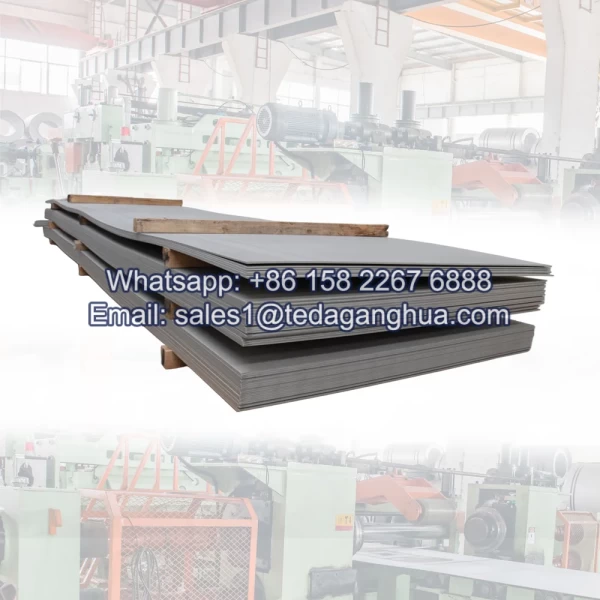
소둔 스테인레스 강판


Annealing is a critical stage in stainless steel sheet production. By applying controlled heat treatment, the material transitions from a hardened, stressed condition into a ductile and stable form. This ensures consistent performance in downstream manufacturing and improves the overall quality of the final product.
- 설명
Annealed stainless steel sheet is produced through a controlled heat treatment process designed to restore ductility, refine grain structure, and eliminate internal stress introduced during cold working. This process is essential for improving forming performance and ensuring consistent mechanical properties.
Definition of Annealing in Stainless Steel
Annealing is a metallurgical process involving three key stages:
- Heating the material to a specified temperature
- Holding at that temperature to allow structural transformation
- Controlled cooling to achieve the desired microstructure
The objective is to soften the material, reduce hardness, and enhance ductility by promoting recrystallization and stress relief.
Manufacturing Process of Annealed Stainless Steel Sheet
1. 열간압연
Stainless steel slabs are heated and rolled into coils or plates. This stage forms the اولیه thickness and structure.
2. 냉간 압연
The material is further reduced in thickness at room temperature. This increases strength but leads to:
- Work hardening
- Increased dislocation density
- 연성이 감소함
- Residual internal stress
Cold rolling creates a strained microstructure that requires annealing.
3. Annealing Heat Treatment (Core Process)
Annealing is typically performed after cold rolling to restore material properties.
프로세스 단계:
Heating Stage
- 오스테나이트 등급: typically 1000°C to 1100°C
- 페라이트 등급: typically 700°C to 900°C
Soaking Stage
- The material is held at temperature to allow uniform recrystallization
- Carbides are dissolved in austenitic structures
Cooling Stage
- Rapid cooling (용액 어닐링) prevents carbide precipitation
- Controlled atmosphere may be used to prevent oxidation
Microstructure Evolution During Annealing
The annealing process involves three metallurgical mechanisms:
- Recovery: reduction of internal defects and dislocations
- Recrystallization: formation of new, strain-free grains
- Grain growth: enlargement of grains for improved ductility
This transformation results in a uniform and stable microstructure, which enhances mechanical consistency and corrosion resistance.
Common Annealing Methods
| Annealing Type | Process Description | Application Purpose |
|---|---|---|
| 용액 어닐링 | High-temperature heating followed by rapid cooling | Improves corrosion resistance and restores structure |
| 광휘 소둔 | Annealing in protective atmosphere (H₂ or N₂) | 깨끗하게 생산, oxide-free surface finish |
| Stress Relief Annealing | Low-temperature heat treatment | Reduces residual stress without major structural change |
| Full Annealing | Heating above critical temperature with slow cooling | Maximizes softness and machinability |
Key Process Parameters
| 매개변수 | 일반적인 범위 / 상태 | Influence on Material |
|---|---|---|
| 온도 | 700°C – 1100°C | Controls recrystallization behavior |
| 보유 시간 | Several minutes to hours | Ensures uniform heat penetration |
| Cooling Method | Air cooling or rapid quenching | Affects carbide precipitation |
| Atmosphere Control | Vacuum or inert gas | Prevents oxidation and scaling |
| Cold Reduction Ratio | 40% – 85% | Determines final grain size |
Process Advantages
- Restores ductility and formability
- Eliminates internal stress from cold working
- Produces uniform grain structure
- Improves dimensional stability
- Enhances corrosion resistance (especially after solution annealing)
Application Suitability
Annealed stainless steel sheet is widely used in processes requiring:
- Deep drawing and stamping
- Precision bending and forming
- 용접 및 제작
- Surface finishing processes