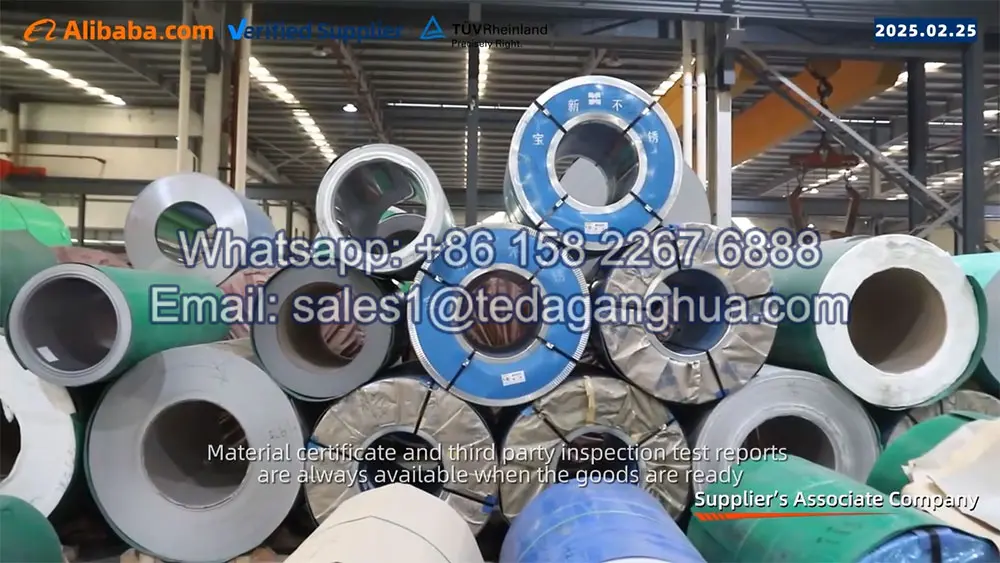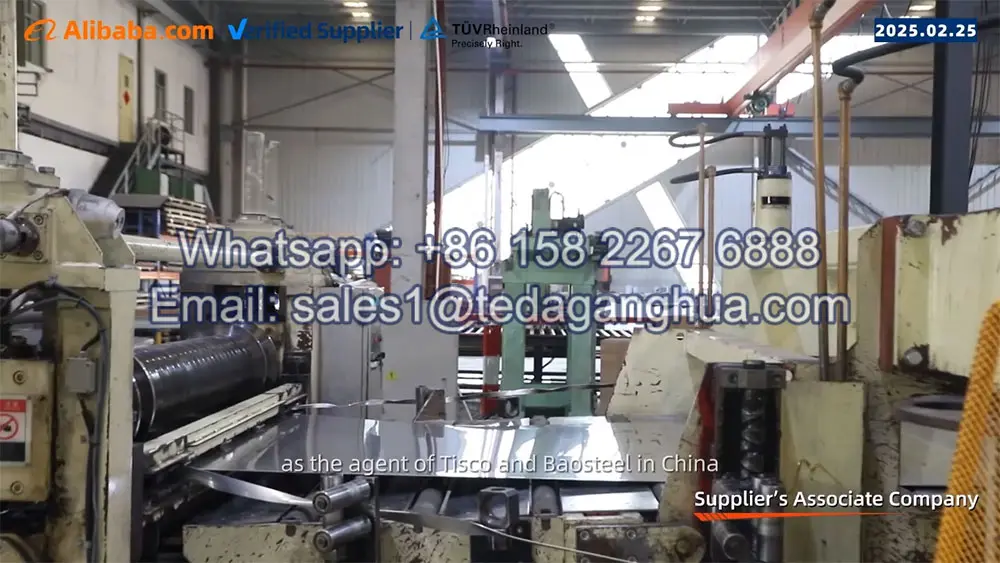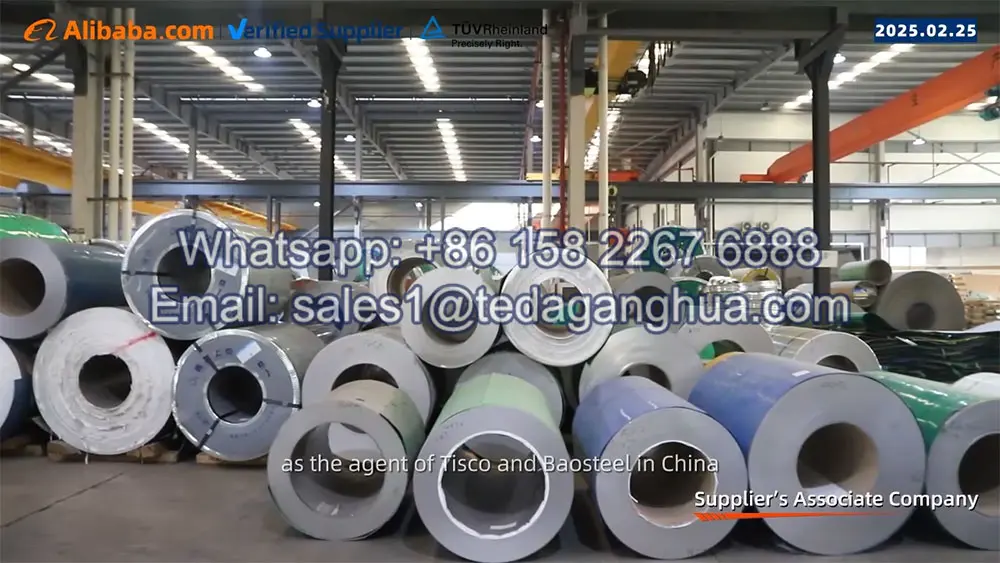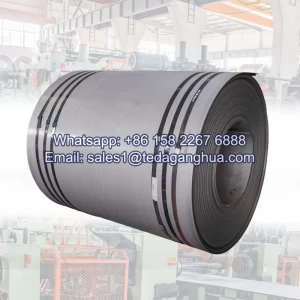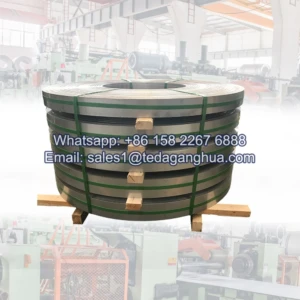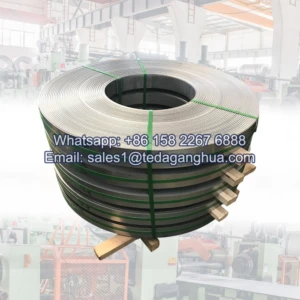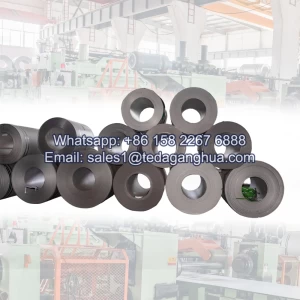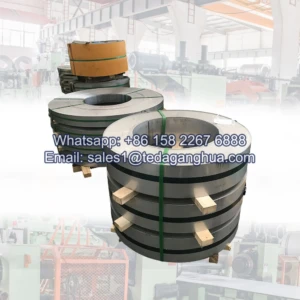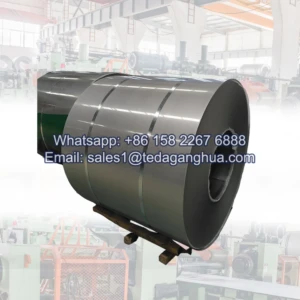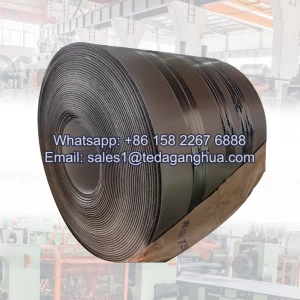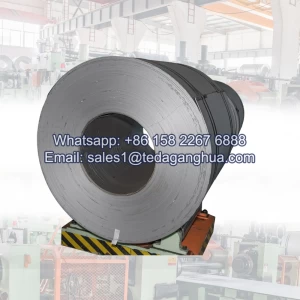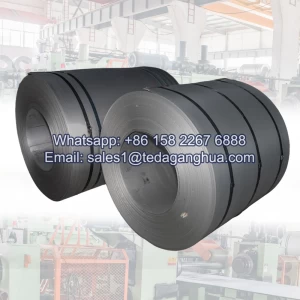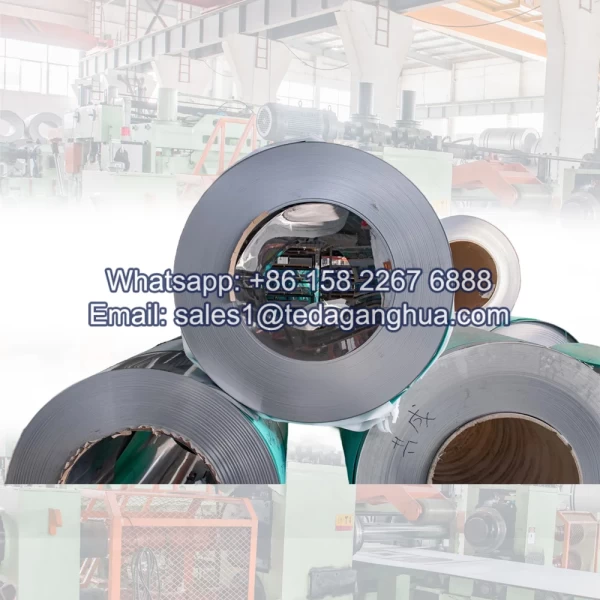
ステンレス鋼冷間圧延コイル
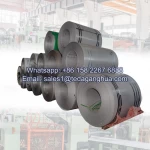
Stainless steel cold rolled coil and cold rolled carbon steel coil differ mainly in:
-
化学組成 (クロム含有量)
-
耐食性
-
Mechanical performance
-
Surface finish quality
-
長期耐久性
Stainless steel cold rolled coil is ideal for corrosion-resistant, 装飾的な, and hygienic environments. Carbon steel cold rolled coil is more economical for structural applications where corrosion protection can be added separately.
- 説明
Stainless steel cold rolled coil is produced by cold reducing stainless steel hot rolled coils, followed by annealing and surface finishing. Compared with ordinary cold rolled carbon steel coil, stainless steel cold rolled coil provides superior corrosion resistance, different mechanical behavior, and distinct application advantages.
Understanding the differences between these two materials is essential for proper material selection.
1. Main Differences Between Stainless Steel and Carbon Steel Cold Rolled Coils
1.1 Chemical Composition Difference
ステンレス鋼冷間圧延コイル
Contains a minimum of 10.5% クロム (Cr), which forms a passive oxide film on the surface to prevent corrosion.
Typical alloy elements:
-
クロム (Cr)
-
ニッケル (で)
-
モリブデン (モー)
-
マンガン (ん)
-
低炭素含有量 (varies by grade)
Common grades:
-
201
-
304 / 304L
-
316 / 316L
-
430
Cold Rolled Carbon Steel Coil
Primarily composed of:
-
鉄 (鉄)
-
炭素 (C)
-
Small amounts of manganese (ん)
Does not contain sufficient chromium to resist corrosion and usually requires painting, コーティング, or galvanizing for protection.
1.2 耐食性
| 財産 | ステンレス鋼冷間圧延コイル | Carbon Steel Cold Rolled Coil |
|---|---|---|
| 耐食性 | 素晴らしい | 低い (requires coating) |
| Rust Resistance | Self-protecting oxide layer | Easily rusts in humid environments |
| Chemical Resistance | Good to excellent (depends on grade) | 貧しい |
Stainless steel performs well in marine, 化学薬品, 食べ物, and humid environments, while carbon steel is mainly used in dry structural applications.
1.3 Mechanical Properties Comparison
冷間圧延により、加工硬化により両方の材料の強度が向上します.
ステンレス鋼 (例: 304 焼きなまし状態)
| 財産 | 代表値 |
|---|---|
| 降伏強さ | ≧205MPa |
| 抗張力 | ≧515MPa |
| 伸長 | ≥40% |
| 硬度 | ≤95HRB |
ステンレス鋼はさまざまな焼き戻し条件にも対応します:
-
軟質焼鈍
-
1/4 難しい
-
1/2 難しい
-
フルハード
冷間圧延炭素鋼 (典型的な商用グレード)
| 財産 | 代表値 |
|---|---|
| 降伏強さ | 200–350MPa |
| 抗張力 | 300–500MPa |
| 伸長 | 20–35% |
| 硬度 | 焼き入れステンレスよりも低い |
炭素鋼は成形が容易ですが、耐食性に欠けます。.
2. 表面仕上げの違い
ステンレス鋼冷間圧延コイル
一般的な仕上げ:
-
2B (滑らかなマット)
-
BA (光輝焼鈍)
-
No.4 (起毛した)
-
ヘアライン (HL)
-
鏡面仕上げ
表面品質は一般的に優れており、装飾用途に適しています。.
Carbon Steel Cold Rolled Coil
通常:
-
明るい冷間圧延表面
-
オイル仕上げ
-
塗装またはコーティングが必要です
さらなる処理を行わないと表面の外観は耐食性を持たない.
3. サイズと寸法の比較
ステンレス鋼と炭素鋼の冷間圧延コイルはどちらも同様の寸法範囲を共有します.
厚さの範囲
-
ステンレス鋼: 0.2 mm – 3.0 mm (標準冷間圧延範囲)
-
炭素鋼: 0.3 mm – 3.5 mm (典型的な範囲)
幅の範囲
-
1000 mm
-
1219 mm
-
1250 mm
-
1500 mm
-
カスタムスリット幅も利用可能
コイル重量
-
3–10トン標準
-
カスタムコイル重量が利用可能
Dimensional tolerance in stainless steel is generally stricter due to its frequent use in precision and decorative applications.
4. Application Differences
Stainless Steel Cold Rolled Coil Applications
-
厨房機器
-
食品加工機械
-
建築装飾
-
Chemical tanks and pipelines
-
医療機器
-
Marine components
Carbon Steel Cold Rolled Coil Applications
-
Automotive structural parts
-
家庭用電化製品 (painted)
-
Steel furniture frames
-
Machinery housings
-
構造コンポーネント (with coating)
5. Cost and Maintenance Consideration
-
Stainless steel has higher initial material cost.
-
Carbon steel is lower cost but requires maintenance or protective coating.
-
Stainless steel provides longer service life in corrosive environments.
-
Carbon steel is suitable for dry, indoor, またはコーティングされたアプリケーション.