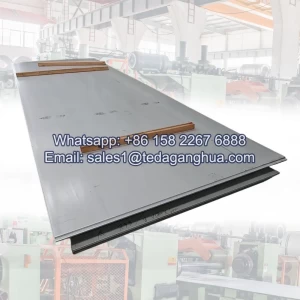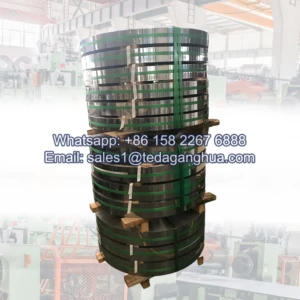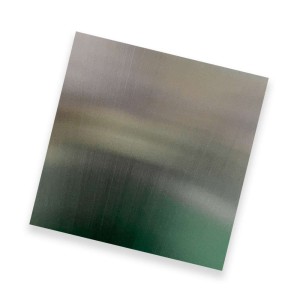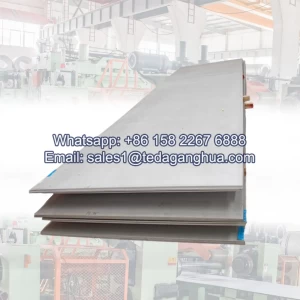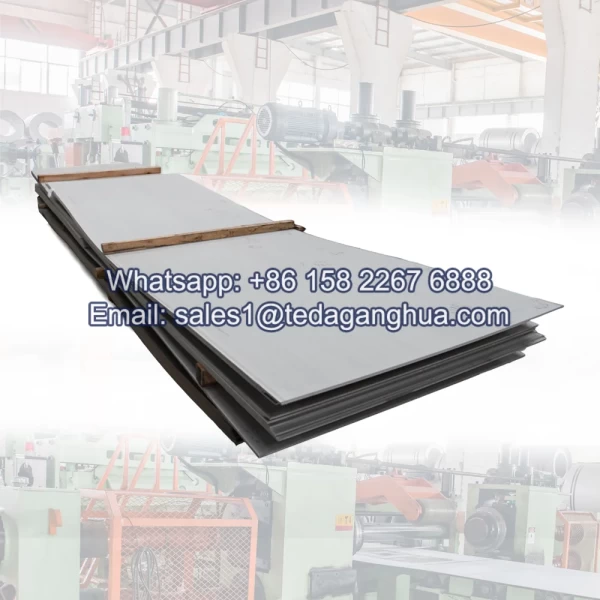
0.05 Lamiera Di Acciaio Inox Mm
L'elaborazione di 0.05 mm stainless steel sheet relies on precision cold rolling, controlled annealing, and non-deforming cutting technologies. Every stage must be carefully managed to ensure dimensional accuracy, surface integrity, e prestazioni meccaniche. Ultra-thin stainless steel represents a high-value segment of advanced manufacturing, requiring specialized equipment and expertise.
- Descrizione
0.05 mm stainless steel sheet is classified as an ultra-thin precision material, widely used in electronics, dispositivi medici, componenti flessibili, e fabbricazione di precisione. Due to its extremely small thickness, the processing technology requires strict control of deformation, planarità, e qualità della superficie.
Characteristics of 0.05 Lamiera di acciaio inossidabile da mm
- Extremely low thickness with high flexibility
- Sensitive to तनाव, vibration, and thermal distortion
- High surface quality requirements
- Difficult to process using conventional sheet metal methods
Core Manufacturing Process of Ultra-Thin Stainless Steel Sheet
1. Precision Cold Rolling
Ultra-thin stainless steel sheets are primarily produced through multi-pass cold rolling.
- Initial thickness reduction from hot-rolled coils
- Use of high-precision rolling mills
- Thickness controlled within micrometer tolerances
Key challenges:
- Thickness deviation control
- Roll gap stability
- Surface defect prevention
2. Intermediate Annealing Process
Annealing is required between rolling passes to restore ductility and prevent cracking.
Typical process:
- Heating to recrystallization temperature
- Short holding time due to thin material
- Controlled cooling to maintain uniform structure
Effects:
- Eliminates work hardening
- Improves elongation
- Stabilizes microstructure
3. Final Annealing and Surface Treatment
Final annealing determines the mechanical properties and surface condition.
Common methods:
- Bright annealing (BA) for ultra-clean surface
- Protective atmosphere to avoid oxidation
- Precise tension control to prevent wrinkling
Slitting and Cutting Technology
Elaborazione 0.05 mm stainless steel requires non-deforming cutting methods.
Taglio
- High-speed precision slitting lines
- Use of sharp circular blades
- Minimal burr control
Taglio laser (Limited Use)
- Applied only for micro-components
- Requires low heat input to avoid warping
Incisione chimica (Advanced Process)
- Used for complex shapes
- No mechanical stress applied
- Elevata precisione dimensionale
Flatness Control and Leveling
Ultra-thin sheets are highly prone to deformation. Advanced leveling technologies are required:
- Tension leveling systems
- Micro-adjustment rollers
- नियंत्रित तनाव distribution
هدف:
- Eliminate موجة (waviness)
- Migliora la planarità
- Maintain dimensional stability
Surface Protection and Handling
Due to the delicate nature of 0.05 mm stainless steel:
- Protective films are applied immediately after processing
- Cleanroom-level handling may be required
- Anti-scratch packaging is essential
Key Processing Parameters
| Parametro | Typical Requirement | Impact on Quality |
|---|---|---|
| Tolleranza sullo spessore | ±0.002 mm | Precision control |
| Rolling Reduction | Multi-pass controlled reduction | Prevents cracking |
| Temperatura di ricottura | 900°C – 1100°C | Restores ductility |
| Tension Control | Low and stable | Prevents deformation |
| Rugosità superficiale | Ra ≤ 0.2 µm | Ensures surface quality |
Processing Challenges
- հեշտ deformation and wrinkling
- Edge cracking during rolling
- Surface scratches and contamination
- Difficulty in maintaining flatness
These challenges require high-end equipment and strict process control.
Application Fields
0.05 mm stainless steel sheet is typically used in:
- Precision electronic components
- Flexible connectors and shielding materials
- Strumenti medici
- Micro stamping parts