Acciaio inossidabile austenitico
Composition and Structure
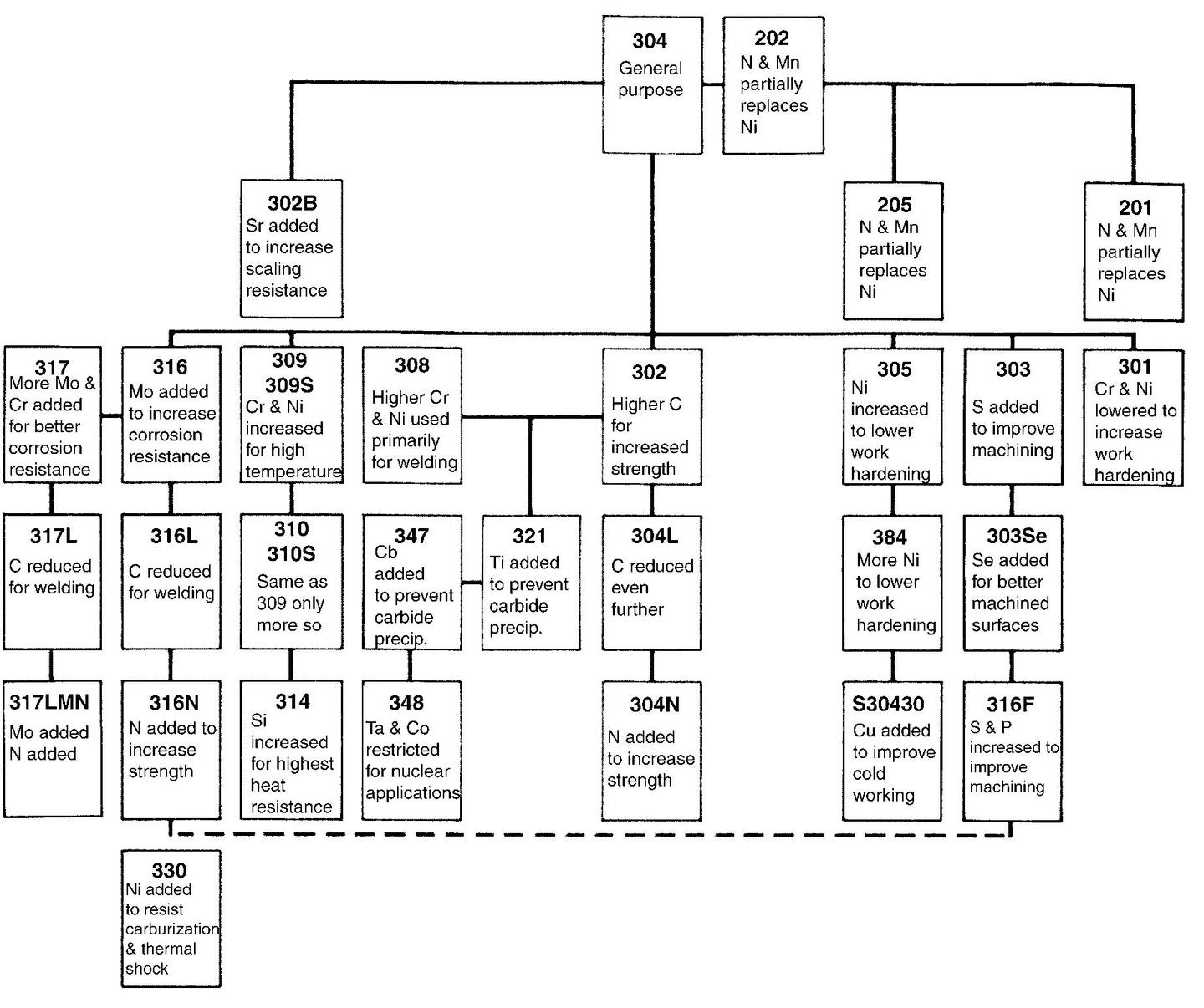
Austenitic stainless steel contains at least 16% cromo e 6% nichel. Per esempio, 304 acciaio inossidabile, noto anche come 18/8 acciaio inossidabile, consists of 18% cromo e 8% nichel. The presence of nickel enhances low-temperature performance, preventing brittleness.
This type of stainless steel is classified into the 200 serie (containing chromium, nichel, e manganese) and the 300 serie (contenenti cromo e nichel). Austenitic stainless steel can be strengthened through cold working but not heat treatment.
Proprietà
- Resistenza alla corrosione: Excellent in various environments.
- Formabilità: Highly adaptable for different applications.
- Durabilità: Maintains structural integrity even in extreme conditions.
Common Types and Applications
304 Acciaio inossidabile
- Resists ordinary rust in construction.
- Suitable for food processing due to resistance to acids, cloruri, e alte temperature.
- Withstands exposure to organic chemicals, coloranti, and inorganic chemicals.
304LAcciaio inossidabile (Basso contenuto di carbonio)
- Offers superior resistance to nitric and sulfuric acid at moderate temperatures.
- Widely used in liquefied gas storage, elettrodomestici, attrezzatura da cucina, and hospital instruments.
316 Acciaio inossidabile
- Contiene più nichel e 2-3% molibdeno rispetto a 304.
- Fornisce una migliore resistenza, soprattutto in ambienti ricchi di cloruri che causano corrosione per vaiolatura.
317 Acciaio inossidabile
- Contiene 3-4% molibdeno e più cromo che 316.
- Offre una resistenza superiore alla vaiolatura e alla corrosione delle staffe.