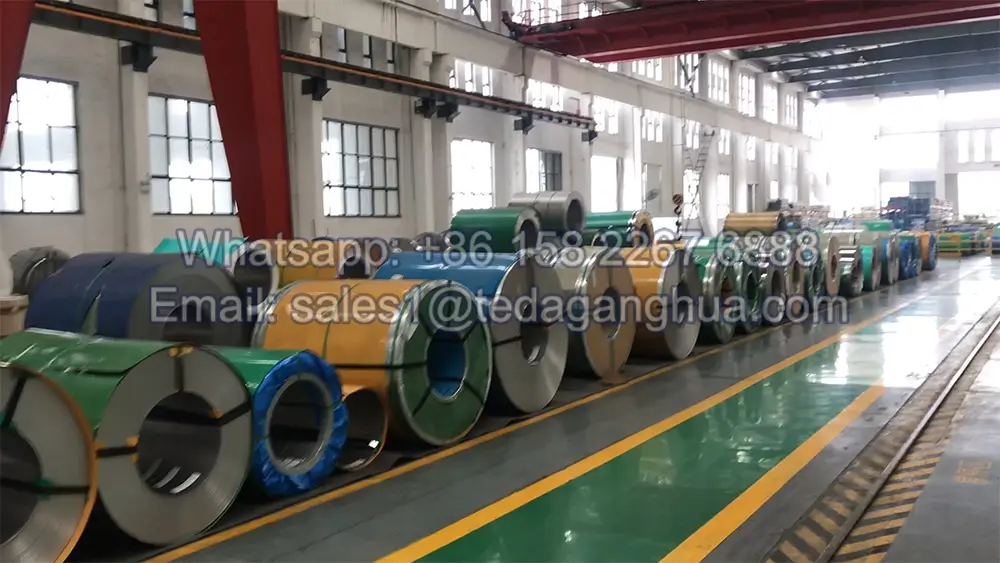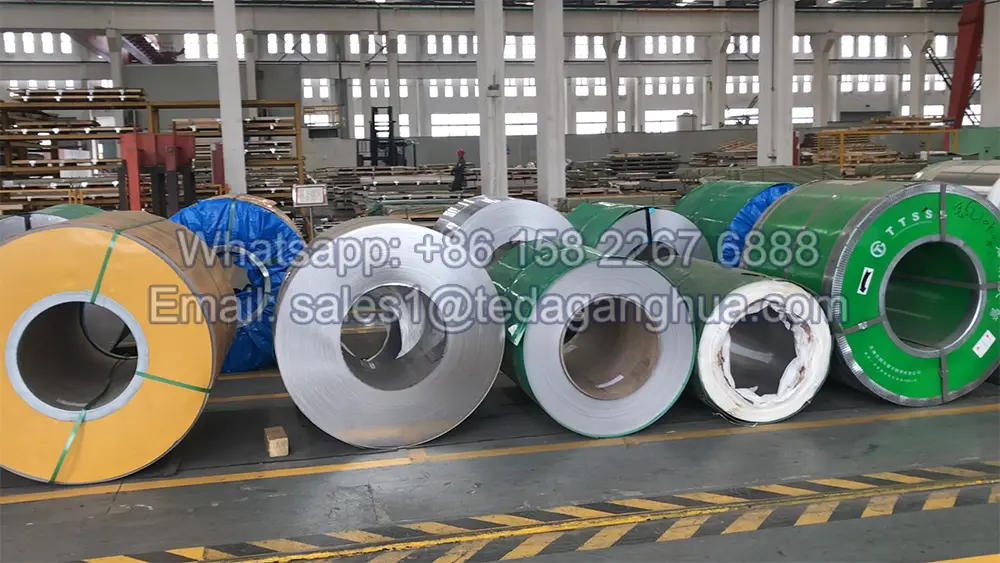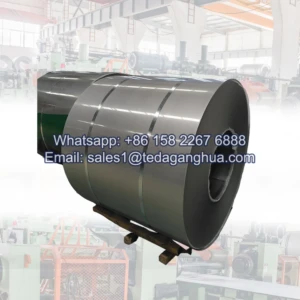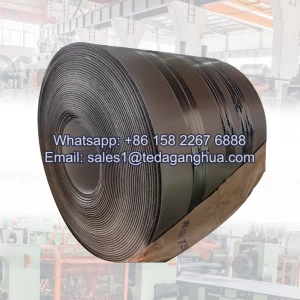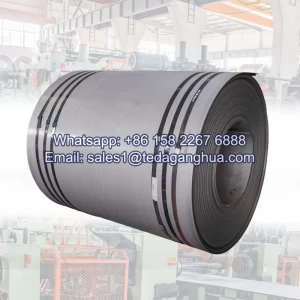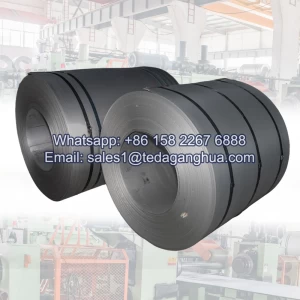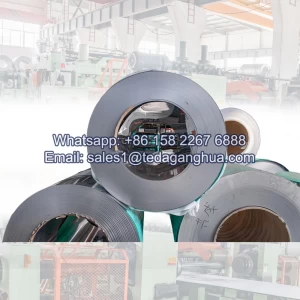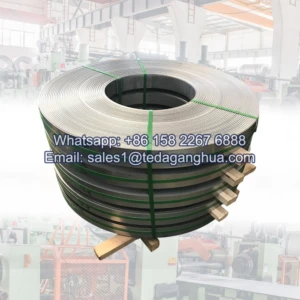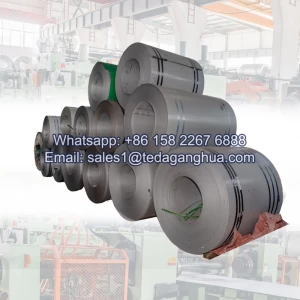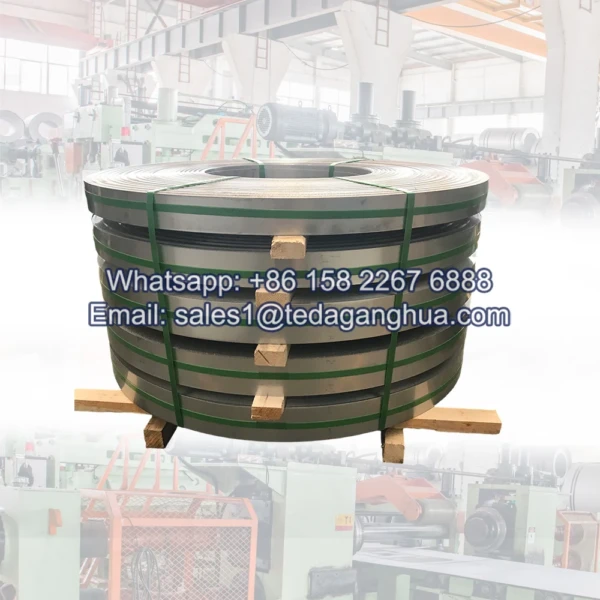
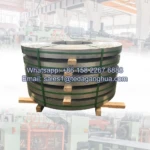
Bobine de bande d'acier inoxydable
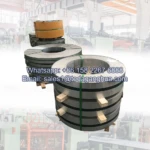
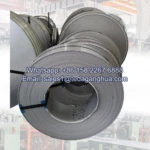
Stainless steel coil and stainless steel strip are related but different products. Stainless steel coil is a wide rolled raw material used for large-scale industrial processing, while stainless steel strip is a narrow precision product processed from stainless steel coil through slitting and finishing operations.
- Description
A stainless steel strip coil is a stainless steel material supplied in continuous rolled coil form, usually processed through slitting from wider stainless steel coils. It is widely used in stamping, fabrication de précision, décoration de construction, et fabrication industrielle.
In the stainless steel industry, “stainless steel strip” and “stainless steel coil” are closely related products, but they are not exactly the same.
What Is Stainless Steel Coil?
Stainless steel coil generally refers to a wide stainless steel rolled material produced directly from hot rolling or cold rolling processes.
Common Characteristics
- Large width
- Supplied in coil form
- Used as raw material for further processing
- Suitable for sheet production and slitting
Common Width Range
| Product Type | Common Width |
|---|---|
| Narrow coil | Below 600 mm |
| Standard stainless steel coil | 1000 mm – 1500 mm |
| Wide coil | 1500 mm – 2000 mm+ |
Main Applications
- Stainless steel sheet production
- Pipe manufacturing
- Fabrication industrielle
- Structural materials
- Panneaux décoratifs
What Is Stainless Steel Strip?
Stainless steel strip is usually a narrow-width stainless steel material slit from larger stainless steel coils.
Common Characteristics
- Narrow width
- Higher dimensional precision
- Easier for stamping and forming
- Often used for precision fabrication
Common Width Range
| Product Type | Common Width |
|---|---|
| Precision strip | 5 mm – 100 mm |
| Standard strip | 100 mm – 600 mm |
Main Applications
- Pièces d'estampage de précision
- Trim strips
- Spring materials
- Electronics components
- Bordure décorative
Main Difference Between Stainless Steel Strip and Coil
| Article | Bobine d'acier inoxydable | Stainless Steel Strip |
|---|---|---|
| Largeur | Wide | Narrow |
| Production stage | Primary rolled product | Slit processed product |
| Precision level | Standard | Higher precision |
| Main form | Large coil | Narrow coil or cut strip |
| Processing purpose | Raw material supply | Fabrication de précision |
| Applications | General industry | Precision and decorative use |
Relationship Between Strip and Coil
In most cases:
Stainless steel strip is produced from stainless steel coil.
The process is:
- Wide stainless steel coil production
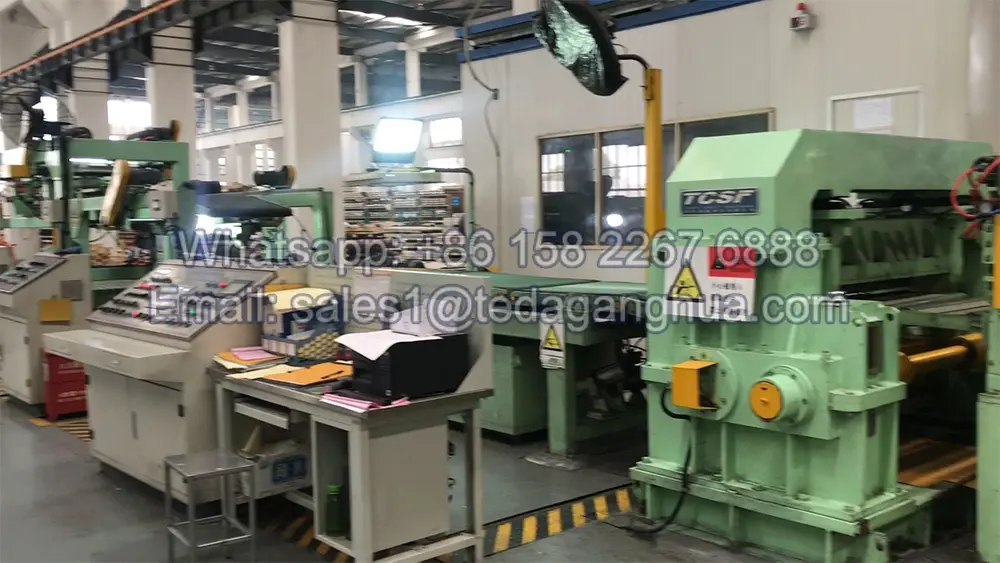
- Slitting into narrow widths
- Surface finishing and precision processing
- Packaging as stainless steel strips
So stainless strip can be considered a secondary processed product based on stainless steel coil.
Thickness Comparison
| Produit | Plage d'épaisseur commune |
|---|---|
| Stainless steel coil | 0.3 mm – 16 mm+ |
| Stainless steel strip | 0.02 mm – 6 mm |
Precision strips are usually thinner and require stricter thickness tolerance control.
Surface Finish Comparison
Both products can have similar surface finishes:
- 2Finition B
- Finition BA
- Finition brossée n°4
- Finition miroir
- PVD coated finish
Cependant, stainless strips often require:
- Better surface precision
- More stable edge quality
- Higher flatness control
Common Grades Used for Both Products
| Grade | Caractéristiques |
|---|---|
| 201 | Utilisation décorative économique |
| 304 | Résistance générale à la corrosion |
| 316 | Haute résistance à la corrosion |
| 430 | Acier inoxydable ferritique magnétique |
Why Stainless Steel Strip Requires More Precision
Compared with coils, strips are often used in:
- Estampage de précision
- Electronics manufacturing
- Edge decoration
- Pièces mécaniques
Donc, strip production requires:
- Accurate slitting
- Burr control
- Stable width tolerance
- Better surface quality