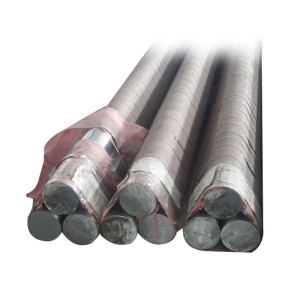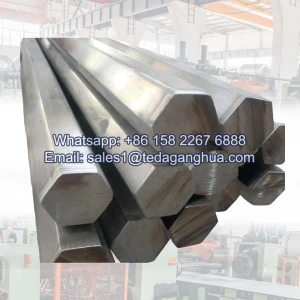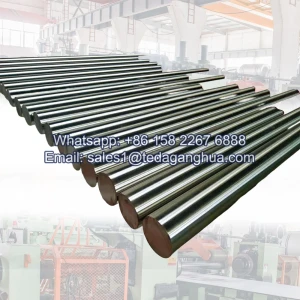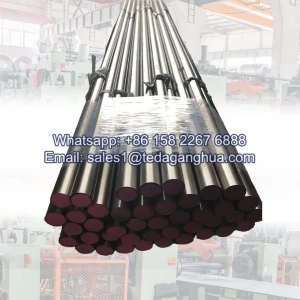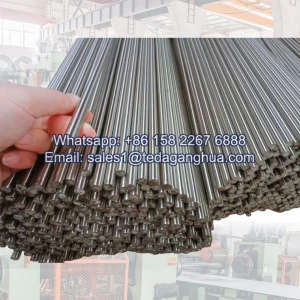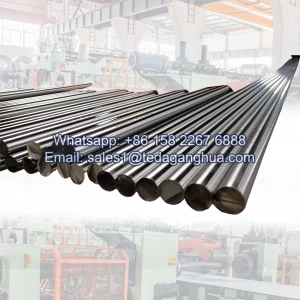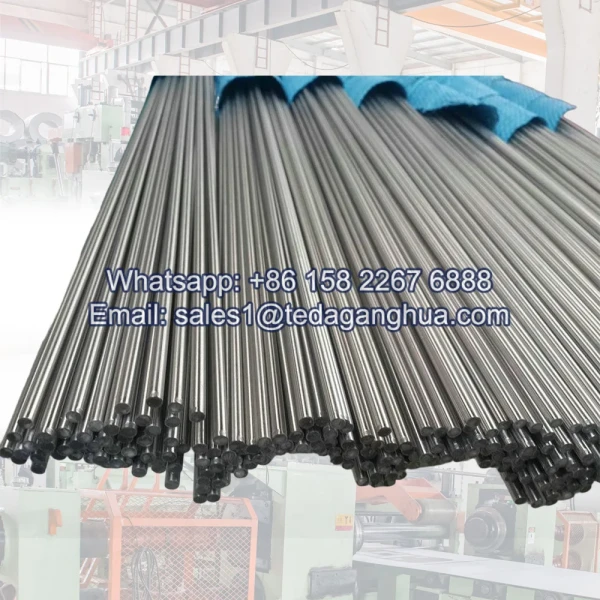
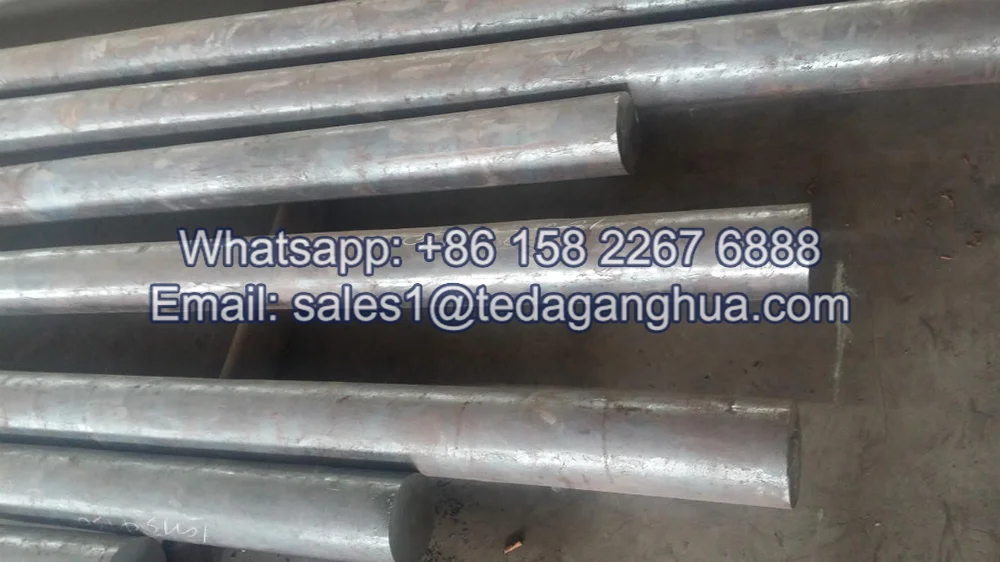
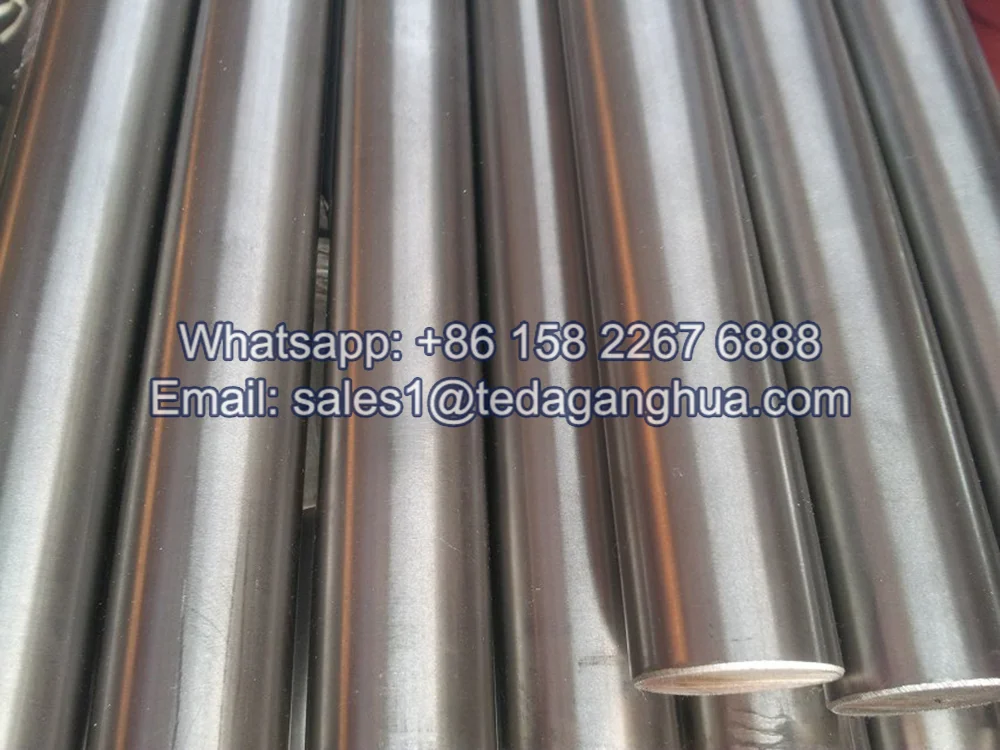
310 Barre ronde en acier inoxydable
- Description
310 Barre ronde en acier inoxydable: Composition and High-Temperature Performance
310 stainless steel round bar is a high-alloy austenitic stainless steel designed for extreme high-temperature environments. It is widely used in furnace parts, équipement de traitement thermique, fours, and thermal processing systems where both oxidation resistance and structural stability are required under continuous heat exposure.
Compared with standard stainless steels like 304 ou 316, 310 stainless steel contains significantly higher chromium and nickel content, which gives it outstanding resistance to scaling and deformation at elevated temperatures.
Composition chimique de 310 Acier inoxydable
The excellent high-temperature performance of 310 stainless steel round bar is mainly due to its high chromium and nickel alloy system, which stabilizes the austenitic structure and enhances oxidation resistance.
| Élément | Contenu typique (%) | Fonction |
|---|---|---|
| Chrome (Cr) | 24.0 – 26.0 | Excellent oxidation and corrosion resistance |
| Nickel (Dans) | 19.0 – 22.0 | Maintains austenitic structure and high-temperature toughness |
| Carbone (C) | ≤ 0.25 | Improves high-temperature strength |
| Manganèse (Mn) | ≤ 2.0 | Stabilizes structure and improves hot workability |
| Silicium (Et) | ≤ 1.5 | Enhances oxidation resistance at high temperature |
| Phosphore (P.) | ≤ 0.045 | Controls brittleness |
| Soufre (S) | ≤ 0.03 | Améliore l'usinabilité (controlled level) |
| Fer (Fe) | Équilibre | Base matrix |
Key Performance Characteristics of 310 Barre ronde en acier inoxydable
310 stainless steel is specifically engineered for continuous service in high-temperature and oxidizing environments. Its performance remains stable even under thermal cycling conditions.
- Excellent oxidation resistance up to approximately 1100°C
- High resistance to scaling and carburization
- Stable austenitic structure under thermal stress
- Good mechanical strength at elevated temperatures
- Reliable performance in continuous furnace operation
High-Temperature Stability Mechanism
The high chromium content forms a dense and stable oxide layer on the surface, which protects the material from further oxidation. Entre-temps, nickel helps maintain the austenitic structure, preventing brittleness during repeated heating and cooling cycles.
- Cr-rich oxide layer provides surface protection
- Nickel stabilizes crystal structure at high temperature
- Reduced deformation under thermal stress
- Improved resistance to thermal fatigue
Comparison of Alloy Content with Common Grades
| Grade | Cr Content | Ni Content | Principal avantage |
|---|---|---|---|
| 304 | 18–20% | 8–10% | Résistance générale à la corrosion |
| 316 | 16–18% | 10–14% | Résistance aux chlorures |
| 310 | 24–26% | 19–22% | Résistance à l'oxydation à haute température |
Importance industrielle de 310 Stainless Steel Composition
The unique high chromium and nickel balance in 310 stainless steel round bar allows it to maintain structural integrity in extreme heat environments where most stainless steels would soften or oxidize rapidly.
In industrial supply chains, suppliers like Teda Ganghua provide stable-composition 310 stainless steel bars with controlled melting and processing standards, ensuring reliable performance in high-temperature engineering applications.
Typical Application Fields
- Heat treatment furnaces and kiln components
- High-temperature industrial ovens
- Thermal processing equipment and fixtures
- Petrochemical heating systems
- Boiler and power plant components
- Glass and ceramic manufacturing equipment
For industrial stainless steel bar and profile solutions, visite
solutions de profilés en acier inoxydable to explore engineered stainless steel products for high-temperature applications.
FAQ
1. Qu'est-ce que 310 stainless steel made of?
It mainly consists of high chromium (24–26%) and nickel (19–22%) with iron as the base metal.
2. Why is 310 stainless steel used in high-temperature environments?
Because its high chromium and nickel content provides excellent oxidation resistance and structural stability at high temperatures.
3. What is the maximum working temperature of 310 acier inoxydable?
It can typically withstand continuous service up to around 1100°C in oxidizing environments.
4. How does 310 differ from 304 acier inoxydable?
310 has much higher chromium and nickel content, giving it superior high-temperature performance compared to 304.
5. Teda Ganghua fournit-il 310 barres rondes en acier inoxydable?
Oui, Teda Ganghua supplies industrial-grade 310 stainless steel round bars with stable composition and export packaging.