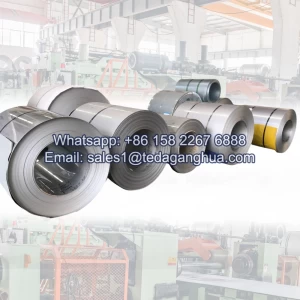
0.05 Tôle d'acier inoxydable de millimètre
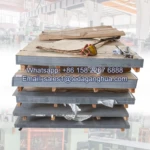
The processing of 0.05 mm stainless steel sheet relies on precision cold rolling, controlled annealing, and non-deforming cutting technologies. Every stage must be carefully managed to ensure dimensional accuracy, surface integrity, et performances mécaniques. Ultra-thin stainless steel represents a high-value segment of advanced manufacturing, requiring specialized equipment and expertise.
- Description
0.05 mm stainless steel sheet is classified as an ultra-thin precision material, widely used in electronics, dispositifs médicaux, composants flexibles, and precision fabrication. Due to its extremely small thickness, the processing technology requires strict control of deformation, platitude, et qualité de surface.
Caractéristiques de 0.05 mm tôle d'acier inoxydable
- Extremely low thickness with high flexibility
- Sensitive to तनाव, vibration, and thermal distortion
- Exigences élevées en matière de qualité de surface
- Difficult to process using conventional sheet metal methods
Core Manufacturing Process of Ultra-Thin Stainless Steel Sheet
1. Precision Cold Rolling
Ultra-thin stainless steel sheets are primarily produced through multi-pass cold rolling.
- Initial thickness reduction from hot-rolled coils
- Use of high-precision rolling mills
- Thickness controlled within micrometer tolerances
Key challenges:
- Thickness deviation control
- Roll gap stability
- Surface defect prevention
2. Intermediate Annealing Process
Annealing is required between rolling passes to restore ductility and prevent cracking.
Typical process:
- Heating to recrystallization temperature
- Short holding time due to thin material
- Controlled cooling to maintain uniform structure
Effects:
- Eliminates work hardening
- Improves elongation
- Stabilizes microstructure
3. Final Annealing and Surface Treatment
Final annealing determines the mechanical properties and surface condition.
Common methods:
- Recuit brillant (BA) for ultra-clean surface
- Protective atmosphere to avoid oxidation
- Precise tension control to prevent wrinkling
Slitting and Cutting Technology
Traitement 0.05 mm stainless steel requires non-deforming cutting methods.
Refendage
- High-speed precision slitting lines
- Use of sharp circular blades
- Minimal burr control
Découpe Laser (Limited Use)
- Applied only for micro-components
- Requires low heat input to avoid warping
Chemical Etching (Advanced Process)
- Used for complex shapes
- No mechanical stress applied
- Haute précision dimensionnelle
Flatness Control and Leveling
Ultra-thin sheets are highly prone to deformation. Advanced leveling technologies are required:
- Tension leveling systems
- Micro-adjustment rollers
- नियंत्रित तनाव distribution
هدف:
- Eliminate موجة (waviness)
- Améliorer la planéité
- Maintain dimensional stability
Surface Protection and Handling
Due to the delicate nature of 0.05 mm stainless steel:
- Protective films are applied immediately after processing
- Cleanroom-level handling may be required
- Anti-scratch packaging is essential
Paramètres de traitement clés
| Paramètre | Typical Requirement | Impact on Quality |
|---|---|---|
| Tolérance d'épaisseur | ±0.002 mm | Precision control |
| Rolling Reduction | Multi-pass controlled reduction | Prevents cracking |
| Température de recuit | 900°C – 1100°C | Restaure la ductilité |
| Tension Control | Low and stable | Prevents deformation |
| Rugosité de la surface | Ra ≤ 0.2 µm | Ensures surface quality |
Processing Challenges
- հեշտ deformation and wrinkling
- Edge cracking during rolling
- Surface scratches and contamination
- Difficulty in maintaining flatness
These challenges require high-end equipment and strict process control.
Application Fields
0.05 mm stainless steel sheet is typically used in:
- Precision electronic components
- Connecteurs flexibles et matériaux de blindage
- Instruments médicaux
- Pièces de micro-emboutissage